
About Wulfred
Lived 701 – 832. Wulfred was a catholic priest.
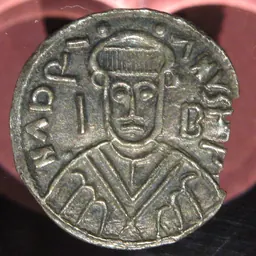
Wulfred (died 24 March 832) was an Anglo-Saxon Archbishop of Canterbury in medieval England. Nothing is known of his life prior to 803, when he attended a church council, but he was probably a nobleman from Middlesex. He was elected archbishop in 805 and spent his time in office reforming the clergy of his cathedral. He also quarrelled with two consecutive Mercian kings – Coenwulf and Ceolwulf – over whether laymen or clergy should control monasteries. At one point, Wulfred travelled to Rome to consult with the papacy and was deposed from office for a number of years over the issue. After Coenwulf's death, relations were somewhat better with the new king Ceolwulf, but improved much more after Ceolwulf's subsequent deposition. The dispute about control of the monasteries was not fully settled until 838, after Wulfred's death. Wulfred was the first archbishop to place his portrait on the coinage he struck.
Sources and early life
The main sources for Wulfred's life are the surviving charters which mention him, a number of documents from his suffragan bishops pledging obedience, the records of a church council he presided over, and the coinage he issued. A kinsman, Werhard, owned property near Hayes, and Wulfred later owned property there also. Other evidence suggests that he was related to a noble family that owned lands in Harrow and Twickenham as well as Hayes. Wulfred attended a synod as a member of Æthelhard's staff in 803, but this is the first mention of Wulfred in the historical record. On 26 July 805, he attended a synod and was named "archbishop-elect" on the documents relating to the council decisions. or perhaps in October or later in 805. He may have owed his elevation to Canterbury to the fact that the kingdom of Mercia dominated Kent and Canterbury at this time. Wulfred may have based the rule of the community on Chrodegang's Regula canonicorum, or perhaps on the rule of Benedict. He was accompanied by the bishop of Sherborne, Wigberht. Laymen controlling monasteries had been customary for centuries, though in the half-century or so before Wulfred became archbishop the church had begun to assert control over monasteries. In England, this attempt to secure control was manifested in decrees made by synods at Clofesho in 803 and more especially the synod of Chelsea in 816. Tensions over the Kentish monastic houses of Reculver and Minster-in-Thanet reached such a point that Wulfred was deprived of authority by the king for a period of some years; six according to the document drawn up in 825 recording the – then victorious – Canterbury view of the debate, though four is perhaps more likely. Wulfred and the Canterbury community fought Coenwulf vigorously, sending embassies to the pope and concocting forgeries in their favour which purported to have been issued by earlier kings. Nor did Coenwulf and his followers quickly cede control of Minster and Reculver to the archbishop.
Death and legacy
Wulfred died in 832, probably on 24 March. Most of his wealth was left to a kinsman, Werhard, who was to give the lands to Christ Church after his own death.
Don’t just read it —
keep it.
Full-length biographies made to live with: read them, listen on the way to work, watch them tonight.
- E-book
- Audio
- Video
Instant download · yours to keep · every purchase keeps this site free
Important facts
Related people
Same field, nearest in time



Contemporaries
People whose lives overlapped Wulfred's


Frequently asked questions
Who was Wulfred?
Archbishop of Canterbury
When was Wulfred born?
Wulfred was born in 701.
When did Wulfred die?
Wulfred died on 24 March 832 in Canterbury.
What was Wulfred's occupation?
Wulfred was a catholic priest.
Sources & further reading
Cite this page
APA: Biography.guide. (2026). Wulfred. https://biography.guide/wulfred/
MLA: "Wulfred." Biography.guide, https://biography.guide/wulfred/.
Chicago: "Wulfred." Biography.guide. https://biography.guide/wulfred/.
Data last updated: 2026-09-20 · Spot an error? Report a correction.
Page generated 2026-09-27 05:17 UTC