
Wolo
American artist and puppeteer
About Wolo
Lived 1902 – 1989 (aged 86–87). Wolo was a German.
Wolo (1902–1989) was an artist, caricaturist, muralist, puppeteer, and children's book author. He emigrated from Europe to the United States after World War I, and after six years doing odd jobs, pursued a career in art over the next sixty years. He began exhibiting his art in Chicago, Los Angeles, and then in San Francisco, where he drew a daily caricature column, "I Saw You", for the San Francisco Chronicle. He painted murals at hospital wards and at restaurants, wrote five children's books, and was a puppeteer for children's parties as well as on television station KPIX5.
Early life and education Ehrhardt Anton Wolff Georg Trützschler Von Falkenstein was born July 4, 1902, in Berlin, Germany. His parents, of the noble class, were Baron Ludwig Ullrich Martin Fritz Trützschler Von Falkenstein, and Caroline Margarethe Charlotte Ida Anna (née Von Nettelbladt) Trützschler Von Falkenstein. His name "Wolo" came from his younger sister Anneliese, who as a two-year-old was not able to pronounce "Wolff", and when he became an artist, Wolo was the name he chose to use.
Wolo's father was a Lieutenant in the Alexander Grenadier Guards. When his parents divorced, his mother married a diplomat attached to the embassy at Berne, Switzerland, where Wolo lived until the age of 12. Under German law, his father took custody then, and enrolled his son in the Royal Military Academy in Germany. Following World War I, Wolo was sent first to a business college, then to "a famous Swiss Agricultural College" where he graduated as an "agricultural engineer". Wolo worked on a model farm near Beloit, tending dairy cattle. His wages were $10 per month, and he wrote, "I had never really wanted to be a farmer— I wanted to be an artist!"
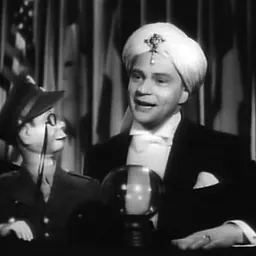
Career Wolo began his career as an artist in Chicago by sketching people in cabarets, then sold sketches to magazines and newspapers, In that studio, ventriloquist Edgar Bergen paid him $5 to sketch "a stupid-looking hayseed", a drawing used to create Bergen's famous dummy, Mortimer Snerd. Critic Ada Haifin wrote, "Wolo's so-called caricatures of famous on exhibition at Courvoisier's might better be called 'exaggerated portraits.' There is a significant force and a penetrating quality, frequently soul-deep, in much of his work that bespeaks a future for this man if he should take up portrait as his special vocation."
In November 1933, Wolo began to sketch for "I Saw You", his daily caricature column at the San Francisco Chronicle, in which Wolo observed and sketched a person on the streets of San Francisco, without the "victim's knowledge". If a victim or his friends recognized him in Wolo's column, he could claim $1 at the Chronicle, after being identified by Wolo.
Drawings Demonstrating he was more than a caricaturist, Wolo exhibited drawings in 1937 at the Gelber-Lilienthal Gallery, featuring sketches for murals he had created for children's rooms. Commenting on his murals, a critic wrote, "He is adroit; he has an affectionate sense of fun. His fanciful youngsters and animals are delightful."
Wolo also created sketches on the site of events such as the Open Air Art Show in San Francisco's Union Square.
Murals In 1932, Wolo contributed to the Olvera Street mural, América Tropical.
Wolo's large murals were also on display at the Hippo Burger, New Pisa and Vesuvio restaurants, the Children's Hospital's Little Jim ward, and children's wards in Salinas and San Pablo. Amanda, New York: William Morrow and Company, 1941. "Amanda is a kind-hearted polka dot snake, who befriends all the jungle folk and was particularly beloved by Sir Archibald, the monkey. This is the story of their adventures in search of the blue lake where breadfruit grew buttered. Nonsense tale, with tropically gay splashy illustrations -- on every page. Jacket blurb in verse." —Kirkus Review The Secret Of The Ancient Oak, William Morrow and Company, New York, 1942. "The old oak had many tenants, an owl, squirrels, orioles, woodpeckers, raccoons, bees, and Ilgamoot, the ground-hog. A wicked black beaver lived nearby and decided that he would gnaw down the old tree and claim it for his own fell purposes. He came at night to accomplish his threat, but at first the occupants paid little attention. Then each group tried to keep him off, but it wasn't until they all learned to pull together that the old devil was thwarted." —Kirkus Review Tweedles Be Brave, Collins, London, 1943. "Tweedles is a daring small monkey with a white cockatoo playmate. What one doesn't see or do the other does. And they flout the spoiled, cantankerous king of the monkeys, and go far afield -- and find out a few things for themselves. Eventually, they save the monkey king and his subjects, and all live happily ever after. In story with lots of pictures."—Kirkus Review Sir Archibald, William Morrow and Company, New York, 1944. "Sir Archibald is the boastful monkey of previous books -- and this time he sets out to recover the king's crown from the dreaded Grizzlegrimm. The Meanies make it hard for him, but he has learned to use a charm which shows up fears as nothing -- and he comes through unscathed, only to find that Grizzlegrimm is a scarecrow! -- And the crown is home -- under the throne -- all the time. Typical Wolo pictures -- and lots of them."—Kirkus Review Friendship Valley, William Morrow & Company, New York, 1946. "This story has its own bit of social significance, dedicated as it is to the amity of nations. It is a story of the dispossessed, as a group of animals are burned out of their forest home and combine to find a new place to live. Fear and distrust are overcome and the animals find the path not too rugged after all. They settle down in a valley and learn to live together. Illustrated profusely in characteristic black and white and color." —Kirkus Review
Wolo also illustrated:
Hippo Cook Book, by Jack Falvey. Nitty Gritty Productions, 1969.
The digital library collection at the University of Southern California includes two images of "Wolo of the talking Hands," with this 1949 description of Wolo:
Wolo created puppets for the 1980 production of the musical Carnival! at the Mountain Play in Marin County California.
Wolo created all elements of his puppet shows:
End of life Wolo's career as an artist spanned 60 years. He died at age 86 in Laguna Honda Hospital in San Francisco.
Don’t just read it —
keep it.
Full-length biographies made to live with: read them, listen on the way to work, watch them tonight.
- E-book
- Audio
- Video
Instant download · yours to keep · every purchase keeps this site free
Important facts
People in Wolo's life
Named in this biography and alive at the same time


Contemporaries
People whose lives overlapped Wolo's





Frequently asked questions
Who was Wolo?
American artist and puppeteer
When was Wolo born?
Wolo was born on 4 July 1902.
When did Wolo die?
Wolo died in 1989.
What nationality was Wolo?
Wolo was German.
Sources & further reading
Cite this page
APA: Biography.guide. (2026). Wolo. https://biography.guide/wolo/
MLA: "Wolo." Biography.guide, https://biography.guide/wolo/.
Chicago: "Wolo." Biography.guide. https://biography.guide/wolo/.
Data last updated: 2026-09-20 · Spot an error? Report a correction.
Page generated 2026-09-27 04:57 UTC