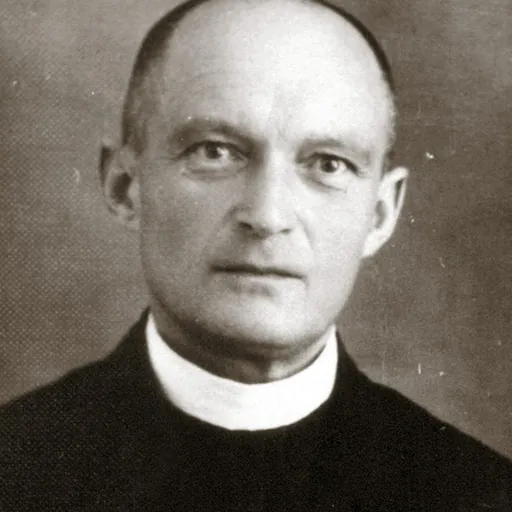
Władysław Bukowiński
Polish Catholic priest, missionary and beati
About Władysław Bukowiński
Lived 1904 – 1974 (aged 69). Władysław Bukowiński was a Polish and Russian catholic priest, missionary, confessor and preacher.
Władysław Bukowiński (also known as Ladislao Bukowinski; 22 December 1904 – 3 December 1974), was a Polish Roman Catholic priest who served in the diocese of Karaganda in Kazakhstan. He served in Poland during World War II and became renowned among his parishioners for his calmness and his intelligence. He made an effort to meet the conflict with the love of Jesus Christ and the message of the Gospel. He was arrested on several occasions and was a prisoner for a time in a Soviet gulag. After he was released, he served a long-term mission in Kazakhstan.
Pope Francis proclaimed him to be venerable in 2015 upon the confirmation of his life of heroic virtue, and approved a miracle attributed to him twelve months later. His beatification, in which Cardinal Angelo Amato presided on behalf of the pontiff, was celebrated on 11 September 2016 in Karaganda where he had served.
Life
Childhood and education Władysław Bukowiński was born on 22 December 1904 in nowadays Ukraine (then in Russian Empire) but was an ethnic Pole. He was the eldest son of Jozef Cyprian Bukowiński (16 March 1874 – 15 September 1952) and Jadwiga Monika Scipio del Campo (1885–1918) and was the brother of Gustav and Irene Bukowiński-Davidovskaya (d. 1930). He was baptized on 26 December in the church of Saint Barbara with the names of "Władysław Antoni". He had a half-brother named Zygmunt (d. 1982). Following his mother's death, his father married her sister, Victoria Scipio del Campo.
He spent his childhood in a Ukrainian region until 1912 when he relocated to Opatów. (He moved again in 1920 after the death of his mother and the remarriage of his father.) In 1914, he began his education in Kiev and then studied in Podolia until 1917 when he began to attend a coed Polish grammar school in Płoskirow. In 1920, the Bolshevik invasion caused him to move with his family to the village of Sandomierz.
On 24 September 1921, he passed his examinations in Kraków and began preparations to study theology. He studied law in addition to his theological studies at the Jagiellonian University, and in 1925, was one of the founders of Praetoria (Polish Academic Corporation) in Kraków. He served as its editor from 1925 to 1926. It was back in Rabka that he founded the academic association "Revival" for young students.
From 18 August 1936 to 1939, he taught sociology and catechism at the major seminary there at his own request, and was the general secretary of the Diocesan Institute of Catholic Action from 1938, while simultaneously serving as the director of the Higher Institute of Religious Sciences and the deputy editor of The Catholic Life.
Final years and death He visited Poland three times between 1963 and 1973 where he met with the Archbishop of Kraków Karol Józef Wojtyła - the future pope. But during his visits to Poland, he was the subject of surveillance by the Communist secret service forces. In 1965, the Polish authorities granted him permission to return to visit his relatives and he then returned to Karaganda on 31 August. Bukowiński travelled on a mission to Tajikistan in December 1967, and it was his last visit due to poor health. He returned from that mission on 3 March 1968, where he continued his work after a week of battling an illness. He travelled again to Poland in September 1969 and was there for a month before returning on 16 December 1969; he came back to Poland in December 1972, where he spent time in a hospital for treatment.
Bukowiński spent two months in the hospital in Poland until he returned to Karaganda on 19 April 1973, and settled in August 1974 with a widow Teresa Bitz. In October 1974, he spent a period of rest in Wierzbowca with the priest Józef Kuczynski. He then spent time that same October with the priest Antoni Chomicki who invited him to Murafa. The priest celebrated his final Mass on 25 November 1974 and then received the sacraments for the last time from Alexander Chiry.
He died, with a rosary in his hands, on 3 December 1974 in a Karaganda hospital at 5:00 pm due to a hemorrhage. His relics (remains) were later enshrined in the Karaganda Cathedral in 2008. The funeral was celebrated on 7 December at a new cemetery located just outside the town where a marble grave was erected with an inscription in Polish and German.
Legacy
On 13 November 2011, he was granted the posthumous award of Commander's Cross with the Star of the Order of the Rebirth of Poland. It was given to the Bishop of Karaganda Janusz Kaleta.
Beatification The beatification process commenced in 2005; the cause was transferred from Karaganda to Kraków on 28 February 2005 and the Congregation for the Causes of Saints granted their approval to the cause three months later on 16 May 2005, titling Bukowiński a Servant of God. The diocesan process spanned from 19 June 2006 until 8 March 2008. The process was validated on 6 February 2009 which allowed for the positio to be submitted in 2012. Theologians approved the cause on 22 November 2013. Pope Francis recognized that Bukowiński had lived a life of heroic virtue on 22 January 2015 and proclaimed Bukowiński to be venerable.
A miracle was investigated in Karaganda from 22–31 May 2013 and validated in Rome on 22 November 2013; the miracle was Mariusz Kowalski's healing of a brain hemorrhage that took place in 2008. It received the approval of the Rome-based medical board and received the approval of theologians on 10 September 2015. Pope Francis approved it on 14 December 2015 which allowed for his beatification to take place; it was celebrated on 11 September 2016 in Karaganda and Cardinal Angelo Amato presided over the celebration on the pope's behalf. Over a thousand pilgrims attended the beatification from places such as Belarus and Russia, while around fifteen bishops were in attendance. The postulator assigned to the cause is Jan Nowak.
Don’t just read it —
keep it.
Full-length biographies made to live with: read them, listen on the way to work, watch them tonight.
- E-book
- Audio
- Video
Instant download · yours to keep · every purchase keeps this site free
Important facts
People in Władysław Bukowiński's life
Named in this biography and alive at the same time
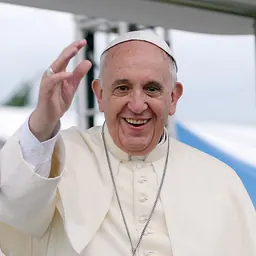
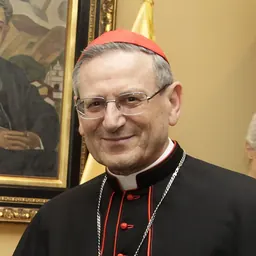

Related people
Same field, nearest in time


Contemporaries
People whose lives overlapped Władysław Bukowiński's


Frequently asked questions
Who was Władysław Bukowiński?
Polish Catholic priest, missionary and beati (1904–1974)
When was Władysław Bukowiński born?
Władysław Bukowiński was born on 22 December 1904 in Berdychiv.
When did Władysław Bukowiński die?
Władysław Bukowiński died on 3 December 1974 in Karaganda.
What was Władysław Bukowiński's occupation?
Władysław Bukowiński was a catholic priest, missionary, confessor and preacher.
What nationality was Władysław Bukowiński?
Władysław Bukowiński was Polish and Russian.
Sources & further reading
· Wikipedia: Władysław Bukowiński
· DBpedia: Władysław Bukowiński
Cite this page
APA: Biography.guide. (2026). Władysław Bukowiński. https://biography.guide/wladyslaw-bukowinski/
MLA: "Władysław Bukowiński." Biography.guide, https://biography.guide/wladyslaw-bukowinski/.
Chicago: "Władysław Bukowiński." Biography.guide. https://biography.guide/wladyslaw-bukowinski/.
Data last updated: 2026-09-22 · Spot an error? Report a correction.
Portrait: Wikimedia Commons · author & licence
Page generated 2026-09-27 05:03 UTC