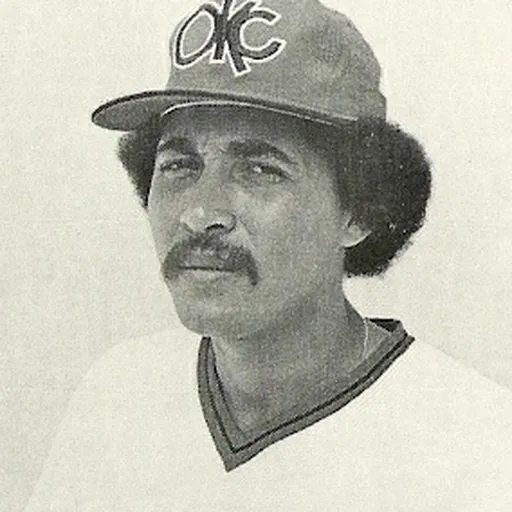
About Willie Hernández
Lived 1954 – 2023 (aged 69). Willie Hernández was an American baseball player.
Guillermo "Willie" Hernández Villanueva (November 14, 1954 – November 20, 2023) was a Puerto Rican professional baseball relief pitcher in Major League Baseball. He won both the American League Cy Young Award and the American League Most Valuable Player Award in 1984 after leading the Detroit Tigers to the World Series championship.
Hernández was born and raised in Aguada, Puerto Rico. He signed with the Philadelphia Phillies in 1973 and played in their minor-league system as a starting pitcher from 1974 to 1976. He was acquired by the Chicago Cubs in the 1976 Rule 5 Draft and played for the Cubs, principally as a relief pitcher, from 1977 to 1983. His performance improved markedly after adding a screwball and cut fastball to his pitching repertoire. He was traded to the Phillies in May 1983, helped lead them to the National League pennant, and appeared in three games in the 1983 World Series, giving up zero hits and zero runs in three games.
In March 1984, he was traded to the Detroit Tigers. As the Tigers' closer in 1984, he compiled a 9–3 win–loss record with 32 saves and a 1.92 earned run average (ERA). He helped lead the Tigers to the 1984 World Series championship and became only the third player in major-league history (following Sandy Koufax and Denny McLain) to win the Cy Young Award, MVP Award, and World Series title, all in the same season.
Hernández continued to pitch for the Tigers through the 1989 season. In 13 major-league seasons, he appeared in 744 games, 733 as a relief pitcher and 11 as a starter, and compiled a win–loss record of 70–63 with a 3.38 ERA, 788 strikeouts, and 147 saves. After his playing career ended, he returned to Puerto Rico, where he operated a construction business and later owned a cattle ranch.
Early years Hernández was born in 1954 in Aguada, Puerto Rico. He was seventh of eight children born to Dinicio, a worker in a sugar cane factory, and Dominga, a housekeeper.
Hernández was promoted in 1975 to the Double-A Reading Phillies of the Eastern League. Continuing as a starter, he compiled an 8–2 record with a 2.97 ERA. Halfway through the 1975 season, he was promoted again to the Triple-A Toledo Mud Hens of the American Association. He compiled a 6–4 record with a 3.27 ERA at Toledo. Hernández recalled that the lack of playing time caused him to lose rhythm, adding: "I was struggling. My attitude was bad." He appeared in 75 games (and an equal 75 innings), a career-high to that point in his career. He was used exclusively in relief, lowered his ERA to 3.00 and tallied 54 strikeouts and 10 saves, the latter being another career high to that point. At the time of the trade, Hernández said: "I'm really excited about coming to a contender like the Phillies, and I'm raring to go. Physically, I feel great, and I'm ready for whatever the Phillies want me to do."
Hernández appeared in 63 games for the Phillies and compiled an 8–4 record with a 3.29 ERA and seven saves. He was used principally as a setup man for Phillies closer Al Holland.
Hernández also performed well at the plate in 1983. He compiled a .400 batting average, scored two runs, stole a base, and tallied a run batted in.
The Phillies compiled a 90–72 record, defeated the Los Angeles Dodgers to win the National League pennant, and lost to the Baltimore Orioles in the 1983 World Series. Hernández appeared in three games during the World Series, compiling a 0.00 ERA and striking out four batters in four hitless innings pitched.
Detroit Tigers Cy Young and MVP in 1984 On March 24, 1984, the Phillies traded Hernández to the Detroit Tigers with Dave Bergman for Glenn Wilson and John Wockenfuss. Upon arriving at the Tigers' spring training facility, Hernández expressed eagerness to help the team in any way he could: "If they want me to come in from the bullpen, I'll do it. If they want me to start, I'll do it. If they want me to DH or steal bases, I'm happy to do it. . . . I'm a winner. I want to play ball in October."
During the 1984 season, Hernández led the American League's pitchers by appearing in 80 games and tallying 68 games finished – both figures establishing new team records for the Tigers. After tallying only 27 saves in the previous seven seasons combined, he ranked third in the league with 32 saves. He also compiled a 9–3 record, a 1.92 ERA, and 112 strikeouts in 140 innings pitched. Bill McGraw of the Detroit Free Press described Hernández as "truly the missing link, the key element the Tigers needed to nudge an already good ball club over the thin line separating parvenu from pennant contender." Sports Illustrated credited him with the Tigers' success: "Hernandez has changed the Tigers from a talented team that lost the close ones to a talented team that now steps on an opponent's neck once it gets ahead."
The Tigers finished the season with a 104–58 record, swept the Kansas City Royals in the American League Championship Series, and defeated the San Diego Padres in the 1984 World Series, four games to one. Hernandez pitched five innings in the series, had two saves, and gave up only one run. On October 30, he won the 1984 American League Cy Young Award, beating out Dan Quisenberry by a total of 88 points to 71. He learned of the award at his home in Puerto Rico and said: "This is an incredible award, not only for me, but for all of Puerto Rico. I feel like I won the award for all of the people." On November 6, he won the American League Most Valuable Player Award, defeating Kent Hrbek by 306 points to 247.
Hernández was the fourth player in the American League (and the seventh overall) to win the Cy Young and Most Valuable Player awards in the same season. Among that group, only Sandy Koufax and Denny McLain also won a World Series in the same year that they won the Cy Young and MVP awards.
Screwball and cutter Many credited the screwball for the turn-around in Hernández's career. Hernández learned the screwball from Mike Cuellar during the off-season in Puerto Rico prior to the 1983 season. Gary Gillette, in his biography of Hernández for the Society for American Baseball Research, wrote that his development of a cutter pitch (or "cut fastball") was the real key to Hernández's success. The cutter looked like a fastball on the inside part of the plate as it approached the plate but then cut in toward the batter's hands, causing right-handed batters to hit weak popups or grounders. The four-year extension was worth an estimated $4.65 million and made Hernández the highest paid player in team history. In 1985, Hernández appeared in 70 games and tallied 31 saves with a 2.70 ERA. He was selected to the All-Star team for the second consecutive season and compiled an 8–10 record. The following March, Hernández dumped a bucket of ice water on Albom at spring training in Florida. Albom complained to Tigers' executives who declined to take disciplinary action against Hernández.
One month after dumping ice water on Albom, Hernández asked that the stadium's public address system introduce him by his given name "Guillermo" rather than "Willie" as he had been introduced for the previous four years. The first announcement of his appearance as "Guillermo" led to a "puzzled reaction" from the Tiger Stadium crowd. Questioned about the change after the game, Hernández responded: "I use it because it's my name. What's wrong with using my real name?" He compiled a 6–5 record in 1988 with a 3.06 ERA and 10 saves in 67 innings pitched. However, Hernández remained unpopular with fans who booed him on opening day. In the final year of his contract with the Tigers, elbow soreness sidelined Hernández for a portion of the season. He appeared in 32 games, pitched innings, and compiled a 2–2 record with a career-high 5.74 ERA. At age 34, Hernández appeared in his last major-league game on August 18, 1989, giving up two earned runs in one inning. His tryout was cut short in March due to a sore elbow, but he was then tried out again in May.
Hernández attended spring training with the Philadelphia Phillies as a non-roster invitee in 1991. The Phillies released Hernández in early April. He then played with the Triple-A Syracuse Chiefs of the Toronto Blue Jays organization.
Four years later, during the 1994–95 strike, Hernández attempted a comeback with the New York Yankees as a replacement player. He said at the time that the comeback was not about money but because of his love of baseball, adding, "My spirit said I hadn't finished my career yet. I wanted to have more years in my career." In one exhibition game, Hernandez threw six pitches in one inning, retiring three Atlanta Braves batters on two fly balls and a groundout.
Career statistics Hernández played 13 seasons in Major League Baseball. He appeared in 744 games, 733 as a relief pitcher and 11 as a starter. He compiled a record of 70–63 with a 3.38 ERA, 788 strikeouts, and 147 saves in 1,044-23 innings pitched. At the plate, he posted a .206 batting average (13-for-63) with three runs batted in. Defensively, he was above average, committing only four errors in 231 total chances in 1044.2 innings pitched for a .983 fielding percentage. He later sold his construction business and operated a cattle ranch.
Hernández married Carmen Rivera in 1978. They had two sons together, Guillermo, born in approximately 1981 and Xavier, born in approximately 1982.
Hernández died at home in Sebring, Florida, on November 20, 2023, at age 69. He was buried at Monte Cristo Memorial Park in Aguadilla, Puerto Rico.
Don’t just read it —
keep it.
Full-length biographies made to live with: read them, listen on the way to work, watch them tonight.
- E-book
- Audio
- Video
Instant download · yours to keep · every purchase keeps this site free
Important facts
People in Willie Hernández's life
Named in this biography and alive at the same time
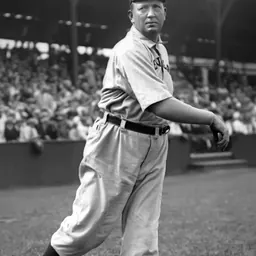



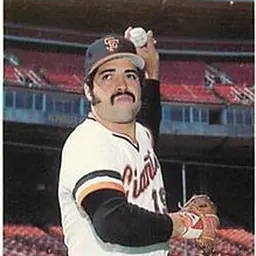

Related people
Same field, nearest in time


Contemporaries
People whose lives overlapped Willie Hernández's



Frequently asked questions
Who was Willie Hernández?
American baseball player (1954–2023)
When was Willie Hernández born?
Willie Hernández was born on 14 November 1954 in Aguada.
When did Willie Hernández die?
Willie Hernández died on 20 November 2023 in Sebring.
What was Willie Hernández's occupation?
Willie Hernández was a baseball player.
What nationality was Willie Hernández?
Willie Hernández was American.
Sources & further reading
Cite this page
APA: Biography.guide. (2026). Willie Hernández. https://biography.guide/willie-hernandez-baseball-player/
MLA: "Willie Hernández." Biography.guide, https://biography.guide/willie-hernandez-baseball-player/.
Chicago: "Willie Hernández." Biography.guide. https://biography.guide/willie-hernandez-baseball-player/.
Data last updated: 2026-09-21 · Spot an error? Report a correction.
Portrait: Wikimedia Commons · author & licence
Page generated 2026-09-27 04:58 UTC