
About William Whorwood
Lived 1500 – 1545. William Whorwood was a politician.
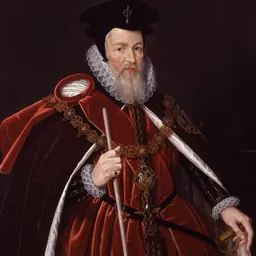
Sir William Whorwood (c.1500 – 28 May 1545) was a landowner in Staffordshire and the neighbouring counties, a distinguished lawyer, and a politician in the reign of Henry VIII. He achieved the positions of Solicitor General and Attorney General.
Background and early years Whorwood was born before 1505: his elder brother John was aged 40 in 1534, and taking account also of the dates of his education, it can be assumed that William was born 1500–1502.
He was the second or third son of John Whorwood of Compton, near Kinver one of a family of minor gentry, who had long lived at Compton, in Kinver, Staffordshire. The family name is also rendered Horwood or Horewode, giving an indication of contemporary pronunciation. His mother was Elizabeth Corbyn, daughter of Richard Corbyn of Kingswinford, Staffordshire.
Whorwood was admitted to the Middle Temple for legal training on 2 November 1519. Within two years he was acting as receiver of monies for the serjeants-at-law, the elite group of lawyers who monopolised work in the central courts. He quickly built up a successful practice, working for eminent clients. He handled the funeral accounts of Sir Thomas Lovell in 1524 and three years later was advising Anne Rede, niece of William Warham, the Archbishop of Canterbury on her jointure. In 1526 he was nominated for the post of Common Serjeant of London, the capital city's senior legal officer, by the mayor and aldermen of London, although he was unsuccessful in the face of competition from a royal nominee.
Political career In 1529 Whorwood was returned as Member of the English Parliament for the borough of Downton in Wiltshire This was one of three boroughs controlled by the Diocese of Winchester. The bishop's bailiff simply filled in the election return or indenture and handed it to the High Sheriff of Wiltshire. The bishop in commendam at the time was Thomas Wolsey, formerly the king's senior counsellor, but his career had entered its final crisis. It is possible Warham influenced the returns. Five of the six seats controlled by Winchester were taken by senior legal figures, The family were not prominent until William greatly increased their wealth and influence. This he achieved by using his contacts in the royal administration.
Whorwood bought from the king the manor of Kinver with Stourton Castle in 1537 and subsequently the rectory impropriate of Kinver, which remained in the family until 1672. He also acquired various estates elsewhere, including the reversion of White Ladies Priory, a dissolved Augustinian convent in Shropshire. He owned a large house in Putney, probably acquired through his second marriage.
He died on 28 May 1545, leaving two daughters as heirs. Both daughters were taken into wardship by John Dudley, Viscount Lisle, later Duke of Northumberland.
Marriages and family Whorwood married twice.
Cassandra Grey, daughter of Sir Edward Grey of Enville, Staffordshire was his first wife. A son, John, died young. Their daughter Anne Whorwood (died 1552), was married to Ambrose Dudley, Earl of Warwick. so her share of her father's estates passed to Thomas Whorwood, William's great nephew. Margaret Brooke (died 1589), daughter of Sir Richard Broke of London, was his second wife: after his death she married William Shelton or Sheldon. Their daughter Margaret Whorwood became a ward of Sir Henry Sidney after Dudley's execution in 1553 and was married to Thomas Throckmorton of Coughton Court.
A partition was made of the family estates in 1578, between Thomas Throckmorton and Thomas Whorwood.
Don’t just read it —
keep it.
Full-length biographies made to live with: read them, listen on the way to work, watch them tonight.
- E-book
- Audio
- Video
Instant download · yours to keep · every purchase keeps this site free
Important facts
People in William Whorwood's life
Named in this biography and alive at the same time



Related people
Same field, nearest in time

Contemporaries
People whose lives overlapped William Whorwood's





Frequently asked questions
Who was William Whorwood?
Solicitor General for England and Wales
When was William Whorwood born?
William Whorwood was born in 1500.
When did William Whorwood die?
William Whorwood died in 1545.
What was William Whorwood's occupation?
William Whorwood was a politician.
Sources & further reading
Cite this page
APA: Biography.guide. (2026). William Whorwood. https://biography.guide/william-whorwood/
MLA: "William Whorwood." Biography.guide, https://biography.guide/william-whorwood/.
Chicago: "William Whorwood." Biography.guide. https://biography.guide/william-whorwood/.
Data last updated: 2026-09-20 · Spot an error? Report a correction.
Page generated 2026-09-27 05:22 UTC