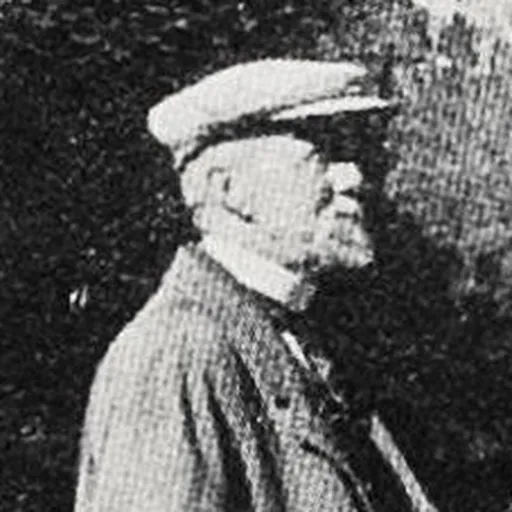
William Walter Smith
New Zealand gardener, naturalist, conservationist
About William Walter Smith
Lived 1852 – 1942 (aged 89–90). William Walter Smith was a New Zealand naturalist, conservationist, botanical collector, horticulturist and scientific collector.
William Walter Smith (14 September 1852 – 3 March 1942) was a New Zealand gardener, naturalist and conservationist. He was born in Hawick, Roxburghshire, Scotland, in 1852, and moved to New Zealand in about 1875. He was part of a five-member commission in charge of implementing the Scenery Preservation Act of 1903, which led to the creation of scenic and historic reserves, He trained as a gardener on estates in Scotland and in England's Lake District, and would have become familiar with formal gardens and the ideas of landscape designers Loudon and Robinson who created carefully crafted park lands and gardens known as 'romantic' or 'natural' gardens. From 1871, Smith worked for over three years at Burghley Estate in England. This was notable as a garden designed by Capability Brown during the eighteenth century; in his daily work Smith would have been exposed to the realisation of Brown's vision from a century before. The head gardener at Burghley stated that Smith was "skilled in practical geometry and in the laying out of grounds and in every sense of the word a very intelligent young man". Smith was interested in entomology, and had a large collection of butterflies and moths at his home in Ashburton in the 1880s.
Ashburton Domain 1894–1904 In June 1894, Smith was appointed as caretaker of the Ashburton Domain, a position that came with a lodge for his family. The 90 acre (36 ha) domain was controlled by the Ashburton Borough Council. The domain was bordered on one side by an old river channel which had been turned into an artificial lake. Smith's work included thinning out existing trees, improving paths and developing the flower beds. He created rose beds next to the lodge, and labelled trees with their botanical names. Development of the domain was slow as Smith was reliant on seeds and shrubs donated by the public. In 1903, Smith started to replant an island in the middle of the lake, using native trees and shrubs. He initially declined the position, not wanting to give up his permanent job at the Ashburton Domain for a temporary appointment, but Premier Richard Seddon met Smith and persuaded him to accept the role. Smith was assured that a permanent position would be found for him once the commission had completed its work, but this did not eventuate.
The five-person commission travelled around New Zealand inspecting scenic and historic sites to find areas that should be preserved. They looked at forest remnants that were rapidly being destroyed as farming and forestry developed, other landscape features such as waterfalls, rivers and lakes, and Māori pā sites and significant locations. In published articles and letters, he said that Kapiti should be preserved for native birdlife, and suggested that it might make a good refuge for the huia, which was then on the point of extinction. Smith is thought to have been the last "competent naturalist" to have sighted a huia. He saw three of them at Mount Holdsworth in the Tararua Range in 1907.
In November 1907, Smith was contracted as curator by the Palmerston North Borough Council to maintain its reserves, which included the Square, the Esplanade and the river banks. Before Smith arrived to begin work in early December 1907, a highly critical opinion of him was published in an anonymous letter to the editor of the Manawatu Standard. Smith was greatly offended, and wrote back defending his work in Ashburton and his interests in entomology. Trouble continued, and in February 1908 Smith resigned his position. He had a lot of support from councillors and others, but the mayor of Palmerston North was against him, calling Smith a "common cabbage gardener". Pukekura Park in 1933: "The park is regarded as one of New Zealand's most picturesque domains. On the left is Mr. W. W. Smith, a well-known Dominion authority on natural history and a former curator of Pukekura Park."
Pukekura Park, New Plymouth 1908–1920 In March 1908, Smith became curator at Pukekura Park in New Plymouth. He gained this position with the support of Percy Smith, who had been chairman of the Scenery Preservation Commission that Smith worked on a few years earlier.
Smith spent so much time writing and advising on natural history subjects that the park board began to object, so Smith resigned his position at the park in October 1920. Smith died in New Plymouth on 3 March 1942.
Legacy Smith's gardens at Ashburton and New Plymouth were very well regarded. He began with familiar British trees but soon incorporated New Zealand trees and plants into his work. He was also highly respected for his studies of plants, birds and invertebrates. Smith was aware of the rapidly changing landscape in New Zealand and wrote about the processes endangering wildlife. He could see that deforestation was affecting the climate, and knew that "as many of our plants and insects are wholly dependent on each other, any cause affecting one affects the other". During his lifetime, politician and scientist George Thomson said that Smith was “second to none in the Dominion as a field naturalist". Many of Smith's published articles and letters were cited by scientists long after his death, and several species were named after him.
Don’t just read it —
keep it.
Full-length biographies made to live with: read them, listen on the way to work, watch them tonight.
- E-book
- Audio
- Video
Instant download · yours to keep · every purchase keeps this site free
Important facts
People in William Walter Smith's life
Named in this biography and alive at the same time

Related people
Same field, nearest in time



Contemporaries
People whose lives overlapped William Walter Smith's
Frequently asked questions
Who was William Walter Smith?
New Zealand gardener, naturalist, conservationist (1852–1942)
When was William Walter Smith born?
William Walter Smith was born in 1852 in Hawick.
When did William Walter Smith die?
William Walter Smith died in 1942 in New Plymouth.
What was William Walter Smith's occupation?
William Walter Smith was a naturalist, conservationist, botanical collector, horticulturist and scientific collector.
What nationality was William Walter Smith?
William Walter Smith was New Zealand.
Sources & further reading
· Wikipedia: William Walter Smith
· DBpedia: William Smith (conservationist)
Cite this page
APA: Biography.guide. (2026). William Walter Smith. https://biography.guide/william-walter-smith/
MLA: "William Walter Smith." Biography.guide, https://biography.guide/william-walter-smith/.
Chicago: "William Walter Smith." Biography.guide. https://biography.guide/william-walter-smith/.
Data last updated: 2026-09-21 · Spot an error? Report a correction.
Portrait: Wikimedia Commons · author & licence
Page generated 2026-09-27 05:00 UTC