
William W. Robinson
Union Army colonel in the American Civil War
About William W. Robinson
Lived 1819 – 1903 (aged 83). William W. Robinson was a diplomat, military personnel and consul (representative).
William Wallace Robinson Sr. (December 14, 1819 – April 27, 1903) was a Union Army officer and American diplomat. He commanded the 7th Wisconsin Infantry Regiment in the famed Iron Brigade of the Army of the Potomac through most of the Civil War, and was U.S. consul to the Merina Kingdom of Madagascar for 12 years (1875–1887).
Early life William Robinson was born in Fair Haven, Vermont, in 1819. His parents had moved to Vermont from Connecticut after the War of 1812. He was educated at Castleton Academy in Castleton, Vermont, and then attended Norwich Military Academy.
Washington (Fall 1861Spring 1862) The 7th Wisconsin Infantry arrived near Washington in October 1861. It was the last of the original four regiments to join the brigade of General Rufus King. The other regiments of the brigade were the 2nd Wisconsin, 6th Wisconsin, and 19th Indiana infantry regiments. They spent most of the fall constructing fortifications and guarding railroad bridges around Washington, D.C. Van Dor was ultimately offered a diplomatic post, and Robinson was promoted to colonel of the 7th Wisconsin Infantry. This coincided with other leadership shake-ups in the brigade as less-experienced politically appointed officers were replaced with more qualified and experienced men. Colonel Robinson led the regiment through the next three years of the war.
Northern Virginia (Summer 1862) In the spring of 1862, the 7th Wisconsin, with their brigade, made their first advance into Confederate territory. They went south to Falmouth, Virginia, on the Rappahannock River, across from Fredericksburg, Virginia, where they remained through most of McClellan's Peninsula campaign. They were put on alert to reinforce McClellan during the campaign, but were called away to participate in a fruitless chase of Stonewall Jackson. They ultimately returned to Falmouth. General Reynolds was shot dead while giving orders to the brigade.
Overland Campaign (Summer 1864) In March 1864, General Ulysses S. Grant was appointed the commander of the Union Army in the Virginia theatre, replacing General George Meade, who had been in command since the Gettysburg Campaign. That same month, the Iron Brigade veterans returned to camp and engaged in drilling and reorganization under the new commander. For the next phase of the war, they would be the 1st Brigade, 4th Division, in Gouverneur K. Warren's V Corps.
After days of skirmishing and shelling at the fortifications around Spotsylvania Court House, V Corps was again ordered to move to the south, continuing the maneuver toward Richmond. After stopping at Guinea's Station and the Po River, they crossed the North Anna River near dusk on May 23, 1864. Colonel Robinson resigned his commission. Colonel Robinson was retained as consul by Grant's successors, Hayes, Garfield, and Arthur, and ultimately served twelve years as consul. In 1882, when a delegation of Madagascan ambassadors were being sent to tour the United States and Europe, Queen Ranavalona II personally requested that the Colonel Robinson be allowed to accompany the mission. At the time, this was seen as a rebuke of Bragg, who had been extremely active in politics and was continuing to seek higher office.
In his later years, Colonel Robinson went to live with his son, William Jr., in Seattle, Washington, where the younger Robinson was serving as U.S. Army quartermaster at Fort Lawton, supplying U.S. forces in the Pacific. Colonel Robinson died at his son's home on April 27, 1903.
Personal life and family William Robinson's father, John W. Robinson, was a lieutenant in the Connecticut Militia during the War of 1812 and was severely wounded at the Battle of Stone Mill. During his eventful career, General Robinson also served with the 7th U.S. Cavalry Regiment (after the Battle of Little Bighorn) and was with the unit sent to apprehend Sitting Bull after his surrender. General Robinson was also responsible for the donation of the family's former land in Sparta, Wisconsin, for military use. The land came to be known as Camp Robinson and is now part of Fort McCoy. Colonel Robinson refused to speak to his son-in-law for several months after the marriage, but the two later became close friends. Richardson soon received an officer's commission, then distinguished himself during the Battle of Gettysburg, running orders between regiments and rallying the men, and received an honorary brevet to brigadier general. After the war, Colonel Robinson lived for some time with Richardson and Leonora.
Don’t just read it —
keep it.
Full-length biographies made to live with: read them, listen on the way to work, watch them tonight.
- E-book
- Audio
- Video
Instant download · yours to keep · every purchase keeps this site free
Important facts
People in William W. Robinson's life
Named in this biography and alive at the same time


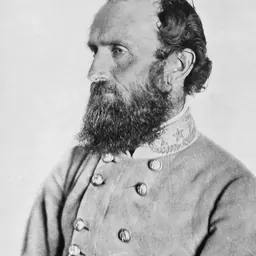
Related people
Same field, nearest in time




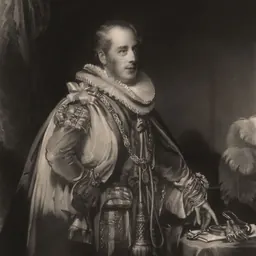
Contemporaries
People whose lives overlapped William W. Robinson's


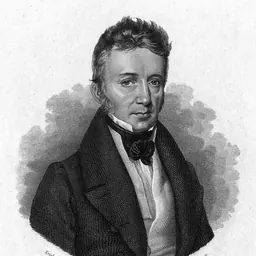

Frequently asked questions
Who was William W. Robinson?
union Army colonel in the American Civil War (1819-1903)
When was William W. Robinson born?
William W. Robinson was born on 14 December 1819.
When did William W. Robinson die?
William W. Robinson died on 27 April 1903.
What was William W. Robinson's occupation?
William W. Robinson was a diplomat, military personnel and consul (representative).
Sources & further reading
· Wikipedia: William W. Robinson
· DBpedia: William W. Robinson
Cite this page
APA: Biography.guide. (2026). William W. Robinson. https://biography.guide/william-w-robinson/
MLA: "William W. Robinson." Biography.guide, https://biography.guide/william-w-robinson/.
Chicago: "William W. Robinson." Biography.guide. https://biography.guide/william-w-robinson/.
Data last updated: 2026-09-20 · Spot an error? Report a correction.
Page generated 2026-09-27 05:21 UTC