
About William V. Judy
Lived 1938 – 2022 (aged 83–84). William V. Judy was a writer.
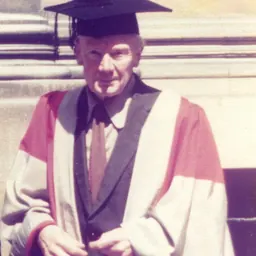
William V. Judy, Ph.D. (April 16, 1938 – October 30, 2022) was an American author, clinical researcher, clinical trial consultant, and retired professor of physiology and biophysics. He was first introduced to the field of Coenzyme Q10 clinical research by Karl Folkers, the American bio-chemis t who determined the structure of the Coenzyme Q10 molecule.
Judy managed randomized controlled trials into the safety and efficacy of Coenzyme Q10 supplementation for patients with heart failure, chronic fatigue syndrome, Parkinson's disease or prostate cancer. He was instrumental in the treating of children with Prader-Willi syndrome with Coenzyme Q10. He also did an extensive study of the absorption and bio-availability of various formulations of Coenzyme Q10 supplements.
In 1995, Judy founded the SIBR Research Institute, of which he was the president. The SIBR Research Institute helps develop clinical trial protocols to test the safety and efficacy of natural products. It is a full-service clinical research institute. Judy was the author of numerous scholarly journal articles, college textbooks, and the book The Substance That Powers Life: Coenzyme Q10, An Insider's Guide.
Judy died on October 30, 2022, at the age of 84.
Education and early career Judy did his undergraduate studies in Anatomy and Physiology at the University of Kentucky in Lexington, KY. He then did graduate study in bio-physics and physiology at the University of Kentucky from which he graduated with the successful defense of his MS degree thesis in 1963. The title of his thesis was Calorigenic Response of Warm and Cold-Adapted Rabbits to Intravenous Infusion of Epinephrine and Norepinephrine. He earned his Ph.D. at the West Virginia Medical School, Morgantown, West Virginia (1971) after defending his dissertation Sympathetic Nervous System Control of Renal Hemodynamics.
For a number of years, from 1963 to 1968, Judy worked in the field of bio-physics at the Manned Space Craft Center in Houston, Texas, and at Cape Canaveral in Florida. He conducted in-flight medical experiments on the Gemini and Apollo missions. He was the first to put an artificial gravitational force on the venous circulation in the prevention of orthostatic hypotension. He also monitored contracts with universities and space program industry corporations that were doing contract work for NASA. In 1985, Judy conducted a successful five-year study in Class IV congestive heart failure patients.
Moreover, in 1986, Judy published the results of a double-blind, crossover study of the effect of Coenzyme Q10 on patients with cardiac disease. The study data showed that improvement in cardiac pumping and contractibility came, typically, within 30 to 60 days of daily supplementation with 100 milligrams of Coenzyme Q10. Peak response came, generally, with 90 days of supplementation. Coenzyme Q10 supplementation did not improve heart function quickly but did result in significantly increased long-term improvement. Furthermore, if the Coenzyme Q10 treatment was discontinued, then the patients' heart function gradually decreased.
In 1991, Judy reported the subsequent findings from the long-term management of heart failure patients with adjunctive Coenzyme Q10 treatment. He reported that Coenzyme Q10 is a safe and naturally occurring mediator of the process of cellular bio-energetics well-suited for long-term use. Coenzyme Q10 is not a fast-acting substance in heart failure. If the patient's condition is so severe that he or she does not have 40 – 60 to respond, then the CoQ10 treatment is likely to be ineffective. Once the patient responds to the Coenzyme Q10 treatment, however, and his or her heart function begins to improve, then the clinical course becomes more stable and the patient's condition is easier to manage. Improvement of one or two NYHA functional classes is likely. Coenzyme Q10 adjunctive treatment of heart failure patients is a long-term therapy because patients whose Coenzyme Q10 treatment is discontinued will have a clinical relapse.
Clinical relapse after discontinuation of long-term Coenzyme Q10 therapy did not follow the same course as clinical relapse after discontinuation of short-term Coenzyme Q10 therapy. The relapse after the withdrawal of short-term Coenzyme Q10 therapy tended to be a rapid relapse followed by deterioration of heart function; the relapse after the withdrawal of long-term Coenzyme Q10 therapy was delayed and reduced by comparison.
In summary, long-term management of severe heart failure patients with 100 milligrams of Coenzyme Q10 per day in conjunction with conventional therapy showed that 70% responded to the Coenzyme Q10 treatment albeit fairly slowly. Peak improvements came, typically, within 8–12 months. Survival (1–8 years) in the Coenzyme Q10 group was greater than in a matched control group (n=90) treated with conventional drugs only. The results of this early study showed that long-term Coenzyme Q10 therapy is safe, is effective in chronic heart failure patients with measurable CoQ10 deficiency, and is associated with improved long-term survival compared to conventionally treated patients.
Judy's clinical studies of Coenzyme Q10 supplementation of heart failure patients are the forerunners of the international multi-center Q-Symbio Study of the Effect of Coenzyme Q10 on Morbidity and Mortality in Chronic Heart Failure. In that study, 106 weeks of adjunctive treatment of chronic heart failure patients with 3 times 100 milligrams of a daily ubiquinone Coenzyme Q10 supplement in addition to conventional heart failure medicine was associated with significant reductions in major adverse cardiovascular events, cardiovascular mortality, all-cause mortality, and hospitalizations as compared to placebo.
Patients in both groups had a documented blood Coenzyme Q10 deficiency (< 0.6 micrograms per milliliter), low cardiac index (< 2.4 L/m2 per minute), and low left ventricular ejection fraction (< 35%) prior to the Coenzyme Q10 treatment.
The average time to a discernible change in exercise tolerance and recovery time was 30 days in the group of patients who took 300 milligrams of Coenzyme Q10 daily and 60 days in the group of patients that took 100 milligrams of Coenzyme Q10 daily. The increased dosage of Coenzyme Q10 yielded greater effectiveness. By 180 days, patients in both groups had experienced significant improvements in exercise tolerance and recovery time. Interestingly, despite the statistically significant increases, the chronic fatigue syndrome patients supplemented with Coenzyme Q10 could not reach the exercise tolerance levels of normal individuals, at least not within 180 days of supplementation. The KiSel-10 Study of combined Coenzyme Q10 and selenium supplementation of senior citizens for years has shown that daily supplementation with 2 times 100 milligrams of Coenzyme Q10 and 200 micrograms of selenium is associated with significant reduction of cardiovascular mortality, significant improvement of heart function, and significant improvement of health-related quality of life.
Cancer Folkers and Judy did case studies of the effects of Coenzyme Q10 on various cancers in patients with congestive heart failure. Coenzyme Q10 put the cancers into remission, improved heart function, and reduced the degree of heart failure.
In 1998, Judy reported that PSA and prostate mass decreased following the treatment of prostate cancer patients with high dosages of Coenzyme Q10 (600 milligrams per day). However, the Coenzyme Q10 treatment did not take effect rapidly. It took 60–80 days before the researchers began to see a drop in the PSA scores and the prostate mass measurements. By 180 days of supplementation, PSA and prostate mass were significantly reduced in all of the responding patients. At 360 days of supplementation, PSA and prostate mass were reduced by 73.6% and 48.4%, respectively.
In the study, Judy and his co-researchers started the Coenzyme Q10 supplementation at a dosage of 100 milligrams per day three to five days before the adriamycin treatment began. The Coenzyme Q10 treatment proved to be effective in cancer patients with normal cardiac function prior to the commencement of the adriamycin treatment. These Coenzyme Q10-treated patients could take a significantly higher total accumulated dosage of adriamycin without any significant changes in cardiac hemodynamics or kinetics as compared to chemotherapy patients not on Coenzyme Q10.
Non-invasive transthoracic bio-electrical impedance method Already in 1981, Judy did a study showing that the transthoracic electrical impedance method for measuring cardiac output in humans warranted further consideration as a non-invasive clinical tool that will be applicable in the investigation of the hemodynamics of normal and altered physiological states.
As a graduate student and NIH fellow at Baylor University Medical School (1963), Judy was introduced to the bioelectrical impedance method as a noninvasive means of measuring stroke volume and cardiac output. He helped develop this method for space flight in 1964 and 1965. He implemented this system in the clinical arena in 1971. After 56 years of development, this technology has drastically improved as a result of Judy's research. Total cardiac function can be measured by this system. The measurements include not only stroke volume and cardiac output but also left ventricular end diastolic filling volume and ejection fraction.
Using a scanning system, total coronary blood flow can be measured as well as the location and magnitude of inter-vascular stenosis. These systems are used around the world in clinical screening of cardiac function and in research. The non-invasive bioelectrical impedance technology is a low-cost high technology system designed by Judy as a solution to high cost of cardiac diagnostic procedures.
Research findings Judy's research into the absorption, bio-availability, and clinical effects of Coenzyme Q10 have led him to the following conclusions:
The oxidized form, ubiquinone, is the more stable and better documented form of Coenzyme Q10. It is an electron acceptor. It is essential in the process of cellular ATP energy generation. The reduced form, ubiquinol, is the antioxidant form. It is an electron donor. It neutralizes superoxides and harmful free radicals. By its nature, it is less stable than the ubiquinone form. The benzoquinone head and the isoprene tail of the ubiquinone molecule are created in the mitochondria, the endoplasmic reticulum, and in organelles called peroxisomes. The head and the tail section are joined in a condensation reaction. Ubiquinol is converted from ubiquinone by oxidoreductase enzymes. In the Coenzyme Q10 cycle, all three redox forms of Coenzyme Q10 – ubiquinone, ubiquinol, and the unstable intermediate form semiubiquinone – are converted from one form to the other. Regardless of whether the oral Coenzyme Q10 supplement is ingested in the ubiquinone form or the ubiquinol form, the Coenzyme Q10 will be absorbed in the ubiquinone form and will be rapidly converted to the ubiquinol form in the lymph. It will enter the blood circulation predominantly in the ubiquinol form.
Don’t just read it —
keep it.
Full-length biographies made to live with: read them, listen on the way to work, watch them tonight.
- E-book
- Audio
- Video
Instant download · yours to keep · every purchase keeps this site free
Important facts
Related people
Same field, nearest in time



Contemporaries
People whose lives overlapped William V. Judy's



Frequently asked questions
Who was William V. Judy?
American author & academic (1938-2022)
When was William V. Judy born?
William V. Judy was born in 1938.
When did William V. Judy die?
William V. Judy died on 30 October 2022.
What was William V. Judy's occupation?
William V. Judy was a writer.
Sources & further reading
Cite this page
APA: Biography.guide. (2026). William V. Judy. https://biography.guide/william-v-judy/
MLA: "William V. Judy." Biography.guide, https://biography.guide/william-v-judy/.
Chicago: "William V. Judy." Biography.guide. https://biography.guide/william-v-judy/.
Data last updated: 2026-09-20 · Spot an error? Report a correction.
Page generated 2026-09-27 05:07 UTC