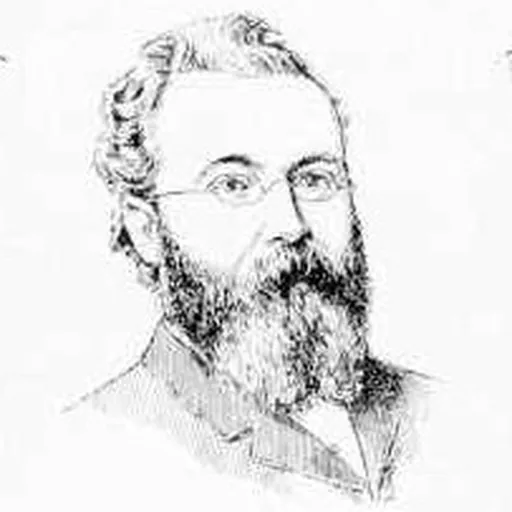
About William Thwaites
Lived 1853 – 1907 (aged 54). William Thwaites was an Australian civil engineer and engineer.
William Thwaites (1853–1907) was a civil engineer working in Melbourne, Australia, in the late nineteenth and early twentieth centuries. He was responsible for the design of Melbourne's sewerage system and supervised its construction.
Early life and training Thwaites was born in Melbourne, Australia, on 13 August 1853, the son of cabinet maker Thomas Henry Thwaites (1826-1912) and Eliza Thwaites née Raven (1831-1907), who were married on 16 September 1851.
Thwaites was educated at the Model School in Spring Street in the 1860s. In about 1858, his family moved to 64 Little Collins Street East. Thwaites trained at the University of Melbourne under the well-known engineer William Charles Kernot, obtaining the certificate of Civil Engineering and Master of Arts in 1876. Thwaites also designed a system of service reservoirs to serve the expanding Melbourne suburbs, including ones at Essendon, Caulfield and Preston. However, a major failure during that period was the cracking of the new water main over Merri Creek from the Yan Yean reservoir, which W.C. Kernot showed was caused by errors in Thwaites' and Davidson's design.
In 1883, Thwaites was appointed Engineer, Roads, Bridges and Drainage, in the PWD, and undertook a series of swamp reclamation schemes, including the Port Melbourne Lagoon (1885), West Melbourne Swamp, Moonee Ponds Creek, Koo-Wee-Rup Swamp (1890), the Moe River and Lake Condah, although the last was completed by Carlo Catani. In 1889, Thwaites also designed the system for pumping water to the Melbourne Botanic Gardens from Dights Falls on the Yarra River. He became a councillor of the Institute of Surveyors in 1887, was made a member of the Institution of Civil Engineers (ICE), London, in 1889, and was the Australasian representative on the ICE council from 1899 to 1901.
He was made a co-examiner in engineering at the University of Melbourne and held a position on the University Council from 1890, including the subcommittee which set the course of mathematics in engineering degrees, continuing into the 20th century when Kernot was waning.
Melbourne sewerage system Thwaites' greatest achievement was the design of Melbourne's underground sewerage scheme and the supervision of its construction. At the time, it was the largest civil engineering project in the history of Victoria. Other changes were the construction of a single pumping station at Spotswood and a single sewage treatment farm at Werribee.
Illness and death After being "seized with illness", Thwaites died in San Remo on 19 November 1907, from uraemia and pneumonia.
Don’t just read it —
keep it.
Full-length biographies made to live with: read them, listen on the way to work, watch them tonight.
- E-book
- Audio
- Video
Instant download · yours to keep · every purchase keeps this site free
Important facts
People in William Thwaites's life
Named in this biography and alive at the same time



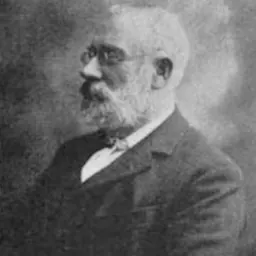

Related people
Same field, nearest in time
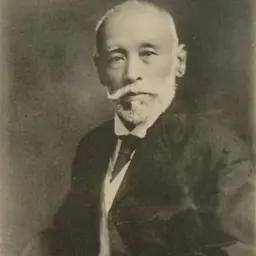


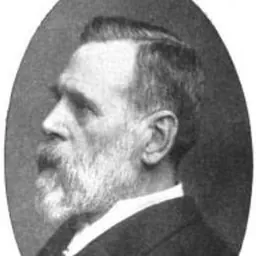
Contemporaries
People whose lives overlapped William Thwaites's



Frequently asked questions
Who was William Thwaites?
Civil engineer in Australia
When was William Thwaites born?
William Thwaites was born on 13 August 1853 in Melbourne.
When did William Thwaites die?
William Thwaites died on 19 November 1907 in San Remo.
What was William Thwaites's occupation?
William Thwaites was a civil engineer and engineer.
What nationality was William Thwaites?
William Thwaites was Australian.
Sources & further reading
· DBpedia: William Thwaites (engineer)
Cite this page
APA: Biography.guide. (2026). William Thwaites. https://biography.guide/william-thwaites/
MLA: "William Thwaites." Biography.guide, https://biography.guide/william-thwaites/.
Chicago: "William Thwaites." Biography.guide. https://biography.guide/william-thwaites/.
Data last updated: 2026-09-23 · Spot an error? Report a correction.
Portrait: Wikimedia Commons · author & licence
Page generated 2026-09-27 05:04 UTC