
About William Smith
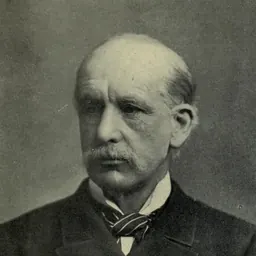
William Smith was a British poet.
William Smith (15??-16??) was an English poet who published a sonnet sequence entitled Chloris in 1596. Nothing is known about his life except that he moved in the circles of Edmund Spenser, whom he considered a mentor and to whom he dedicated Chloris, and Sir Philip Sidney, to whose sister he dedicated at least one and possibly two poems preserved only in manuscripts.
Works Smith's sonnet sequence, Chloris, or the Complaint of the Passionate Despised Shepheard, was published in 1596 by the London printer Edmund Bollifant. The collection consists of 53 poems, most but not all of them sonnets, combining the Petrarchan convention of unhappy love with a pastoral setting inspired by Spenser's Shepheardes Calender. The first and last poems in the collection are addressed to "Colin Cloute", i.e. Spenser, whom Smith describes as "the patron of my maiden verse". but otherwise the collection seems to have attracted little attention, and it was not reprinted until the 19th century. and assumed to be an autograph by Smith himself. The poem is an allegory in which Time explains his attributes and introduces his legitimate family (Opportunity, Patience, Experience) and his bastard children (Excuse, Protraction, and Deceit). and Nicholas Breton's The Will of Wit, Wit's Will, or Will's Wit, Chuse You Whether (1597). The lyric "My thoughts are wingde with hopes, my hopes with love", first printed in John Dowland's First Book of Songes or Ayres (1597) and reprinted in Englands Helicon, has been variously attributed to Smith, George Clifford (Earl of Cumberland), Fulke Greville, John Lyly, and Sir Walter Raleigh. In the absence of evidence to support the identifications, all of these attributions are speculative. A poem entitled "A Notable Description of the World" and printed in The Phoenix Nest, a miscellany published in 1593, shares some characteristics with the allegory of Time in the Yale manuscript, and may have a slightly stronger claim to be Smith's work.
Several plays signed "W. Smith" and occasionally in the past attributed to William Smith are now usually assumed to have been written by the playwright Wentworth Smith.
Modern editions A. B. Grosart, ed., Chloris by William Smith (1596) (Manchester 1877). A privately printed edition limited to 50 copies. E. Arber, ed., An English Garner, vol. VIII (London 1896), pp. 171–199. Reprints Chloris (but omits sonnet 47). M. F. Crowe, ed., Elizabethan Sonnet-Cycles: Idea by Michael Drayton, Fidessa by Bartholomew Griffin, Chloris by William Smith (London 1897). Reprints Chloris (complete). S. Lee, ed., Elizabethan Sonnets (London 1904), vol. II, pp. 321–349. Reproduced from Arber's edition; reprints Chloris (but omits sonnet 47). L. A. Sasek, ed., The Poems of William Smith (Baton Rouge 1970). Reprints Chloris (complete) together with A Newyeares Guifte Made upon Certen Flowers from the British Library MS. K. T. Van den Berg, "An Elizabethan Allegory of Time by William Smith", English Literary Renaissance 6.1 (1976), pp. 40–59. Reprints An Allegory of Time from the Yale MS.
Don’t just read it —
keep it.
Full-length biographies made to live with: read them, listen on the way to work, watch them tonight.
- E-book
- Audio
- Video
Instant download · yours to keep · every purchase keeps this site free
Important facts
Related people
Same field, nearest in time



Frequently asked questions
Who was William Smith?
English sonneteer, poet, and friend of Edmund Spenser
What was William Smith's occupation?
William Smith was a poet.
What nationality was William Smith?
William Smith was British.
Sources & further reading
· DBpedia: William Smith (poet)
Cite this page
APA: Biography.guide. (2026). William Smith. https://biography.guide/william-smith-poet/
MLA: "William Smith." Biography.guide, https://biography.guide/william-smith-poet/.
Chicago: "William Smith." Biography.guide. https://biography.guide/william-smith-poet/.
Data last updated: 2026-09-20 · Spot an error? Report a correction.
Page generated 2026-09-27 05:33 UTC