
About William Smith Fraser
Lived 1852 – 1897 (aged 44). William Smith Fraser was an architect.
Fraser's original Joseph Horne Co. department store as it appeared in 1893
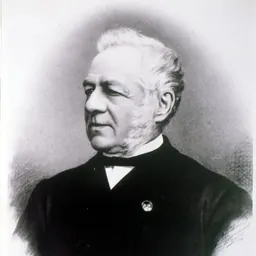
William Smith Fraser (July 19, 1852 – April 27, 1897) was an American architect based in Pittsburgh, Pennsylvania. Fraser is best known for his designs for the Herron Hill Pumping Station (1896), a City of Pittsburgh Historic Structure, and the original Joseph Horne Company Department Store (1893), a Pittsburgh History and Landmarks Foundation Historic Landmark, though substantially rebuilt by later architects.
Fraser was born July 19, 1852, in Wellsville, Ohio and studied architecture in New York City and in the office of William Burges in England. In 1879, he opened his architectural practice in Pittsburgh. In all, he completed about 50 commissions for homes, churches, schools, and commercial buildings, in a variety of styles, before his death from cancer in 1897. These included two of Pittsburgh's earliest skyscrapers: the National Bank of Commerce Building (1888), a steel-framed highrise completed just three years after the pioneering Home Insurance Building in Chicago (credited as the world's first skyscraper), and the Arbuthnot-Stephenson Building (1891), which was reported to be the city's tallest commercial building at . Other major works included the Arbuckles & Co. Warehouse (1882); Sixth United Presbyterian Church (1894), now Eastminster Presbyterian Church; Horne Office Building (1894); and Lockhart Building (1895), a contributing property in the Penn–Liberty Historic District.
Fraser was an early proponent of fireproof construction, using clay tile to protect structural members in larger buildings like the National Bank of Commerce, Arbuthnot-Stephenson, and Horne buildings. In 1897, the Horne department store was one of the first fireproof buildings to experience a major fire, which became an important case study for engineers and influenced the design of future buildings. Although the steel frame survived with only moderate damage, the building was nevertheless mostly destroyed. William Harvey Birkmire, in his 1898 book The Planning and Construction of High Office-Buildings, summarized the lessons learned from the Horne fire:
Fraser died on April 27, 1897, one week before the fire and did not see his fireproof design put to the test. The store was rebuilt by the Boston-based architects Peabody and Stearns. Fraser was interred at Homewood Cemetery.
After Fraser's death, two of his draftsmen, Thomas Hannah and Fraser's nephew William F. Struthers, took over the firm, which was renamed Struthers & Hannah.
Works
Fraser's more significant works include: Wellsville High School (1880), Wellsville, Ohio - demolished Arbuckles & Co. Office and Warehouse (1883), 808 Liberty Ave., Pittsburgh - demolished Freedman's Mission School (1884), Norfolk, Virginia - demolished Standard Oil Company Office Building (1884), 8th St. and Fort Duquesne Blvd., Pittsburgh - demolished H. L. Richmond Jr., House (1885), Meadville, Pennsylvania Pittsburgh Daily Post Building (1886), Wood St. and Oliver Ave., Pittsburgh - demolished National Bank of Commerce Building (1890), Wood St. and 6th Ave., Pittsburgh - demolished Houses at 512 and 518 Shady Ave. (1890), Pittsburgh John Renshaw House (1890), 5131 Ellsworth Ave., Pittsburgh Keystone Bank Building (1890), 108 4th Ave., Pittsburgh - demolished Arbuthnot–Stephenson Building (1891), Penn Ave. and 8th St., Pittsburgh - demolished W. S. Fraser House (1891), 5655 Stanton Ave., Pittsburgh Sharpsburg YMCA (1892), Sharpsburg, Pennsylvania - altered Joseph Horne Company (1893), Penn Ave. and Stanwix St., Pittsburgh - demolished Hamilton Avenue United Presbyterian Church (1893), Hamilton Ave. and Lang St., Pittsburgh - altered Wilson Hall, Indiana University of Pennsylvania (1893), Indiana, Pennsylvania Joseph Horne Office Building (1894), Penn Ave. and Cecil Pl., Pittsburgh Eastminster Presbyterian Church (1894), 250 N Highland Ave., Pittsburgh Lockhart Building (1895), 908–910 Penn Ave., Penn–Liberty Historic District, Pittsburgh Herron Hill Pumping Station (1896), 4501 Centre Ave., Pittsburgh Greensburg High School (1897), Greensburg, Pennsylvania - demolished Edward L. Dawes House (1897), New Brighton, Pennsylvania
Don’t just read it —
keep it.
Full-length biographies made to live with: read them, listen on the way to work, watch them tonight.
- E-book
- Audio
- Video
Instant download · yours to keep · every purchase keeps this site free
Important facts
People in William Smith Fraser's life
Named in this biography and alive at the same time



Related people
Same field, nearest in time


Contemporaries
People whose lives overlapped William Smith Fraser's
Frequently asked questions
Who was William Smith Fraser?
American architect
When was William Smith Fraser born?
William Smith Fraser was born on 19 July 1852 in Wellsville.
When did William Smith Fraser die?
William Smith Fraser died on 27 April 1897 in Pittsburgh.
What was William Smith Fraser's occupation?
William Smith Fraser was an architect.
Sources & further reading
· Wikipedia: William Smith Fraser
· DBpedia: William Smith Fraser
Cite this page
APA: Biography.guide. (2026). William Smith Fraser. https://biography.guide/william-smith-fraser/
MLA: "William Smith Fraser." Biography.guide, https://biography.guide/william-smith-fraser/.
Chicago: "William Smith Fraser." Biography.guide. https://biography.guide/william-smith-fraser/.
Data last updated: 2026-09-24 · Spot an error? Report a correction.
Page generated 2026-09-27 05:05 UTC