
William Rufus Rogers Stowell
Mormon pioneer
About William Rufus Rogers Stowell
Lived 1822 – 1901 (aged 78–79).
William Rufus Rogers Stowell (September 23, 1822 – May 30, 1901) was a Mormon pioneer and early member of the Church of Christ (Latter Day Saints) established by Joseph Smith. Stowell was instrumental in establishing many settlements along the main Pioneer route between Nauvoo and Salt Lake City from 1846 to 1850, entering the Great Salt Lake Valley in 1850. After his arrival, Stowell also assisted in establishing many settlements in Utah including Fillmore, Ogden and Provo. Stowell's life is also notable for his role in the Utah War (1857-58), where he served as a lieutenant. The reports he gave to U.S. commanders during his capture likely delayed the overall conflict, buying the time needed to negotiate and reduce tensions on both sides.
Early life Stowell was born on September 23, 1822, in Solon, Oneida County, New York. In August 1825, his family moved to Westfield, Chautauqua County, New York, which was “heavily timbered country, requiring great labor to clear the ground for cultivation.” His father Augustus was a licensed attorney at law in the state of New York.
In Nauvoo, Stowell became acquainted with Joseph Smith, and was eventually ordained an elder and a seventy by Joseph Smith and George A. Smith before being called on a mission to campaign for Joseph Smith for president. Stowell received his patriarchal blessing from Hyrum Smith.
Mormon pioneer
After the death of Joseph Smith in 1844, Stowell returned to Nauvoo, where he married Hannah Topham on Christmas Day 1844. Stowell assisted in the construction of the Nauvoo Temple and received his endowments in February 1846. When the Saints began leaving Nauvoo under mob pressure, Stowell assisted in ferrying many wagons across the Mississippi River before finally ferrying across himself in February 1846.
Stowell established homesteads in many settlements, building cabins and planting crops before handing them over to families traveling west before moving to the next homestead and starting again. He built homesteads in Shoal Creek, IA (1846), Garden Grove, IA (1846), Council Bluffs, IA (1847–49), and Nodaway County, MO (1849). William and Hannah's son William John, was born February 11, 1848, and died November 29, 1848, while living at Council Bluff, IA.
In late fall, early winter 1849, Apostle John Taylor stayed at Stowell's home in Missouri on his way to his latest mission assignment in Europe. While staying there, Stowell reported Apostle Taylor asking him, "hen are you going to the mountains?" Taylor instructed Stowell, "When the next emigration is ready to go.... be on the banks of the Missouri River ready to go with them."
When Stowell's company met up with Lt. General Daniel H. Wells, they exchanged information and new orders for the battalion. Stowell, being Major Joseph Taylor's adjutant, had the duty of carrying correspondence and letters to deliver to various command posts further up the line. Stowell carried a group of correspondence after the meeting with Wells, including orders from Wells to Joseph Taylor, Orin Porter Rockwell, John McAllister, Robert Burton, Lot Smith and others operating in the Echo Canyon region. On October 16, Stowell and Taylor encountered a camp in the fog ahead of them. Supposing them to be the battalion of Lot Smith, they approached, not realizing it was a detachment of US Army soldiers. Stowell remained a prisoner of war for the remainder of the conflict. On January 5, 1858, Justice Eckels held a court proceeding where Stowell was arraigned in person on behalf of all of the defendants on charges of high treason. Stowell pled not guilty and requested more time to prepare for trial. Not believing he would get a fair trail, Stowell devised a plan to escape which he executed soon after the proceedings. However, after escaping on foot heavy snowfall thwarted his escape attempt and he was forced to turn back to Camp Scott to avoid freezing. Stowell's food rations were greatly reduced as punishment for the attempted escape. Kane met with Brigham Young in Salt Lake City and although he was a non-Mormon, he and Young had a warm friendship dating back before the Pioneers had left Nauvoo. Young directed Kane to “please learn what you can in regard to Stowel, and what their intentions are toward him."
After his meeting with Brigham Young, Kane traveled to Camp Scott arriving on March 10, 1858. After deliberations, Governor Cumming and a small non-military escort which included Thomas Kane, left Camp Scott on April 5 and traveled to Salt Lake to formally install the new Governor. Governor Cumming was welcomed to Utah by "its most distinguished citizens" on April 12, 1858. Three days later, word was sent to Colonel Johnston that the governor had been properly received by the people and was able to fully discharge his duties as governor.
Governor Cumming arrived back to Camp Scott in the third week of May to retrieve his belongings and begin preparations for his family to travel to the Salt Lake valley. He also sent Cynthia's letter to be delivered to William. When William received it, he sought a meeting with the governor. The governor was reportedly astonished to see Stowell's condition. After four months of reduced rations, Stowell was severely emaciated and dirty with an iron ball and chain attached to one leg. Stowell reports the governor "wiped tears from his eyes" at the site of his condition.
While in Mexico, Stowell operated a gristmill that supplied flour to Colonia Juarez and nearby colonies. He was ordained a Patriarch in the Church of Jesus Christ of Latter-day Saints in December 1895.
After a trip to Utah and Idaho in May 1901, Stowell traveled back to Colonia Juarez. He contracted pneumonia soon afterward and died at his home on May 30, 1901. He was 78.
Don’t just read it —
keep it.
Full-length biographies made to live with: read them, listen on the way to work, watch them tonight.
- E-book
- Audio
- Video
Instant download · yours to keep · every purchase keeps this site free
Important facts
People in William Rufus Rogers Stowell's life
Named in this biography and alive at the same time
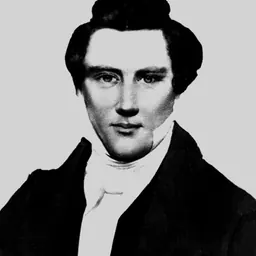

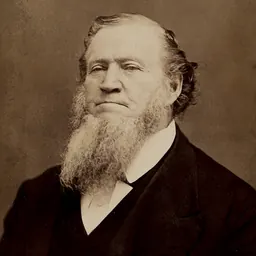


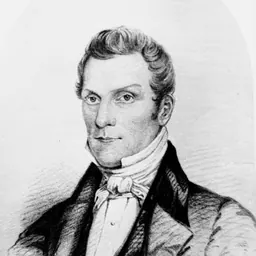
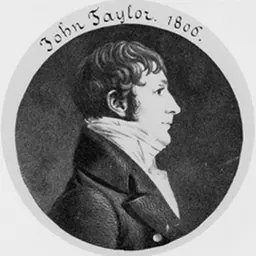

Contemporaries
People whose lives overlapped William Rufus Rogers Stowell's





Frequently asked questions
Who was William Rufus Rogers Stowell?
mormon pioneer
When was William Rufus Rogers Stowell born?
William Rufus Rogers Stowell was born in 1822.
When did William Rufus Rogers Stowell die?
William Rufus Rogers Stowell died in 1901.
Sources & further reading
· Wikipedia: William Rufus Rogers Stowell
· DBpedia: William Rufus Rogers Stowell
Cite this page
APA: Biography.guide. (2026). William Rufus Rogers Stowell. https://biography.guide/william-rufus-rogers-stowell/
MLA: "William Rufus Rogers Stowell." Biography.guide, https://biography.guide/william-rufus-rogers-stowell/.
Chicago: "William Rufus Rogers Stowell." Biography.guide. https://biography.guide/william-rufus-rogers-stowell/.
Data last updated: 2026-09-20 · Spot an error? Report a correction.
Page generated 2026-09-27 05:02 UTC