
About William Rufane
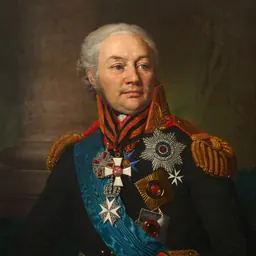
William Rufane was a military leader.
William Rufane (died 14 February 1773) was a British soldier who fought in the Seven Years' War, was governor of Martinique in 1762–63 and rose to the rank of lieutenant-general.
Early career
William Rufane was from a family that originated in France, and seems to have formerly been named Ruffane or Ruffine. His brother, Henry Rufane, was a linen draper before joining the navy. He rose to the rank of captain, and was court-martialed for cowardice in an action at sea in July 1745, but later acquitted. William Rufane joined the army in 1721. He was commissioned ensign on 8 February 1722. For many years he served in what would become the 24th Regiment of Foot. He was commissioned captain of Brigadier Thomas Wentworth's Regiment of Foot on 27 September 1737. Rufane was appointed major of the 24th in 1741. On 9 February 1751 Rufane was made lieutenant colonel of the regiment of foot commanded by William Kerr, Earl of Ancram, and William Godfrey, major. By 1752, the 24th Regiment was under the command of Edward Cornwallis and Rufane was posted to Minorca until 1756.
Seven Years War
During the Seven Years War (1756–1763) Britain and France struggled for supremacy in North America. After initial French victories, the British captured Louisbourg in 1758, Quebec City and Guadeloupe in 1759 and Montreal in 1760. On 16 January 1761 Rufane took over command from George Forbes as colonel of the 76th Regiment of Foot. At the capture of Belle Île off the coast of France in 1761 he served with distinction under Lieutenant General Studholme Hodgson. He was then transferred to the West Indies. The 76th participated in the capture of Martinique in early 1762. Robert Monckton left Barbados on 5 January 1762 bound for Martinique with an army of about 14,000 troops and a black labour force of 1,500. After abandoning an attempt on Pigeon Island in Fort Royale Bay, the army disembarked without opposition in Cas Navires Bay on 16 January 1762. The advance on the French positions began on 24 January, the citadel surrendered on 3 February and the remaining French forces capitulated on 14 February 1762.
Governor of Martinique
Monckton appointed Brigadier General William Rufane governor and commander in chief of Martinique and its dependencies on 8 May 1762. Captain Robert Donkin, the future general, was a member of Governor Rufane's staff. On 10 July 1762 Rufane was promoted to major general.
A letter of 2 June 1762 from Rufane to Charles Wyndham, 2nd Earl of Egremont reports that Rufane had ordered a census taken of the inhabitants, free 'Negroes', Mulattos and slaves, with the state of their plantations, etc. He needed additional vessels to prevent smuggling and improve communications. The inhabitants of Saint Lucia had been disarmed and sworn to allegiance, and submissions had been received from Saint Vincent. A tax on houses and 'Negroes' had been raised to provide provisions for troops as military funds were almost exhausted. In a letter from Rufane to Egremont dated 19 July 1762 he enclosed the census and representations from Mr MacLean, receiver general and collector, on matters relating to trade on which he needed instructions. Rufane asked for instructions on various matters concerning the government of the island, and reported difficulties in dealing with criminal matters and taxation. He had issued an ordinance that required all agreements between French and English to be recorded in both languages and signed by both parties before witnesses, except where money is paid on the spot.
The Treaty of Paris was signed on 10 February 1763 by France, Britain and Spain. Spain ceded Florida to Britain. France ceded Île-Royale (Cape Breton Island), Canada (Quebec), the Great Lakes Basin and the land east of the Mississippi River. Britain returned France's West Indian possessions, including Martinique, as well as the French trading posts in India and the slaving station on the Île de Gorée in what is now Senegal.
Don’t just read it —
keep it.
Full-length biographies made to live with: read them, listen on the way to work, watch them tonight.
- E-book
- Audio
- Video
Instant download · yours to keep · every purchase keeps this site free
Important facts
Related people
Same field, nearest in time





Frequently asked questions
Who was William Rufane?
British Army general
When did William Rufane die?
William Rufane died on 14 February 1773 in Saint Vincent (Antilles).
What was William Rufane's occupation?
William Rufane was a military leader.
Sources & further reading
Cite this page
APA: Biography.guide. (2026). William Rufane. https://biography.guide/william-rufane/
MLA: "William Rufane." Biography.guide, https://biography.guide/william-rufane/.
Chicago: "William Rufane." Biography.guide. https://biography.guide/william-rufane/.
Data last updated: 2026-09-20 · Spot an error? Report a correction.
Page generated 2026-09-27 05:22 UTC