
About William Rooke Creswell
Lived 1852 – 1933 (aged 80). William Rooke Creswell was a British and Australian naval officer, vice admiral and farmer.
Vice Admiral Sir William Rooke Creswell, (20 July 1852 – 20 April 1933) was an Australian naval officer, commonly considered to be the 'father' of the Royal Australian Navy.
Early life and family Creswell was born in Gibraltar, son of Edmund Creswell (head of the postal service at Gibraltar and for the Mediterranean), and Margaret Mary Ward, née Fraser. He was educated at Gibraltar and Eastman's Royal Naval Academy, Southsea.
Creswell's brother Edmund (1849–1931) played for the Royal Engineers in the first FA Cup Final in 1872. Another brother, Frederic (1866–1948) was a Labour Party politician in South Africa, who was Minister of Defence from 1924 to 1933.
Naval career Beginning his naval career at the age of 13 as a cadet on the Royal Navy's training ship Britannia, Creswell was promoted to midshipman in 1867 and on 20 October 1871 became a sub-lieutenant. but his wound meant returning to England to recuperate. Creswell's next seagoing appointment, to the East India Station, was followed by a period in Zanzibar, where he commanded a flotilla involved in suppressing the slave trade. Illness, however, again forced his return to England.
Creswell retired from the Royal Navy in 1878 and, seeking to become a pastoralist, he emigrated to Australia in 1879. A stint in the Northern Territory, however, convinced Creswell that he was ill-suited to outback life. During a visit to Adelaide in 1885 he met a former naval colleague and was convinced to take up an appointment as First Lieutenant on South Australia's only naval vessel, HMCS Protector, a posting he very much enjoyed.
As part of the 1897 Diamond Jubilee Honours Creswell was appointed a Companion of the Order of St Michael and St George (CMG).
Creswell soon began agitating for the establishment of an Australian naval force to supplement the Royal Navy squadron based in Sydney. In mid-1895, he reached the rank of captain; by 1899, he was arguing strongly for an Australian navy. On 1 May 1900, he was appointed Commandant of the Queensland Maritime Defence Force, but was soon released to command Protector on its deployment to China to assist in suppressing the Boxer Rebellion.
After Federation, Creswell's lobbying for an Australian navy gained momentum. He was regarded by many as Australia's chief spokesman on naval matters, hence his appointment in February 1904 to the new position of Naval Officer Commanding the Commonwealth Naval Forces (the amalgamation of the various colonial navies). He had retained his position in Queensland and accepted the role of Naval Commandant in Victoria but his energies were primarily focused on the national navy.
Alarmed at Germany's growing naval might by 1909, Australia's admiralty sought to dramatically increase Australia's naval strength. In company with Colonel Justin F. G. Foxton, Creswell attended the Imperial Conference, which resulted in the Naval Defence Act 1910 being passed which created the Australian navy. In 1911, Creswell was promoted to rear admiral in the service of the Royal Australian Navy.
The fact that Australia's navy was ready for service when the First World War began was largely the result of Creswell's hard work and lobbying. During the war he was involved as an administrator in ship construction, the development of shore support, and the arranging of convoys. After the war he worked on developing a defence program for Australia, focussing mainly on ensuring the continued strengthening of the RAN.
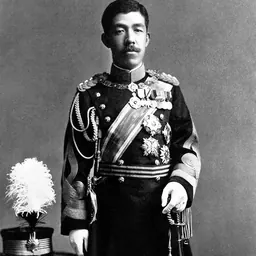
Late life and legacy Considered the father of the RAN, Creswell retired in 1919 and took up farming in Victoria; in the same year he was awarded a second knighthood as a Knight Commander of the Order of the British Empire (KBE). On 8 March 1920 he was awarded the Gold and Silver Star of the Order of the Rising Sun (Second class of the order) by Emperor Taishō of the Empire of Japan. He was promoted to Vice Admiral in 1922. He died on 20 April 1933 and was survived by his wife Adelaide Elizabeth née Stow (daughter of Justice Randolph Stow) two sons and a daughter. He is buried at Beersheba War Cemetery. His twin brother, Lieutenant Edmund Lindsay Creswell was wounded at Bullecourt, but survived the war. His oldest daughter, Margaret, took her own life in 1913 at the age of 21.
In 1965, his memoir "Close To The Wind; The early memoirs (1866-1879) of Admiral Sir William Creswell" was published posthumously, his surviving daughter, Noël Vigne, having found the manuscript.
Creswell has been honoured with the naming of the naval base, , the site of the Royal Australian Naval College at Jervis Bay.
Don’t just read it —
keep it.
Full-length biographies made to live with: read them, listen on the way to work, watch them tonight.
- E-book
- Audio
- Video
Instant download · yours to keep · every purchase keeps this site free
Important facts
People in William Rooke Creswell's life
Named in this biography and alive at the same time


Related people
Same field, nearest in time

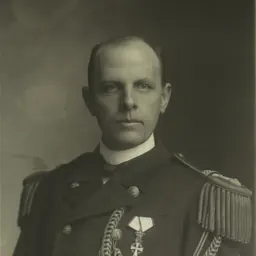
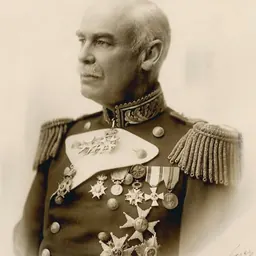
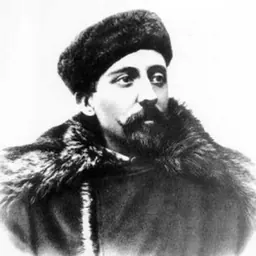
Contemporaries
People whose lives overlapped William Rooke Creswell's
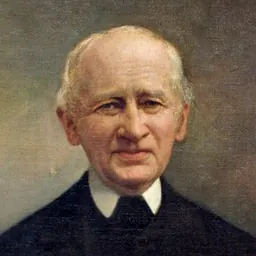


Frequently asked questions
Who was William Rooke Creswell?
Australian admiral (1852–1933)
When was William Rooke Creswell born?
William Rooke Creswell was born on 20 July 1852 in Gibraltar.
When did William Rooke Creswell die?
William Rooke Creswell died on 20 April 1933 in Armadale.
What was William Rooke Creswell's occupation?
William Rooke Creswell was a naval officer, vice admiral and farmer.
What nationality was William Rooke Creswell?
William Rooke Creswell was British and Australian.
Sources & further reading
· Wikipedia: William Rooke Creswell
Cite this page
APA: Biography.guide. (2026). William Rooke Creswell. https://biography.guide/william-rooke-creswell/
MLA: "William Rooke Creswell." Biography.guide, https://biography.guide/william-rooke-creswell/.
Chicago: "William Rooke Creswell." Biography.guide. https://biography.guide/william-rooke-creswell/.
Data last updated: 2026-09-20 · Spot an error? Report a correction.
Page generated 2026-09-27 05:29 UTC