
William Reardon Smith
British shipowner
About William Reardon Smith
Lived 1856 – 1935 (aged 79). William Reardon Smith was a British.
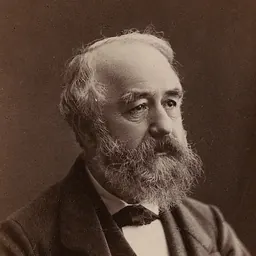
Sir William Reardon Smith, 1st Baronet (7 August 1856 – 23 December 1935) was an English shipowner and philanthropist.
Early life Descended from Irish seafaring stock, he was born at Appledore, Devon, the youngest son of Thomas Reardon Smith, a merchant navy captain, and his wife Elizabeth (née Green). After her husband and eldest son Philip Green Smith were lost at sea when the schooner Hazard sank off the coast of South Wales in October 1859, his mother was forced to bring up her surviving eight children by herself on her income as a dressmaker. and being sufficiently trusted by Hugh Hogarth to superintend the building of three of his ships. For his last four years at sea, Reardon Smith forsook Hogarth for the Cardiff-based Anning Brothers who had Devon connections and lastly William J. Tatem, who was born at Appledore.
Among the sailing and steamships he commanded were the Baron Douglas (June 1890 to April 1892), Baron Elibank (June 1890 to April 1892), Baron Belhaven (November 1894 to October 1896), Starcross (November 1896 to July 1897), Lady Lewis (July 1897 to April 1899, February to December 1900)) and Shandon (June 1899 to February 1900).
Relocation to Cardiff
Reardon Smith came ashore in December 1900 and joined his wife Ellen (née Hamlyn), who had recently relocated the family from Devon to Cardiff. W. R. Smith & Son operated from 1905 to 1909 before being succeeded by W. R. Smith & Sons between 1909 and 1922, and then finally Sir W. R. Smith & Sons Ltd from 1923 onwards.
Reardon Smith followed the common practice of the time in Cardiff of expanding his fleet by floating separate public companies in which his privately owned W. R. Smith would take a share. This allowed him to tap new sources of capital while also reducing the liability. The first such company was the Instow Steamship Co Ltd, formed in 1905 with a proposed capital of £32,800. The company's first ship was City of Cardiff built by Ropner & Son at Stockton-on-Tees. Despite a large mortgage from the shipbuilder, Reardon Smith struggled to raise sufficient capital to pay for her. However, after the Holman family from Topsham in Devon showed their faith in him by buying a large number of shares the remainder were soon taken up.
Instow's second vessel, the Leeds City was a trunk deck ship delivered in 1908 also by Ropner & Son.
In August 1909, Reardon Smith ordered the Bradford City from Ropner & Son. To pay for her, he floated the Bradford Steamship Co Ltd in 1910 with a nominal capital of £33,250. The company's name and that of the later Leeds Shipping Co Ltd was in reference to the many investors that he had signed up for his previous public company and hoped to continue to attract from Yorkshire. the venture was well supported. As the name Cornish City had already been bestowed on a second-hand purchase, the company's first ship was called Devon City. it was wound up in 1918.
Post-WWI
Reardon Smith's wartime losses were initially replaced in 1919 when seven ships were acquired from the Swansea-based Letricheux & David Co. and then in 1920–21 by nine German vessels surrendered as War reparations which were purchased for £468,000. Immediately following the end of the War, there was a perceived shortage of ships due to wartime losses, whereas in reality, the total tonnage of the British merchant fleet in 1919 was only 700,000 gross tons less than it had been in 1913, while the worldwide merchant fleet had actually increased. Many ships were still operating on government wartime contracts far from their normal commercial trading routes, reducing the number available to service mercantile trade. From March 1919, the government began deregulating the shipping markets as it released ships from its service. In May 1919, HMG lowered the excess profit duty from 80 to 40 per cent. These factors in combination with post-war optimism lead to vastly inflated ship values to create a boom which lasted until the late spring of 1920.
In June 1923, Reardon Smith established Reardon Smith (Union of South Africa) Ltd with capital of £250,000. In 1926, he was a founding member of the Honourable Company of Master Mariners.
In the latter part of his life, Reardon Smith gave generously to hospitals in Bideford and Cardiff. Other donations were made to the Exeter University and the National Library of Wales. Four years later, he acquired a large yacht, the Margherita, which after being given a three-mast rig and two diesel engines served as both a family yacht and a cadet training vessel. Having served on sailing vessels, Reardon Smith believed that pre-sea training under sail was beneficial for cadets. The Wall Street crash of 1929 and subsequent Great Depression meant the Margherita was sold in 1932.
Reardon Smith was a major benefactor to the National Museum of Wales and served as its Treasurer (1925–1928) and President (1928–1932). During his involvement with Amgueddfa Cymru – Museum Wales, Sir William transformed the museum's poor finances and oversaw the completion of its east wing at Cardiff. As a result, the east wing's new lecture theatre was named the Reardon Smith Lecture Theatre in his honour in 1932. Between 1915 and 1935, he and his wife Ellen (Lady Smith) donated approximately £50,000 to AC-NMW. In addition to his personal donations, Sir William also worked tirelessly to raise funds from elsewhere.
Personal life On 16 May 1880, Reardon Smith married Ellen Hamlyn. They had six children: Lillian "Lily" Nellie Smith, Gertrude "Gertie" Smith, Elizabeth Hamlyn Smith, Grace Hamlyn Smith, Sir Willie Reardon-Smith (26 May 1887 – 24 November 1950) and Douglas Reardon Smith (10 April 1894 – 6 June 1961)
Honours In recognition of his philanthropy, Reardon Smith was awarded the Honorary Freedom of the City of Cardiff in 1928. Although, at the time, Lloyd George was selling baronetcies for £15,000 and Cardiff had the reputation of being the "city of dreadful knights", there is no conclusive evidence that Reardon Smith paid for his title. He was succeeded in the baronetcy by his elder son, Willie.
In 1932, Reardon Smith was admitted as a Freeman of the City of London, becoming a Liveryman of the Worshipful Company of Shipwrights.
Legacy
There is a bust of Sir William Reardon Smith by Sir Goscombe John at Cardiff City Hall.
Footnotes
Don’t just read it —
keep it.
Full-length biographies made to live with: read them, listen on the way to work, watch them tonight.
- E-book
- Audio
- Video
Instant download · yours to keep · every purchase keeps this site free
Important facts
People in William Reardon Smith's life
Named in this biography and alive at the same time


Contemporaries
People whose lives overlapped William Reardon Smith's





Frequently asked questions
Who was William Reardon Smith?
British shipowner
When was William Reardon Smith born?
William Reardon Smith was born on 7 August 1856 in Appledore.
When did William Reardon Smith die?
William Reardon Smith died on 23 December 1935.
What nationality was William Reardon Smith?
William Reardon Smith was British.
Sources & further reading
· Wikipedia: William Reardon Smith
· DBpedia: William Reardon Smith
Cite this page
APA: Biography.guide. (2026). William Reardon Smith. https://biography.guide/william-reardon-smith/
MLA: "William Reardon Smith." Biography.guide, https://biography.guide/william-reardon-smith/.
Chicago: "William Reardon Smith." Biography.guide. https://biography.guide/william-reardon-smith/.
Data last updated: 2026-09-20 · Spot an error? Report a correction.
Page generated 2026-09-27 05:23 UTC