
William Perkins
English cleric and Puritan theologian
About William Perkins
Lived 1558 – 1602 (aged 43–44). William Perkins was a British theologian, university teacher, writer and preacher.
William Perkins (1558–1602) was an influential English cleric and Cambridge theologian, receiving a B.A. and M.A. from the university in 1581 and 1584 respectively, and also one of the foremost leaders of the Puritan movement in the Church of England during the Elizabethan era. Although not entirely accepting of the Church of England's ecclesiastical practices, Perkins conformed to many of the policies and procedures imposed by the Elizabethan Settlement. He did remain, however, sympathetic to the non-conformist puritans and even faced disciplinary action for his support.
Perkins was a prolific author who penned over forty works, many of which were published posthumously. In addition to writing, he also served as a fellow at Christ's College and as a lecturer at St. Andrew's Church in Cambridge. He was a firm proponent of Reformed theology, particularly the supralapsarian theology of Theodore Beza. In addition, he was a staunch defender of Protestant ideals, specifically the five solae with a particular emphasis on solus Christus and sola Scriptura.
Early life
Perkins was born to Thomas and Anna Perkins at Marston Jabbett in the parish of Bulkington, Warwickshire, England in 1558, the year in which the Protestant Elizabeth I succeeded her Catholic sister Mary I as Queen of England. Perkins lived his entire life under Elizabeth I, dying one year before the Queen's death in 1603. Perkins's relationship with Elizabeth was ambiguous: on the one hand, she was Good Queen Bess, the monarch under whom England finally and firmly became a Protestant nation; on the other hand, Perkins and the other members of the Puritan movement were frustrated that the Elizabethan settlement had not gone far enough and pushed for further Reformation.
Little is known of Perkins' childhood and upbringing. Sometime in his early life he was rendered lame which forced him to write with his left hand. His family was evidently of some means, since in June 1577, at age 19, Perkins was enrolled as a pensioner of Christ's College, Cambridge being trained in the tradition of the Reformed scholastic framework. He would receive his BA in 1581 and his MA in 1584.
According to an unverifiable story, Perkins was convinced of the error of his ways after he heard a Cambridge mother say to her child, "Hold your tongue, or I will give you to drunken Perkins yonder." Whether or not the story is true, it is clear that Perkins had a religious awakening sometime between 1581 and 1584 during his time at Cambridge. Perkins's sermons, wrote Fuller, "were not so plain but that the piously learned did admire them, nor so learned but that the plain did understand them."
Perkins's churchmanship
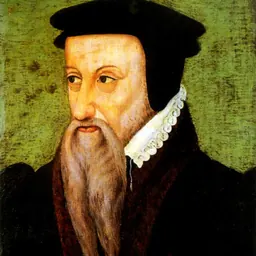
As a "moderate Puritan", Perkins was firmly opposed to non-conformists and other separatists who refused to conform to the Church of England. He also opposed the Elizabethan regime's program of imposing uniformity on the church. For example, when Archbishop of Canterbury John Whitgift imprisoned Francis Johnson for Johnson's support of a presbyterian form of church polity, Perkins defended Johnson. This was not an isolated incident, and he appeared before the commission more than once. and was a major player in introducing the thought of Theodore Beza to England. He viewed the Reformed concept of the Covenant of Grace, which is central to Reformed soteriology and double predestination, to be a doctrine of great consoling value. He was responsible for the publication in English of Beza's famous chart about double predestination. Writing less than a century after Perkins's death, his biographer Thomas Fuller recounted an objection that Perkins's views on double predestination often prompted:Some object that his doctrine, referring all to an absolute decree, hamstrings all industry, and cuts off the sinews of men's endeavours towards salvation. For, ascribing all to the wind of God's Spirit, (which bloweth where it listeth,) he leaveth nothing to the oars of man's diligence, either to help or hinder to the attaining of happiness, but rather opens a wide door to licentious security. He was also a major proponent of literal interpretation using the regula fidei, or Rule of Faith. This principle advocates that the unclear portions of scripture ought to be interpreted by the clear portions rather than by tradition or speculation. He did, however, leave room for figurative or analogical language when context demands.
Influence Although relatively unknown to modern Christians, Perkins has had an influence that is felt by Christians all around the world. He also was influential in the theological development of the American puritan philosopher and theologian Jonathan Edwards. In addition, some consider the hermeneutics of Perkins to be a model that ought to be emulated. His pupils include:
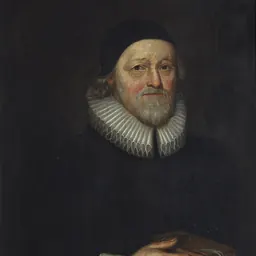
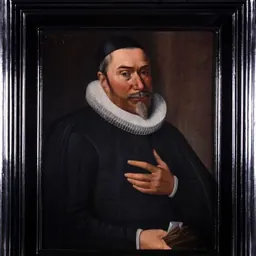
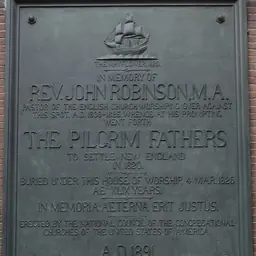
William Ames, Puritan theologian whose "Marrow of Theology" was the most popular systematic theology of the time became professor of theology at Franeker, Netherlands John Robinson, the founder of congregationalism in Leiden and pastor of the group which went on to found the Plymouth Colony Thomas Goodwin, Congregationalist minister and Puritan theologian who was a vital part of the Westminster Assembly Paul Baynes, Puritan preacher and successor to Perkins as lecturer at the church of St Andrew the Great in Cambridge Samuel Ward, Puritan preacher and master of Sidney Sussex College, Cambridge Phineas Fletcher, a poet Thomas Draxe, English puritan and theologian Thomas Taylor, Puritan preacher and Doctor of Divinity at Cambridge James Ussher, Archbishop of Armagh James Montagu, master of Sidney Sussex and later bishop of Winchester Richard Sibbes, Puritan preacher of Gray's Inn and Master at Catherine's Hall known for his eloquence and comforting sermons John Cotton, Colonial American Puritan minister and theologian of the Massachusetts Bay Colony Thomas Hooker, Colonial American Puritan minister and founder of the Connecticut Colony Thomas Shepard, Colonial American Puritan minister and theologian known for his leadership in the Antinomian Controversy
Death
In 1602, Perkins suffered from "the stone". After several weeks of suffering, he died on 22 October 1602 at age 44. A Warning against the of the Last Times (1584) Who Shall Win the Whetstone: Also, A Resolution to the Count (1585) A Treatise Tending a Declaration Whether a Man be in the Estate of Damnation or in the Estate of Grace: And If he be in the First, How he may in Time Come out of it: if in the second, how he it, and in the same to the end. The points that are handled are set in the page following (1590) (1590) A golden , or the description of : containing the order of the causes of and damnation, according to Gods . A view of the order , is to be in the table annexed (1591) The foundation of Christian religion: gathered into principles. And it is to bee learned of ignorant people, that they may be fit to hear sermons with profit, and to the Lords Supper with comfort (1591) (1592) A case of conscience : the greatest that was; how a man may know whether he be the child of God or no. by the word of God. Whereunto is added a discourse, taken out of . Zanchius (1592) An exposition of the Lords prayer: in the way of catechising for ignorant people (1592) treatises: I. Of the nature and practise of repentance. II. Of the combat of the flesh and spirit (1593) An exposition of the Lords : in the way of (1593) A direction for the government of the tongue according to Gods word (1593) An exposition of the or Creed of the Apostles: according to the of the Scriptures, and the consent of Fathers of the Church (1595) A salve for a man, or, A treatise containing the nature, differences, and of death: as also the right manner of dying well. And it may for instruction to 1. Mariners when they to sea. 2. when they to . 3. Women when they of child (1595) A declaration of the true manner of knowing Christ crucified (1596) A reformed , or, A declaration shewing how we may come to the present Church of Rome in points of religion, and wherein we must for depart from them: with an advertisement to all of the religion, shewing that the said religion is against the principles and grounds of the (1597) (1598) (1598) A warning against the of the last times: And an instruction touching religious, or worship (1601) The true : more in worth then all the goods in the world (1601) How to , and that well: in all estates and times, specially when helps and comforts (1601)
Posthumously:
The works of that famous and minister of Christ, in the of Cambridge, M.W. Perkins : gathered into one volume, and newly corrected according to his copies. With distinct chapters, and contents of book, and a table of the whole (1603) The reformation of : Written the 6. chapter of Mathew, from the 19. verse to the of the said chapter (1603) A or exposition, the first chapters of the Epistle to the Galatians: penned by the godly, learned, and (1604) Lectures the three first chapters of the : preached in Cambridge anno Dom. 1595 (1604) (1604) The first part of The cases of conscience: Wherein specially, three questions concerning man, simply considered in , are propounded and , according to the word of God (1604) Satans by our Christ: and in sermons further manifested (1604) or, a treatise of Christian and moderation (1604) M. Perkins, his Exhortation to repentance, out of Zephaniah: preached in 2. sermons in Sturbridge Faire. Together with two treatises of the duties and of the : in the of Cambridge. With a preface touching the publishing of all such of his as are to be expected: with a catalogue of all the [sic] of them, diligently perused and published, by a preacher of the word (1605) Works newly corrected according to his copies (1605) Of the calling of the two treatises, describing the duties and dignities of that calling (1605) The combat Christ and the displayed, or A upon the temptations of Christ (1606) A and learned exposition the whole epistle of ... (1606) A C[hristian] and [plain]e treatise of the manner and order of predestination: and of the of Gods grace (1606) The of , or, A treatise concerning the sacred and true manner and of preaching (1607) A cloud of witnesses, leading to the Canaan, or, A the 11 chapter to the (1607) A treatise of mans imaginations: Shewing his thoughts: His want of good thoughts: The way to them (1607) A discourse of the damned art of witchcraft: so forth as it is revealed in the Scriptures and manifest by true experience ... (1608) The treatise of the cases of conscience: distinguished into three (1608) Christian : or, A short survey of the right manner of erecting and ordering a : according to the scriptures (1609) A of : or, the least measure of grace that is or can be to (1611) A resolution to the countryman it utterly to buy or use our prognostications (1618) Deaths knell: or, The mans passing-bell: summoning all consciences to prpare for the coming of the day of , lest mercies gate be shut against them: fit for all those that desire to at the . Whereunto are added prayers fit for . The ninth edition. (1628)
Recent reprints:
The Work of William Perkins, ed. Ian Breward (1970) The Works of William Perkins, ed. Joel R. Beeke and Derek W. H. Thomas, 10 vols. (Grand Rapids, Michigan: Reformation Heritage Books, 2014–2020).
Don’t just read it —
keep it.
Full-length biographies made to live with: read them, listen on the way to work, watch them tonight.
- E-book
- Audio
- Video
Instant download · yours to keep · every purchase keeps this site free
Important facts
People in William Perkins's life
Named in this biography and alive at the same time

Related people
Same field, nearest in time

Contemporaries
People whose lives overlapped William Perkins's



Frequently asked questions
Who was William Perkins?
English cleric and Puritan theologian
When was William Perkins born?
William Perkins was born in 1558 in Warwickshire.
When did William Perkins die?
William Perkins died on 22 October 1602 in Cambridge.
What was William Perkins's occupation?
William Perkins was a theologian, university teacher, writer and preacher.
What nationality was William Perkins?
William Perkins was British.
Sources & further reading
· DBpedia: William Perkins (theologian)
Cite this page
APA: Biography.guide. (2026). William Perkins. https://biography.guide/william-perkins/
MLA: "William Perkins." Biography.guide, https://biography.guide/william-perkins/.
Chicago: "William Perkins." Biography.guide. https://biography.guide/william-perkins/.
Data last updated: 2026-09-25 · Spot an error? Report a correction.
Page generated 2026-09-27 05:12 UTC