
About William of Rubruck
Lived 1220 – 1293 (aged 72–73). William of Rubruck was a French explorer, diplomat, writer, missionary, travel writer and orientalist.
William of Rubruck or Rubrouck was a Franciscan friar who, with the support of Louis IX of France, undertook a mission to the Great Khan Möngke of the Mongol Empire. On his return, William wrote his Itinerarium, an account addressed to King Louis, detailing his experiences and observations.
William was born likely in the 1210s or 1220s in Rubrouck in the County of Flanders of the Kingdom of France, and died, according to sources, in the 1270s or after 1293. He is known for his travels to various parts of the Middle East and Central Asia in the 13th century, including the Mongol Empire.
He traveled to Mongolia in 1253–1254, thus preceding the journeys of Marco Polo and Odoric of Pordenone. He visited Karakorum, the capital of the empire, and provided some descriptions of it. Upon his return, unable to meet the King of France in person, he wrote him a long letter in Latin recounting his journey through the Mongol Empire.
His account of his travels is one of the masterpieces of medieval travel literature, comparable to those of Marco Polo and Ibn Battuta, as well as an essential historical source. However, it never attained the popularity of Marco Polo's book.
Mission
William was born in Rubrouck, County of Flanders, Kingdom of France. In 1248, he accompanied King Louis IX of France, on the Seventh Crusade. On 7 May 1253, on Louis' orders, he set out on a missionary journey to convert the Tatars to Christianity. He first stopped in Constantinople to confer with Baldwin of Hainaut, who had recently returned from a trip to Karakorum, the capital of the Mongol Empire, on behalf of Baldwin II, Latin Emperor. There, William received letters to some of the Tatar chiefs from the emperor.
William then followed the route of the first journey of the Hungarian Friar Julian, and in Asia that of the Italian Friar Giovanni da Pian del Carpine. With William's party were Bartolomeo da Cremona, an attendant called Gosset, and an interpreter named in William's report as Homo Dei, meaning "man of God", perhaps representing the Arabic Abdullah, "servant of God". William's was the fourth European mission to the Mongols: previous ones had been led by Giovanni da Pian del Carpine and Ascelin of Lombardia in 1245 and André de Longjumeau in 1249. The king had been encouraged to send another mission by reports of the presence of Nestorian Christians at the Mongolian court, but because of an earlier rebuff he declined to send a formal mission.
Travels After reaching the Crimean town of Sudak, William continued his trek with oxen and carts. Nine days after crossing the Don, he met Sartaq Khan, next ruler of the Kipchak Khanate. The Khan sent William on to his father, Batu Khan, at Sarai near the Volga River. Five weeks later, after the departure from Sudak, he reached the encampment of Batu Khan, Mongol ruler of the Kipchak Khanate and Volga River region. William is said to have taken an aggressive approach with Batu, promising him eternal damnation and everlasting fire should he not convert. Batu was offended by William's preaching and reportedly saw it as a threat. William is highly critical of Nestorians in his accounts, believing them to be heretical. William was critical of the Hellenic traditions he encountered among the Christians of the former Byzantine Empire, including the Nicaean celebration of a feast day for Felicitas, which he reports was known to John III Doukas Vatatzes through the alleged possession of the second half of Ovid's incomplete Book of Days.
William also answered a long-standing question in demonstrating by his passage north of the Caspian Sea that it was an inland sea and did not flow into the Arctic Ocean; although earlier Scandinavian explorers like Ingvar the Far-Travelled had extensive knowledge of the region, William was the first to answer the question in written form.
William's report is one of the great masterpieces of medieval geographical literature, comparable to that of Marco Polo, although they are very different. William was a good observer and an excellent writer. He asked many questions along the way and did not take folk tales and fables as literal truth. He showed a great facility with language, noting the similarities between those he encountered and those European languages he already knew.
In May 1254, during his stay among the Mongols, William entered into a famous competition at the Mongol court, as the khan encouraged a formal theological debate between the Christians, Buddhists, and Muslims, in order to determine which faith was correct, as determined by three judges, one from each faith. A Chinese person participated with William in the competition.
Roger Bacon, William's contemporary and fellow-Franciscan, cited the traveler copiously in his Opus Majus, and described him as "Brother William through whom the lord King of France sent a message to the Tartars in 1253 AD... who traveled to regions in the east and north and attached himself to the midst of these places, and wrote of the above to the illustrious king; which book I carefully read and with his permission expounded on". After Bacon, however, William's narrative seems to have dropped out of sight until Richard Hakluyt's 1599 publication.
Russian poet Nikolay Zabolotskiy wrote in 1958 the long poem "Rubruck in Mongolia" ("Рубрук в Монголии").
Editions The Latin text of an incomplete manuscript containing only the first 26 chapters, together with an English translation by Richard Hakluyt, was published in 1599. A critical edition of the complete Latin text prepared by the French historian Francisque Michel and the English antiquarian Thomas Wright was published in 1839. An English translation by William Woodville Rockhill, The Journey of William of Rubruk to the Eastern Parts, was published by the Hakluyt Society in 1900, and an updated translation by Peter Jackson in 1990. Jackson's translation is based on the critical edition by Anastasius Van den Wyngaert that was published in 1929.
List of manuscripts Manuscript Date Notes A Corpus Christi, Cambridge, MS 181, pp. 321–398 Last quarter of the 13th century Oldest and the basis of Van den Wyngaert's 1929 critical edition. B Corpus Christi, Cambridge, MS 66A, ff. 67r–110r First third of 14th century Contains a historiated initial at the beginning of the text and includes some chapter titles in the margins. C Corpus Christi, Cambridge, MS 407, ff. 37r–66r Beginning of 15th century Ends after Chapter 26 paragraph 8. D British Library, MS Royal 14 C XIII ff. 255r–236r 15th century Ends after Chapter 26 paragraph 8. Used by Richard Hakluyt for his 1599 translation. E Yale University Library, New Haven, Beinecke MS 406 ff. 93r–142v 15th century
Don’t just read it —
keep it.
Full-length biographies made to live with: read them, listen on the way to work, watch them tonight.
- E-book
- Audio
- Video
Instant download · yours to keep · every purchase keeps this site free
Important facts
more
Rubruk, Rubroeck, Willielmus de Rubruquis, Rubrouck, William Rubruck, Qilyom de Rubruk, Willem van RuysbroeckPeople in William of Rubruck's life
Named in this biography and alive at the same time



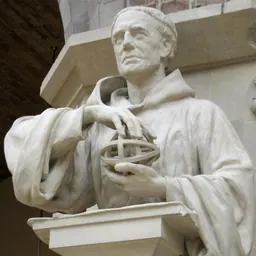

Related people
Same field, nearest in time




Contemporaries
People whose lives overlapped William of Rubruck's

Frequently asked questions
Who was William of Rubruck?
Flemish Franciscan missionary and explorer
When was William of Rubruck born?
William of Rubruck was born in 1220 in Rubrouck.
When did William of Rubruck die?
William of Rubruck died in 1293.
What was William of Rubruck's occupation?
William of Rubruck was an explorer, diplomat, writer, missionary, travel writer and orientalist.
What nationality was William of Rubruck?
William of Rubruck was French.
Sources & further reading
· Wikipedia: William of Rubruck
Cite this page
APA: Biography.guide. (2026). William of Rubruck. https://biography.guide/william-of-rubruck/
MLA: "William of Rubruck." Biography.guide, https://biography.guide/william-of-rubruck/.
Chicago: "William of Rubruck." Biography.guide. https://biography.guide/william-of-rubruck/.
Data last updated: 2026-09-20 · Spot an error? Report a correction.
Page generated 2026-09-27 05:27 UTC