
William Nightingale
British Unitarian
About William Nightingale
Lived 1794 – 1874 (aged 79). William Nightingale was a British.
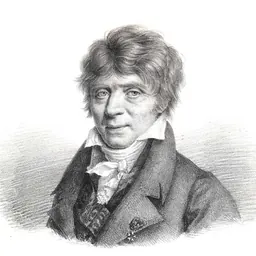
William Edward Nightingale ( Shore; 15 February 1794 – 5 January 1874) was a noted English Unitarian and the father of Florence Nightingale, the founder of modern nursing.
Biography
William Nightingale (known also as W.E.N.) was born William Edward Shore on 15 February 1794, in Lea, Derbyshire. His father was William Shore (1752–1822). His mother was Mary née Evans (1760–1853) who died at Tapton House, Sheffield. She was the niece of one Peter Nightingale, a lead mining entrepreneur, under the terms of whose will William Shore inherited the Lea Hall estate in Derbyshire, but also assumed the name and arms of Nightingale in 1815. He was appointed Sheriff of Hampshire in 1828. He had two sisters, Anne and Mary.
alt=A large, three-storey house of red brick with stone dressings and tiled roof, with multiple bays, gables and chimneys, set in open grassed surroundings.
By his early twenties, William Nightingale had an income of £8,000 which made him very wealthy. He liked to hunt, read, and follow social issues of his day.
Nightingale was the architect of Lea Hurst, a house which survives today and which was highly innovative for its time. Lea Hurst was designed to offer the Nightingale family considerable privacy. In contrast to the manors of other wealthy gentlemen, Lea Hurst was designed to blend in with its environment. It was made of the same local gray stone as other, less affluent houses were made of.
When his daughters were of school age, Nightingale devoted himself to their education. As a consequence, Parthenope and Florence were educated well beyond what was typical of young ladies of their age.
Interest in politics
William Nightingale had a keen interest in politics, and in 1829, he was appointed as the High Sheriff of Hampshire. In the summer months of 1834, he stood for parliament as a Whig candidate for Andover. He supported the Reform Bill and opposed any form of bribery for the encouragement of the electors. His views cost him the election, which left him shocked. As a result, he resolved never to be persuaded into political life again.
In 1838 he took his family on tour in Europe. In Paris he was introduced to Mary Elizabeth Clarke, an English-born salon hostess. "Clarkey" generally rejected female company and spent her time with male intellectuals, but she made an exception in the case of the Nightingale family. She and Florence were to remain close friends for 40 years despite their 27-year age difference.
Don’t just read it —
keep it.
Full-length biographies made to live with: read them, listen on the way to work, watch them tonight.
- E-book
- Audio
- Video
Instant download · yours to keep · every purchase keeps this site free
Important facts
Family & relationships
People in William Nightingale's life
Named in this biography and alive at the same time

Contemporaries
People whose lives overlapped William Nightingale's





Frequently asked questions
Who was William Nightingale?
British Unitarian (1794–1874)
When was William Nightingale born?
William Nightingale was born on 15 February 1794 in Dethick, Lea and Holloway.
When did William Nightingale die?
William Nightingale died on 5 January 1874 in Wellow, Hampshire.
What nationality was William Nightingale?
William Nightingale was British.
Sources & further reading
· Wikipedia: William Nightingale
· DBpedia: William Nightingale
Cite this page
APA: Biography.guide. (2026). William Nightingale. https://biography.guide/william-nightingale-1794/
MLA: "William Nightingale." Biography.guide, https://biography.guide/william-nightingale-1794/.
Chicago: "William Nightingale." Biography.guide. https://biography.guide/william-nightingale-1794/.
Data last updated: 2026-09-20 · Spot an error? Report a correction.
Page generated 2026-09-27 05:24 UTC