
About William Leete Stone, Sr.
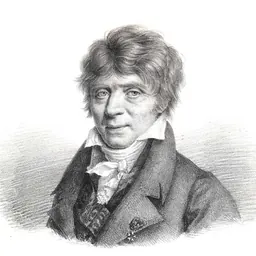
Lived 1792 – 1844 (aged 51–52). William Leete Stone, Sr. was an American journalist, historian, editor and writer.
Early career At age 17, Stone became a printer in the office of the Federalist in Cooperstown, New York. In 1813, he was editor of the American in Herkimer, New York, where Thurlow Weed worked under him. He later edited the Northern Whig in Hudson, New York, and in 1817 the Daily Advertiser in Albany, New York.
In 1818, Stone succeeded Theodore Dwight as editor of the Hartford Mirror. While in Hartford, he collaborated with Jonathan Mayhew Wainwright, Samuel G. Goodrich ("Peter Parley"), and Isaac Toucey in editing a literary magazine called The Knights of the Round Table. He also edited The Lounger, a humorous and literary periodical.
Commercial Advertiser In 1821, Stone became editor and part owner of the New York Commercial Advertiser, a post he held for the remainder of his life. He became known for his literary criticism, which led to a famous libel suit by novelist James Fenimore Cooper over reviews of Home as Found and History of the Navy.
Stone used the Commercial Advertiser to advocate gradual abolition of slavery by act of Congress, in tandem with colonization efforts through the American Colonization Society. He served as president of the New York Colonization Society and introduced a gradual emancipation plan at the 1825 Baltimore convention. However, he opposed the immediate abolitionists of the American Anti-Slavery Society, and has been described as one of the leading critics who fueled the Anti-abolitionist riots (1834).
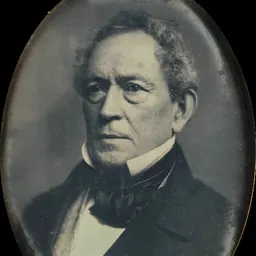
Other public roles Greek independence In 1824, Stone supported the Greek War of Independence alongside Edward Everett and Samuel G. Howe, helping to rally American sympathy.
In 1825, he joined Thurlow Weed in accompanying Lafayette on a Hudson River steamboat trip during the general’s U.S. tour. That year, Brown University awarded him an honorary A.M. degree.
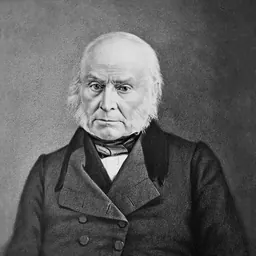
Freemasonry and controversy Stone was a Freemason but became a critic after the William Morgan disappearance. In 1832, he published Letters on Masonry and Anti-Masonry addressed to John Quincy Adams, arguing that Masonry had outlived its usefulness.
Education and civic work Known popularly as “Colonel Stone” (having served on Governor De Witt Clinton’s staff), he was appointed the first superintendent of public schools in New York City. In 1844, shortly before his death, he debated Archbishop John Hughes over the use of the Bible in public schools.
He was active in charitable associations, supporting education for the deaf, reform for juvenile delinquents, and missionary work among Native Americans. He was later made a chief of the Seneca Nation.
Historical scholarship In 1838, Stone introduced a resolution in the New-York Historical Society urging the recovery of colonial records from England and the Netherlands. This initiative led to the appointment of John Romeyn Brodhead as a state historian, resulting in the publication of the New York Colonial Documents.
Stone’s biographies of Joseph Brant (1838) and Red Jacket (1841) were pioneering works on Native American leaders.
Diplomatic appointment In 1841, President William Henry Harrison appointed Stone U.S. minister to the Hague, though he was soon recalled by President John Tyler.
Personal life Stone married Susannah Wayland, sister of Francis Wayland, president of Brown University. Their only son, William Leete Stone Jr., became a historian of the American Revolution.
Death Stone died on 15 August 1844 in Saratoga Springs, New York. He was buried in Greenridge Cemetery.
Works History of the Great Albany Constitutional Convention of 1821 (Albany, 1822) Narrative of the Grand Erie Canal Celebration (New York, 1825) Letters on Masonry and Anti-Masonry (New York, 1832) Tales and Sketches: Such As They Are (2 vols., New York, 1834) Matthias and His Impostures (New York, 1833) The Mysterious Bridal and Other Tales (3 vols., New York, 1835) Maria Monk and the Nunnery of the Hotel Dieu (New York, 1836) Ups and Downs in the Life of a Distressed Gentleman (New York/Boston, 1836) The Witches: A Tale of New-England (Bath, NY, 1837) Letter to Doctor A. Brigham, on Animal Magnetism (New York, 1837) Life of Joseph Brant-Thayendanegea (2 vols., New York, 1838) Life and Times of Red-Jacket (New York, 1841) The Poetry and History of Wyoming (New York & London, 1841) Uncas and Miantonomoh (New York, 1842) Border Wars of the American Revolution (2 vols., 1843) The life and times of Sir William Johnson, bart. (2 vols., New York, 1865) The Centennial History of New York City: from the discovery to the present day (New York, 1876)
Don’t just read it —
keep it.
Full-length biographies made to live with: read them, listen on the way to work, watch them tonight.
- E-book
- Audio
- Video
Instant download · yours to keep · every purchase keeps this site free
Important facts
People in William Leete Stone, Sr.'s life
Named in this biography and alive at the same time


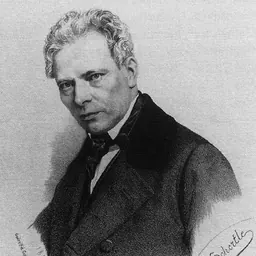
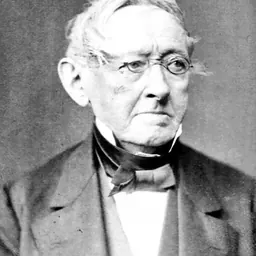
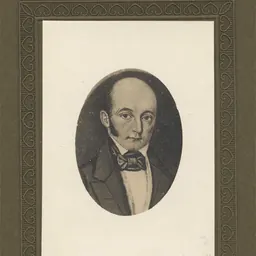
Related people
Same field, nearest in time



Contemporaries
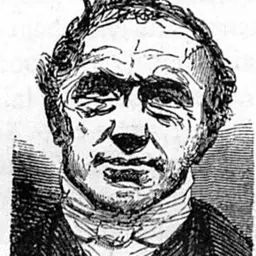
People whose lives overlapped William Leete Stone, Sr.'s


Frequently asked questions
Who was William Leete Stone, Sr.?
American journalist (1792–1844)
When was William Leete Stone, Sr. born?
William Leete Stone, Sr. was born in 1792 in New Paltz.
When did William Leete Stone, Sr. die?
William Leete Stone, Sr. died on 15 August 1844 in Saratoga Springs.
What was William Leete Stone, Sr.'s occupation?
William Leete Stone, Sr. was a journalist, historian, editor and writer.
What nationality was William Leete Stone, Sr.?
William Leete Stone, Sr. was American.
Sources & further reading
· Wikipedia: William Leete Stone, Sr.
· DBpedia: William Leete Stone Sr.
Cite this page
APA: Biography.guide. (2026). William Leete Stone, Sr.. https://biography.guide/william-leete-stone-sr/
MLA: "William Leete Stone, Sr.." Biography.guide, https://biography.guide/william-leete-stone-sr/.
Chicago: "William Leete Stone, Sr.." Biography.guide. https://biography.guide/william-leete-stone-sr/.
Data last updated: 2026-09-20 · Spot an error? Report a correction.
Page generated 2026-09-27 05:28 UTC