
About William Kurtz
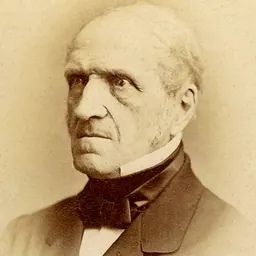
Lived 1833 – 1904 (aged 70–71). William Kurtz was an American photographer.
William Kurtz, born Wilhelm Kurz (1833 – December 5, 1904) was a German-American artist, illustrator, and photographer. He was also a pioneer in the development of halftone printing of color photographs.
Early life Born in Hesse, Germany, he was apprenticed to a lithographer in Offenbach am Main at a young age and showed considerable artistic talent, taking first place in exhibitions while attending an art school there. However, after his two years of compulsory military service, he found he had lost his apprenticeship and moved to England to try his luck. Unable to find work there, he joined the British German Legion and went to fight in the Crimean War.
After the war, he was still unable to gain employment as a lithographer, so he became a sailor for several years. In 1859, he decided he would travel to China with a friend. En route to San Francisco, his ship wrecked off the Falkland Islands. The passengers and crew were rescued and he was taken to New York City. Here, he was able to find work in a photography studio. When the American Civil War began, he enlisted in the New York Seventh Regiment and served with them intermittently over the course of the war. The next year he formed a studio with another partner, named Huston. The two of them practiced a technique called "photosculpture", which involved taking up to 24 simultaneous photographs of a subject from various angles to assist a sculptor to create a sculpture of that person. Finally in 1873, he established a studio on his own in Madison Square. —was able to produce superior results and drive the cost of color printing down dramatically, so much so that Vogel himself acknowledged that Kurtz's adaptations had improved on his own discoveries. The same image was later published in the U.S. in the March 1893 issue of Engraver & Printer.
Other photography innovations Beginning in the 1860s, vignetted heads and upper torsos became a popular style of portrait photographs known as the "Rembrandt style". Kurtz perfected a process using a series of reflectors to concentrate and bounce sunlight onto the subject's face. With the subject seated against a dark background, the result emphasized strong features and masked weaker ones.
However, this technique was limited by daylight hours and weather. The winter months proved to be especially problematic (as demand for studio portraits happened to rise then), and Kurtz was one of the first people to use electric lighting to achieve the same effect.
Later life Kurtz spent the last years of his life in Far Rockaway, Queens. He had spent his summers there since 1879, and moved there permanently in 1899. He died at his home on December 5, 1904, from pneumonia. He was survived by his wife, four daughters, and three sons.
Don’t just read it —
keep it.
Full-length biographies made to live with: read them, listen on the way to work, watch them tonight.
- E-book
- Audio
- Video
Instant download · yours to keep · every purchase keeps this site free
Important facts
Related people
Same field, nearest in time


Contemporaries
People whose lives overlapped William Kurtz's



Frequently asked questions
Who was William Kurtz?
American photographer (1833–1904)
When was William Kurtz born?
William Kurtz was born in 1833 in Hesse.
When did William Kurtz die?
William Kurtz died on 5 December 1904 in Far Rockaway.
What was William Kurtz's occupation?
William Kurtz was a photographer.
What nationality was William Kurtz?
William Kurtz was American.
Sources & further reading
· DBpedia: William Kurtz (photographer)
Cite this page
APA: Biography.guide. (2026). William Kurtz. https://biography.guide/william-kurtz/
MLA: "William Kurtz." Biography.guide, https://biography.guide/william-kurtz/.
Chicago: "William Kurtz." Biography.guide. https://biography.guide/william-kurtz/.
Data last updated: 2026-09-20 · Spot an error? Report a correction.
Page generated 2026-09-27 05:33 UTC