
William Kirby Sullivan
Irish philologist, chemist, historian, Irish nationalist and educationalist
About William Kirby Sullivan
Lived 1821 – 1890 (aged 68–69). William Kirby Sullivan was a British philologist, chemist, historian, pedagogue and academic administrator.
William Kirby Sullivan (1822–1890) was an Irish philologist, chemist, historian, Irish nationalist, educationalist and a passionate promoter of Irish industrial development. He was most notable for his scholarship promoting the literary history and culture of Ireland. He was widely referenced by researchers such as scientist William Grove, jurist and historian Henry Maine and ethnographer and historian Jeremiah Curtin, who visited him in his Irish sojourn of 1887.
Biography He was born in Dripsey, County Cork, Ireland. His father, James Bartholomew Sullivan, owned a paper mill there employing about 400 people. He escaped a fire allegedly started by workers disaffected with the introduction of labour-saving machinery. Sullivan studied at the Christian Brothers school in Cork city. His first lectures were at the Cork Mechanics' Institute, Cork Street. Thereafter he went to Germany, where he studied at the University of Giessen under the pioneering chemist Justus von Liebig.
He was a member of Young Ireland and a shareholder in the short-lived nationalist newspaper of 1848, The Irish Tribune, founded by three medical students, which was regarded as a successor to John Mitchel's The United Irishman, and which was similarly suppressed by the government and its founders arrested. However, he did not participate in the Young Irelander Rebellion of 1848 as he was suffering from a long illness due to rheumatic fever, which had the life-long effect of weakening his heart. About 1849, he married Frances Hennessy, sister to his future professorial colleague the physicist Henry Hennessy.
When the prominent theologian John Newman became Rector of the Catholic University of Ireland at the invitation of Archbishop Cullen for the Irish bishops in 1854, he appointed Sullivan as Professor of Chemistry in 1856, and in time Dean of Science and Dean of Medicine. He remained Professor of Theoretical Chemistry at the Museum. Cullen was upset that Young Irelanders like Sullivan and his professorial colleague, the great Irish scholar Eugene O'Curry, were appointed by Newman, but Newman wholeheartedly accepted Sullivan's enthusiastic advice on the establishment's development. In 1857, Sullivan read various papers on chemistry at the meeting of British Association, which met in Dublin: through this he received grants to research high-temperature salt solutions. That year, he was elected to the Royal Irish Academy. When Kane became President of Queen's College, Cork, (now University College, Cork) Sullivan became Professor of Theoretical Chemistry at the new Royal College of Science in 1867. Sullivan was invited to succeeded Kane as the second President of Queen's College in 1873, a position he held until 1890. During his tenure, which was a residential post (Kane's presidency was largely in absentia), he engaged wide support and instigated major changes: the library, museum and botanical gardens were added to (including a glass house), a physics laboratory and engineering workshops were opened, the Medical (Windle) Building was completed (1875), the (William) Crawford Observatory was built with funds from the eponymous benefactor (1880) and female students were first admitted (1885). The wages of University employees were increased and he opened the grounds to the public. He was awarded a D.Sc. by the Royal University of Ireland in 1882 (Kane was the university's chancellor). He was the (Life-)President of the Cork Literary and Scientific Society, and was a key promoter of the Cork Exhibition of 1883, writing the official report of it. He invited nationalist politician Charles Stewart Parnell to meet his University colleagues. In 1866, having been a council member for four years, he became a vice-president of the Royal Irish Academy and secretary from 1867–74. He translated and edited the posthumously-published lecture series of his former colleague, O'Curry, On the manners and customs of the ancient Irish. This necessitated a long introduction and appendices for the series, encompassing the whole initial volume, and became his most celebrated work, a key reference book in itself: Henry Maine, for example, quotes extensively and Jeremiah Curtin visited him for a few days in 1887. Along with the future British ambassador to the U.S.A, James Bryce, and Richard Barry O'Brien, he was an editor of Two Centuries of Irish History (1888); he wrote the section covering the years from the Treaty of Limerick (1691 -1782) entitled The Ireland of the Penal Days with his friend, the poet and political journalist George Sigerson. Considering his translations, there has been some dispute about how he gained his expertise in Irish and other languages, save for German (Irish was widely spoken around his birthplace).
He was diagnosed with heart disease in 1887 and began sleeping in his office. His wife, Frances, died the following year and he succumbed to his condition on 12 May 1890, survived by three sons and two daughters. He is buried in St. Finbarr's Graveyard, Cork. A memorial in the form of a celtic cross was installed on his grave, and the remainder of the public money collected for such was donated to the Munster Dairy School.
Don’t just read it —
keep it.
Full-length biographies made to live with: read them, listen on the way to work, watch them tonight.
- E-book
- Audio
- Video
Instant download · yours to keep · every purchase keeps this site free
Important facts
People in William Kirby Sullivan's life
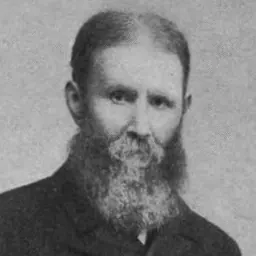
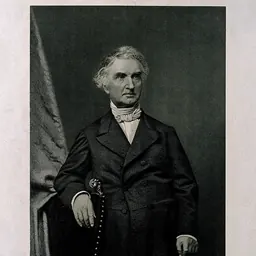
Named in this biography and alive at the same time





Related people
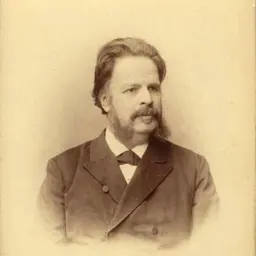
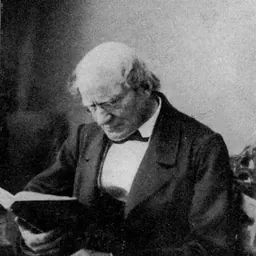
Same field, nearest in time


Contemporaries
People whose lives overlapped William Kirby Sullivan's



Frequently asked questions
Who was William Kirby Sullivan?
Irish philologist, chemist, historian, Irish nationalist and educationalist (1821–1890)
When was William Kirby Sullivan born?
William Kirby Sullivan was born in 1821 in Dripsey.
When did William Kirby Sullivan die?
William Kirby Sullivan died in 1890.
What was William Kirby Sullivan's occupation?
William Kirby Sullivan was a philologist, chemist, historian, pedagogue and academic administrator.
What nationality was William Kirby Sullivan?
William Kirby Sullivan was British.
Sources & further reading
· Wikipedia: William Kirby Sullivan
· DBpedia: William Kirby Sullivan
Cite this page
APA: Biography.guide. (2026). William Kirby Sullivan. https://biography.guide/william-kirby-sullivan/
MLA: "William Kirby Sullivan." Biography.guide, https://biography.guide/william-kirby-sullivan/.
Chicago: "William Kirby Sullivan." Biography.guide. https://biography.guide/william-kirby-sullivan/.
Data last updated: 2026-09-20 · Spot an error? Report a correction.
Page generated 2026-09-27 05:17 UTC