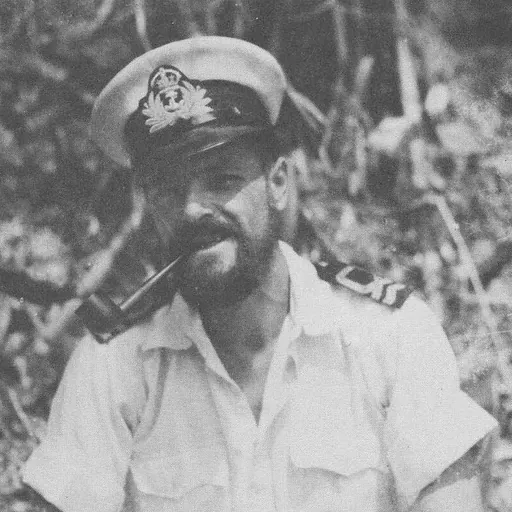
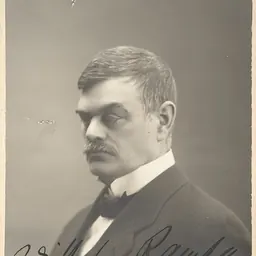
William John Read
(1905–1992) coastwatcher and public servant
About William John Read
Lived 1905 – 1992 (aged 86). William John Read was an Australian army officer, known for Coastwatcher.
William John (Jack) Read (born 18 September 1905, Hobart, Tasmania, Australia; died 29 June 1992, Ballarat, Victoria (Australia)), was an Australian Coastwatcher on Bougainville Island in New Guinea during World War II. He was awarded the Distinguished Service Cross by the United States for his service during World War II in the Solomon Islands campaign and the New Guinea campaign. His experiences and reports have become an important source for historians regarding the history of the coastwatchers.
Early life Read was born on 18 September 1905 in Hobart to William George Read and Eleanor Elfridine, (née Absolom). He attended Hobart State High School and after worked as a bookkeeper. In 1929, he married Gwenneth Ballantyne before leaving for public service in the Mandated Territory of New Guinea. He and Gwen had one child together, Judith. Read served his cadetship in New Britain; in 1932 he was promoted to patrol officer and stationed in Madang. In 1936 he was promoted to assistant district officer and continued to serve in Madang, as well as Wau and Lae in the Morobe Province.
World War II Madang Province and its capital was first colonized by Germany in the late 19th century and German colonial rule lasted until the end of World War I. When World War II began in Europe, Australia began interning foreign nationals suspected of Axis sympathies. Read was involved in taking German and Italian miners into custody in preparation for their deportation and internment in Australia. He applied for release from colonial service to enter the military, but this was denied and he assigned to the Buka Passage sub-district and sent to Bougainville Island where his duties included coastwatching.
Read had risen to the rank of sergeant in the Australian New Guinea Administrative Unit; he was initially inclined to join the Second Australian Imperial Force in 1942 but was convinced by Eric Feldt, the naval intelligence officer in charge of the Coastwatcher service in New Guinea and the Solomons to remain in his post. Feldt had also been a district officer at Madang, and knew Read well from their mutual service. Shortly after this he was appointed as a lieutenant in the Royal Australian Naval Volunteer Reserve. Ian W. Toll writes in The Conquering Tide: War in the Pacific Islands, 1942-1944:
For the second consecutive day, a coastwatcher had provided vital forewarning of an incoming airstrike. It was a pattern that would continue throughout the Solomons campaign. Every day, or nearly so, the Japanese sent airstrikes down from Rabaul—and every day, Jack Read or Paul Mason spotted the southbound formations overhead and relayed the warning. Read was especially well situated for this purpose because his vantage point at Porapora commanded a panoramic view of all of Buka Island to the north, the eastern sea channels leading down the “Slot” (the body of water between the double file of islands that formed the Solomons archipelago), and the skies through which Japanese aircraft must pass.
This vital information denied the Japanese the advantage of a surprise attack and gave the Allies time to prepare for the incoming Japanese airstrike, by defensively dispersing their ships, manning anti-aircraft stations, and having their fighters in the air and ready to defend the fleet and the landings against the attack. Read was never honored by Australia or Britain for his service, a slight he attributed to prejudice against irregulars by the Australian Navy.
Read was commissioned as a Major by the Australian Imperial Forces in September 1944 and served in the Australian New Guinea Administrative Unit as acting district officer on Bougainville.
Post World War II After the war, Read joined the administration of the Territory of Papua and New Guinea in the position of assistant district officer. He was stationed in Kavieng, New Ireland. He remained in this position until May 3, 1951, to take up a civilian appointment in Melbourne with the Department of the Navy. However, he was unsatisfied with life away from Papua New Guinea and returned in 1952 to take up a position as Native (indigenous) Land Commissioner. In this position, he researched local indigenous histories and determined the land rights of individuals or communities based on hereditary or customary rights. He retired from this position in 1975 and left for Australia when Papua New Guinea gained independence. He retained his commission with the Australian Naval Reserve, was promoted to lieutenant commander in 1950 and eventually retired from naval service in 1963.
In Australia, he would live in Melbourne with his wife pursuing his interest in photography. After over 50 years of marriage, his wife Gwen died in 1980, and he moved to Ballarat to be close to his only child, Judith. After an extended illness, he died of lung disease on 29 June 1992 at Ballarat and was cremated.
Don’t just read it —
keep it.
Full-length biographies made to live with: read them, listen on the way to work, watch them tonight.
- E-book
- Audio
- Video
Instant download · yours to keep · every purchase keeps this site free
Important facts
People in William John Read's life
Named in this biography and alive at the same time


Related people
Same field, nearest in time


Contemporaries
People whose lives overlapped William John Read's





Frequently asked questions
Who was William John Read?
(1905–1992) coastwatcher and public servant
When was William John Read born?
William John Read was born on 18 September 1905 in Hobart.
When did William John Read die?
William John Read died on 29 June 1992 in Ballarat, Victoria (Australia).
What was William John Read's occupation?
William John Read was an army officer.
What was William John Read known for?
William John Read was known for Coastwatcher.
What nationality was William John Read?
William John Read was Australian.
Sources & further reading
· Wikipedia: William John Read
Cite this page
APA: Biography.guide. (2026). William John Read. https://biography.guide/william-john-read/
MLA: "William John Read." Biography.guide, https://biography.guide/william-john-read/.
Chicago: "William John Read." Biography.guide. https://biography.guide/william-john-read/.
Data last updated: 2026-09-23 · Spot an error? Report a correction.
Portrait: Wikimedia Commons · author & licence
Page generated 2026-09-27 05:07 UTC