
William John Dumaresq
Anglo-Australian civil engineer in New South Wales and Queensland
About William John Dumaresq
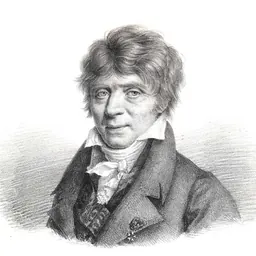
Lived 1793 – 1868 (aged 75). William John Dumaresq was an Australian and British politician, civil engineer, magistrate and civil servant.
William John Dumaresq (25 February 1793 – 9 November 1868) was an English-born military officer, civil engineer, landholder and early Australian politician. He is associated with settler colonisation of the areas around Scone and Armidale, in New South Wales.
Life and career
Dumaresq was the son of John Dumaresq, a Shropshire colonel, and Anne Jones. He attended the Royal Military College, Great Marlow, and became a civil engineer. He served in the Royal Staff Corps in the Peninsular War and in Canada. He rose to the rank of Captain.
He was a brother-in-law of Ralph Darling. When Darling became Governor of New South Wales, in 1824, Dumaresq and his brothers, Henry and Edward, came with Darling and their sister, Eliza, to Australia. William and his brother Henry were subject to criticism, from local opponents of Darling, who saw the brothers as beneficiaries of nepotism. He was acting Deputy Surveyor-General in New South Wales. His appointment was never confirmed, due to concerns about the many appointments Darling had made of his relatives and close associates. and a watch house in Sydney (later the Erskine Street Police Station). In 1828, he purchased land owned by the church at Glebe, although he did not live on it.
He retired in 1829, after the death of Surveyor-General John Oxley and his replacement by Thomas Mitchell. It seems that Mitchell was resentful of Governor Darling and any of those who had been favoured by Darling, such as Oxley, Darling's brothers-in-law, Henry Dumaresq and Dumaresq himself, George Bowen (an assistant surveyor under Oxley), and Charles Sturt (who was a cousin of Henry Dumaresq's wife).
From 1830, Dumaresq was a magistrate of the Hyde Park Barracks Court of General Sessions, with Samuel Augustus Perry (his successor as Deputy Surveyor-General) and James Busby. Convicts were brought to the site for sentencing and punishment by the court, sitting in northern perimeter buildings of the barracks. Punishments handed down included floggings, which were carried out on site, or terms on the treadmill or chain gangs. This role almost certainly ended, around the time that Governor Darling was succeeded by the liberal-minded Richard Bourke, in 1831. Bourke was horrified by the severity and arbitrary application of the punishments to which convicts were being sentenced, and had legislation passed, which codified offences and limited punishments.
On 15 October 1830, he married Christiana Susan Macleay, daughter of the Colonial Secretary, Alexander Macleay; they had three daughters and two sons.
During the 1840s, Dumeresq subdivided and sold his land, the 'Bossier Estate', at Glebe. It was an early suburban land development in what is now an inner suburb of Sydney. His land ran east-north-east, from modern-day Glebe Point Road, to the foreshores of Rozelle Bay and Blackwattle Bay.
William seems to have emerged from retirement into a more public role, only after the death of his more ambitious and temperamental brother, Henry Dumaresq, in 1838. In addition to his own estate of St Aubins, William became responsible for operating St Hiliers near Muswellbrook (by then his brother's widow's property), and both the New England runs.
Prior to the establishment of responsible government, Dumaresq was elected to the partially elected New South Wales Legislative Council at the first elections held in the colony in 1843. He represented the electorate of Counties of Hunter, Brisbane and Bligh. He was defeated for the seat at the 1848 New South Wales colonial election by Donald McIntyre, but was re-elected in 1851 as the member for Counties of Phillip, Brisbane and Bligh.
He was appointed to the reconstituted Council in 1856, but resigned without taking his seat. After that, his only public roles seem to have been in relation to the church. His remains lie in the Camperdown Cemetery, in Sydney, in one of the two vaults bearing the family name Macleay.
Legacy There is a memorial to him in St. James' Church, Sydney, which has this inscription, "William John Dumaresq Captn. Royal Staff Corps Served in the Peninsula, and Canada, and New South Wales Born xxv February MDCCXCII., died in November MDCCCLXVIII."
The family name Dumaresq appears in the naming of features in the north of New South Wales and the south of Queensland, including Dumaresq (a locality) and its former railway station, Dumaresq Creek and on it Dumaresq Dam, Dumaresq River, Mount Dumaresq, and the former Dumaresq Shire.
Dumaresq's Sydney home at Rose Bay, Tivoli House, although subsequently extended, still exists as a building of the Kambala School. He is also remembered by Dumaresq Reserve, a foreshore park in Rose Bay, The land that he sold at Glebe is now a significant part of that inner suburb, and the heritage building Bidura is located upon one of the lots.
One of the main streets of Scone is St Aubins Street, named after Dumaresq's estate, which was south of the settlement. Dumaresq's land adjoined the original village on its north and east sides, and also came close to its southern edge. As the town grew it expanded over some of the land formerly owned by William Dumaresq. Horse breeding, which Dumaresq pioneered at Scone, is still an important industry in the surrounding area.
Don’t just read it —
keep it.
Full-length biographies made to live with: read them, listen on the way to work, watch them tonight.
- E-book
- Audio
- Video
Instant download · yours to keep · every purchase keeps this site free
Important facts
People in William John Dumaresq's life
Named in this biography and alive at the same time



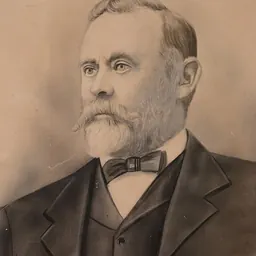
Related people
Same field, nearest in time

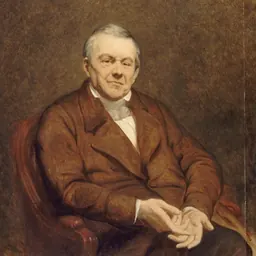
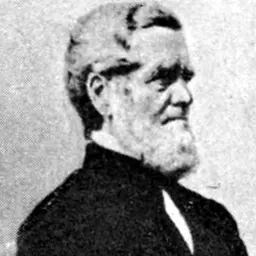
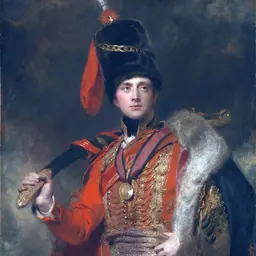

Contemporaries
People whose lives overlapped William John Dumaresq's




Frequently asked questions
Who was William John Dumaresq?
Anglo-Australian civil engineer in New South Wales and Queensland (1793-1868)
When was William John Dumaresq born?
William John Dumaresq was born on 25 February 1793 in Jersey.
When did William John Dumaresq die?
William John Dumaresq died on 9 November 1868 in Moreton Bay.
What was William John Dumaresq's occupation?
William John Dumaresq was a politician, civil engineer, magistrate and civil servant.
What nationality was William John Dumaresq?
William John Dumaresq was Australian and British.
Sources & further reading
· Wikipedia: William John Dumaresq
Cite this page
APA: Biography.guide. (2026). William John Dumaresq. https://biography.guide/william-john-dumaresq/
MLA: "William John Dumaresq." Biography.guide, https://biography.guide/william-john-dumaresq/.
Chicago: "William John Dumaresq." Biography.guide. https://biography.guide/william-john-dumaresq/.
Data last updated: 2026-09-22 · Spot an error? Report a correction.
Page generated 2026-09-27 05:25 UTC