
William "Jock" Ross
Scottish-Australian outlaw biker
About William "Jock" Ross
Born 1943. William "Jock" Ross is an Australian.
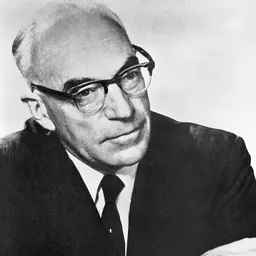
William George "Jock" Ross (born 5 August 1943) is a Scottish-born Australian outlaw biker, best known as the founder and the "Supreme Commander" of the Comanchero Motorcycle Club and for his involvement in the Milperra massacre of 1984. Ross was sentenced to life imprisonment with Judge Roden childing him as one of the men most responsible for the shoot-out at the Viking Tavern.
Youth Ross was born in Glasgow, Scotland into a working-class family. Ross grew up in the Gorbals neighbourhood of Glasgow, where his father worked as a lorry (truck) driver. Ross stated of his youth: "In the old Glasgow days you never backed off, that’s how you survived. The Gorbals was tough and you had to be tough too." As an engineer, he was involved in clearing minefields left over from the Second World War in Libya as well as laying minefields in the Aden Protectorate (modern Yemen) and Hong Kong. The Australian journalists Lindsay Simpson and Sandra Harvey described Ross as a natural "leader of men", an extremely charismatic man whose machismo and toughness inspired much devotion from other men. In 1971, Ross purchased a property along the then rural Mangrove Mountain Road for $800 that became his home. Settling with Ross in his caravan were his first wife Sandy and their infant daughter Deidre. Ross found the sunny New South Wales countryside to be a refreshing change from the decaying industrial neighbourhoods of the Gorbals where he had grown up. Ross's only major weakness was that he believed in ghosts, and was terrified of the spirits that he believed wandered around the New South Wales countryside at night. In particular, Ross was convinced that his caravan was haunted by the ghost of a 19th-century gold prospector who had drowned in a nearby creek along with the ghost of a lorry driver who had crashed on a highway close to his home.
Ross had known a number of motorcycle riders who liked to drink in the pubs along a coastal road north of Sydney and persuaded them to join the Comancheros. Ross led the Comancheros in series of brawls against another outlaw biker club, the Knights over the course of 1973. In May 1973, Ross executed an ambush of the Knights when he sent an emissary to the Tall Timbers Hotel in Ourimbah to say that Ross and a few other Comancheros were having a keg party out in the bush. When the Knights arrived at the party, Ross along with the entire Comancheros were waiting for them and carried out the ambush that Ross had carefully prepared. During the course of the fight, Ross was run over by a Knight in his motorcycle, breaking his leg and causing him to have a slight limp thereafter. Ross continued his feud with the Knights by laying in wait for them along in the bushes along the coastal roads and he would try to shoot them with his rifle when he saw them. Simpson and Harvey wrote: "Jock Ross had by then built an aura around himself. Even the police with whom he had his earliest dealings spoke of him with respect. He was the sort of man the police admired, a man with a fearsome reputation, someone to be reckoned with". That Ross beat up a "pug" (a professional fighter) in a bar brawl contributed to the respect that the police felt for him. In response to a warning from Sergeant Max Lamond of the Newcastle police that his feud with the Knights was getting out of hand, Ross relocated the Comancheros to the Sydney suburb of Parramatta. Ross hung a sign on the wall of the Comancheros' clubhouse that read: "If it's white, sniff it/If it's female or it moves, fuck it/If it narks-kill it". One member who joined the Comancheros in 1974 who idolised Ross was Anthony "Snodgrass" Spencer who saw him as a surrogate father who provided him with the love he never received from the father he had never known. Peter Edwards, the crime correspondent of The Toronto Star, described Spencer as very much a surrogate son to Ross.
Ross had an intensely authoritarian leadership style shaped by his military background and he gave himself the grandiose title of the "Supreme Commander". He was described as leading with "an iron fist". His favorite magazine was Soldier of Fortune, an American magazine catering to mercenaries and more commonly men who fantasise about being mercenaries. Like many other outlaw bikers, Ross's politics tended towards the extreme right and he had a gigantic Nazi swastika flag prominently hanging on the wall of the Parramatta clubhouse. Ross had the new members of the Comancheros swear allegiance to not only the Comanchero club, but also to himself as the "Supreme Commander". Ross led his men on weekly para-military drills intended to prepare them for brawls against rival bikers. The Comancheros were considered to be the most violent of Australia's many outlaw biker clubs in the 1970s and 1980s as Ross was constantly engaged in biker wars. The Canadian journalists Julian Sher and William Marsden wrote that Ross was well known for planning his attacks "with military precision". Sher and Marsden described Ross as a man with "disturbing visions of running his own private army". Besides for the endless drilling, Ross formed his own elite force of especially tough fighters, which he called the Strike Force. Many of the younger Comancheros who joined the biker gang in the late 1970s-early 1980s disliked Ross as one former member told the media: "If I wanted to march around in the fuckin' backyard, I would had joined the fuckin' army".
In 1980, Ross's first marriage ended in a divorce. That same year, the Comanchero had 20 members, but 7 suddenly resigned with Ross's former wife Sandra moving in with one of the members who had resigned, leaving the club with 13 members. Over the next three years, Ross expanded the Comanchero to 45 members, many of whom did not share the reverence that the members who joined the 1960s or 1970s did. In the early 1980s, Ross founded a fencing contracting business and was successful enough to be able to afford to buy a house in a middle class district in the West Pennant Hills. Ross started to date a single mother, Vanessa Eaves, whom he met in a bar. Ross described Eaves as the ideal "biker girl" who had a "a bit of fire" in her, but was ultimately submissive and docile towards her boyfriend. In the outlaw biker subculture, the girlfriends and wives of the bikers are considered to be "property" as the "biker girls" are treated as sex slaves who can be sold or bought. Simpson and Harvey wrote: "Comanchero men owned their women. Vanessa accepted this". Relations between Ross and Spencer went into decline when Spencer was not invited to Ross's second wedding in 1983. Ross's bride, Vanessa Eaves, had vetoed having "Snoddy" Spencer at the wedding under the grounds that: "Snoddy is always stoned and you know how stupid he gets. I'm not going to have him ruin my wedding".
In June 1983, the Comancheros became involved in a dispute with the Loners Motorcycle club. Ross led a raid on the Loners' clubhouse that ended with the three Loners present at the time of the raid being beaten bloody. Ross then suggested a meeting to discuss a truce, which proved to be a ruse. When the Loners arrived in the back alley for the meeting, they were surrounded and beaten up by a superior forces of Comancheros armed with baseball bats who took away their "colours". Ross forced the Loners to become a "feeder club" (i.e. a puppet club) for the Comancheros, which he named the Bandileros. There was continuing tension between the former Loners versus the original Comancheros. In addition, many Comancheros disliked Ross's leadership style, which was considered to be too authoritarian. The British journalist Annie Brown described Ross as "manipulative, violent and domineering". Ross had already come into conflict with "Caesar" Campbell who along with his brothers Philip "Bull" Campbell, Gregory "Shadow" Campbell, John "Whack" Campbell and Geoff "Snake" Campbell formed the core of the anti-Ross faction in the Comanchero. In July 1983, Ross had a shouting match with "Caesar" Campbell at a club meeting over the size of the clubhouse with Campbell demanding that the Comanchero move to a bigger clubhouse. Joined by his brothers along with Spencer, Campbell stormed out of the meeting.
The spokesman for the discontent in the ranks was Spencer. To avoid having to answer the charges that he violated his own rules against sleeping with the wife of another Comanchero, Ross split the Comancheros into two chapters; the ones unhappy with his leadership, led by Spencer, were assigned to a new chapter in Birchgrove. The Birchgrove chapter at 105 Louisa Road with Spencer as the chapter president opened in August 1983. Shortly afterwards, Ross was involved in an incident when he attempted to enter a pub in Kings Cross while being visibly drunk. Ross was refused admittance by the pub's Maori bouncers and was beaten up when he attempted to force his way in. Ross called upon all Comancheros to join him in beating up the bouncers in revenge, and was furious when Spencer declared that the Birchgrove chapter would not be involved. Spencer's decision to declare his neutrality was in turn sparked by his resentment at being excluded from Ross's wedding, which he took as a personal insult.
Continuing tensions between the two chapters led to the Birchgrove chapter under Spencer breaking away to join the Bandidos Motorcycle Club in November 1983. In February 1984, Ross opened up a new chapter under his leadership in Harris Park. Ross demanded the return of the former Comanchero colours, a demand that was only partially met as a number of the Comanchero colours had been mailed off to Texas, which proved to be a major sore point. Ross saw "Caesar" Campbell as the real leader of the Bandidos with Spencer just a puppet president. Ross had T-shirts made that featured a photograph of Campbell's face with a X drawn across it along with the caption "Nail Caesar".
The Milperra Massacre Over the course of 1983 and 1984, relations between the Bandidos and the Comancheros grew increasingly tense. On 26 July 1984, a Comanchero tried to drink at the barroom of the Royal Oak Hotel in Parramatta, only to be informed by two Bandidos present that the Royal Oak was a "Bandido hotel" and that he could either leave or be beaten. On the evening of the next day, Ross along with his sergeant-at-arms, Philip "Leroy" Jeschke and another Comanchero marched into the barroom and Ross told the barman, Graham Marshal, "three beers, mate!" When he was refused service, Ross exploded in rage and asked why the Bandidos were allowed to drink at the Royal Oak Hotel while his men were not. Marshal was in the process of again refusing service when Jeschke swung his fist at him while Ross threw his bar stool at a cabinet full of alcohol and glasses behind Marshall. Content at the damage he had done, Ross told Marshall "no-one tells me where my men can drink!" On the evening of 4 August 1984, Ross paid for the petrol for his 1981 Electraglide Harley-Davidson motorcycle and then went riding towards Ermington. During his ride on Marsden Road he found himself followed by a white Holden van that attempted to run him over, leading to a wild chase down the road as Ross raced ahead of the van with his motorcycle tilting at a dangerous 45-degree angle. After being bumped by the van several times, Ross finally lost control of his motorcycle, which somersaulted and threw him onto the ground. The van stopped, two men stepped out whose faces Ross could not make out in the darkness, but who drove away when Ross forced himself to his feet despite his injuries. Later that night, Ross phoned his wife Vanessa to tell her: "Those cunts have done it this time. They've run me off the road. I had a full petrol tank. The fucking thing could have exploded. Those fucking Bandaid arseholes, I could have fucking died. They meant to kill me". Vanessa Ross reported that she had never seen her husband as angry as he was that night. Vanessa Ross phoned Robert "Foggy" Lane, the Comanchero vice president to inform him: "You've got to put a stop to this, Robbie. It's just got to end. The petrol tank was full you know, the bike could have exploded".
Following an incident on 9 August 1984 when three Comancheros were beaten up by the Bandidos at the Bull and Bush Hotel, the two clubs became involved in a biker war starting on 11 August 1984. Later on 11 August, Ross had the Comanchero clubhouse fortified. During a phone call, Ross and Spencer laid out their rules for their biker war such as no fights in public places or the homes of members, which both sides completely ignored. Ross believed wrongly that Spencer and the other Bandidos were terrified of him, and all that was required was a show of force on the part of the Comancheros to win the biker war. Early on the morning of 2 September 1984 Ross was angered when his brother-in-law, Glen Eaves, who also a Comanchero, told him in a phone call that the Bandidos had ridden by his house led by the Campbell brothers, which he took as a personal insult. The Bandidos told Eaves that they would be attending the swap meeting at the Viking Tavern in Milperra later that day and dared the Comanchero to show up. Ross then phoned Lane to tell him: "The Bandaids [Ross's term of abuse for the Bandidos] could be going to the swap meet. A few of our boys plan to go, so I reckon we should all go-as many that can. There could be trouble". Ross assembled all of the Comancheros to tell them that they were going to the Viking Tavern with weapons including guns, and then shouted "Okay men, let's move it out!" Going with Ross to the Viking Tavern were Robert "Foggy" Lane, Phillip "Leroy" Jeschke, John "Littlejohn" Hennessey, Garry "Pee Wee" Annakin, Ian "Snow" White, Ivan "Sparrow" Romcek, Raymond "Sunshine" Kucler, Michael "Tonka" O'Keefe, Terrence Parker, Glen Eaves, Andrew Thomas, John "Blowave" Bodt, Scott "Bones" Dive, Rick "Chewy" Lorenz, Tony "Dog" McCoy, Robert "JJ" Heeney and Kevork "Kraut" Tomasian. Vanessa Ross would had preferred that her husband spend Father's Day with her and their infant daughter, Holly, but he insisted the Comanchero was more important to him than spending time with his family.
On 2 September 1984 at the parking lot of the Viking Tavern in the Sydney suburb of Milperra, the two gangs clashed during a swap meet hosted by the British Motorcycle Club of Sydney. During a swap meet, used and new motorcycle parts along with motorcycle-related memorabilia and trinkets were put on the market while barbecue food and alcohol were sold in plentiful quantities. Despite his later claims at his trial in 1985 and 1986 that no violence was planned, Ross had his men armed with knives, baseball bats, shotguns and rifles as he knew that Spencer and the Bandidos would be attending the swap meet that day. Ross devoted much time beforehand to plotting an ambush as he planned to have the Comancheros encircle the Bandidos when they arrived at the Viking Tavern. Ross and the Comancheros had arrived first at about 1 pm, armed and ready for a fight should the Bandidos arrive. Ross served his sentence at the Long Bay Central Industrial Prison.
In 1989, an appeal court agreed to hear Ross's appeal of the verdict and in 1992 the appeals court ruled in his favor. Ross's conviction was reduced from murder to manslaughter, which reduced his sentence. Ross served a total of 5 years and three months in Long Bay prison and was released on parole on 7 December 1989 per the "complicated" parole rules in Australia. Ross received an automatic one-third remission in his first degree murder sentence because it was his first major criminal conviction and received further remissions in his sentence by taking adult education courses and industrial skills courses. Ross has never expressed any guilt over the Milperra massacre and instead sees himself as a victim.
In January 1994, representatives of six major biker gangs, namely the Hells Angels, the Outlaws, the Bandidos, the Rebels, the Black Uhlans and the Nomads, attended a gang summit in Sydney and informally decided to align under a decree known as the "Australia 2000 Pact". On 21 June 2021, the Crown dropped the charges against Teo just hours before she was due to go on trial on charges of "dangerous driving occasioning grievous bodily harm".
Books
Don’t just read it —
keep it.
Full-length biographies made to live with: read them, listen on the way to work, watch them tonight.
- E-book
- Audio
- Video
Instant download · yours to keep · every purchase keeps this site free
Important facts
People in William "Jock" Ross's life
Named in this biography and alive at the same time






Contemporaries
People whose lives overlapped William "Jock" Ross's


Frequently asked questions
Who is William "Jock" Ross?
scottish-Australian outlaw biker
When was William "Jock" Ross born?
William "Jock" Ross was born in 1943.
What nationality is William "Jock" Ross?
William "Jock" Ross is Australian.
Sources & further reading
· Wikipedia: William "Jock" Ross
· DBpedia: William "Jock" Ross
Cite this page
APA: Biography.guide. (2026). William "Jock" Ross. https://biography.guide/william-jock-ross/
MLA: "William "Jock" Ross." Biography.guide, https://biography.guide/william-jock-ross/.
Chicago: "William "Jock" Ross." Biography.guide. https://biography.guide/william-jock-ross/.
Data last updated: 2026-09-20 · Spot an error? Report a correction.
Page generated 2026-09-27 05:04 UTC