
About William J. Wilgus
Lived 1865 – 1949 (aged 83). William J. Wilgus was an American civil engineer and engineer.
William J. Wilgus (1865–1949) was an American civil engineer. In 1902 he was responsible for the design and construction of New York City's Grand Central Terminal. Wilgus coined the term "taking wealth from the air" from his idea to lease the area above the Park Avenue Tunnel in order to help finance the station. This is based on the legal concept known as air rights. He is also credited with the double-stacked track design of the station, that greatly increased its capacity. During the First World War, Wilgus served as the American Expeditionary Force chief of logistics and rail transport.
Biography William John Wilgus was born on November 20, 1865, in Buffalo, New York, the son of Frank Augustus Wilgus and his wife Margaret Ann Woodcock.
Wilgus graduated from Buffalo Central High School in 1883. He studied for two years under a local civil engineer and took a Cornell correspondence course in drafting, 1883–1885, ending his formal education.
In 1907 Wilgus was forced to resign from the New York Central and Hudson River Railroad after a crash involving the new electric locomotives he had helped to develop killed 20 passengers. Sixteen died on impact, and four more died in the hospital. The victims were mostly women and children. Anxious to defend his reputation, he carefully documented the design decisions, but the railroad's lawyers forced him to destroy his papers, fearing that they would be brought into court as evidence. To keep the railroad from pinning the blame on him, he reconstructed the documentation and used its existence to keep the railroad from throwing him to the wolves.
Wilgus was appointed director of military railways and deputy director of general transportation in the American Expeditionary Forces; he retired with the rank of Colonel and a Distinguished Service Medal.
In 1933, Wilgus donated land in Weathersfield, Vermont to the state for use as a state park; developed in the 1930s by the Civilian Conservation Corps, it is called Wilgus State Park in his honor.
Wilgus died on October 24, 1949. President of the American Society of Civil Engineers New York chapter (1920–1921) Honorary doctorate in engineering from the Stevens Institute of Technology (1921) Honorary doctorate in engineering from the University of Vermont (1927) Served as a colonel in the United States Army in World War I, directing all logistics and rail transport, decorated with the Distinguished Service Medal for his accomplishments.
Footnotes
Don’t just read it —
keep it.
Full-length biographies made to live with: read them, listen on the way to work, watch them tonight.
- E-book
- Audio
- Video
Instant download · yours to keep · every purchase keeps this site free
Important facts
People in William J. Wilgus's life
Named in this biography and alive at the same time


Related people
Same field, nearest in time



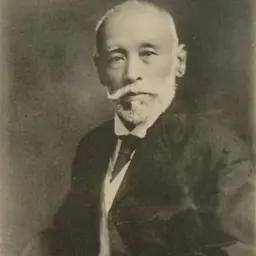

Contemporaries
People whose lives overlapped William J. Wilgus's
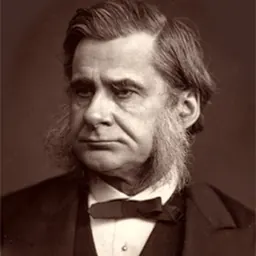

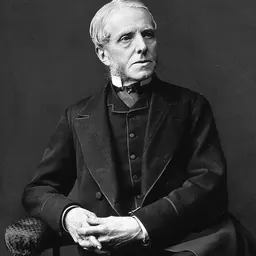
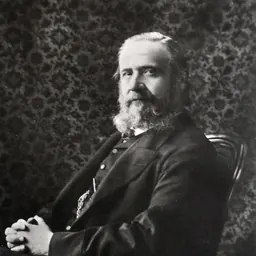


Frequently asked questions
Who was William J. Wilgus?
American civil engineer (1865–1949)
When was William J. Wilgus born?
William J. Wilgus was born on 20 November 1865 in Buffalo.
When did William J. Wilgus die?
William J. Wilgus died on 10 October 1949 in Claremont.
What was William J. Wilgus's occupation?
William J. Wilgus was a civil engineer and engineer.
What nationality was William J. Wilgus?
William J. Wilgus was American.
Sources & further reading
· Wikipedia: William J. Wilgus
Cite this page
APA: Biography.guide. (2026). William J. Wilgus. https://biography.guide/william-j-wilgus/
MLA: "William J. Wilgus." Biography.guide, https://biography.guide/william-j-wilgus/.
Chicago: "William J. Wilgus." Biography.guide. https://biography.guide/william-j-wilgus/.
Data last updated: 2026-09-20 · Spot an error? Report a correction.
Page generated 2026-09-27 05:32 UTC