
William Herbert Fowler
Amateur cricketer and golf course architect
About William Herbert Fowler
Lived 1856 – 1941 (aged 84). William Herbert Fowler was a British cricketer and golf course designer.
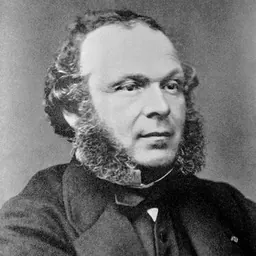
William Herbert Fowler (28 May 1856 – 13 April 1941), also known as Bill Fowler and Herbert Fowler, was an English amateur cricketer who played 26 first-class cricket matches during the 1880s, principally for Somerset County Cricket Club. He was an all-rounder who was best known for his big-hitting when batting. He was also a famous golf course architect, and designed Walton Heath Golf Club among many others in the United Kingdom and United States.
Early and personal life Fowler was born in Tottenham, London as the son of William Fowler, a barrister, and Rachel Maria, née Howard. In 1893, he worked as a banker, and during this time, he invested heavily, especially in the Americas. His first-class debut was not for a county team, but instead for the well-known Marylebone Cricket Club (MCC) in 1880. Facing Cambridge University, Fowler scored 36 runs in his only innings. He passed 50 for the first time in his following match, also for the MCC, scoring 61 runs after opening the innings against Oxford University. He played in Somerset's first ever first-class match in 1882, opening the innings alongside Edward Sainsbury, but his scores of 9 and 18 were the county's highest in each innings as they lost the match by an innings. Later that season, playing against the MCC at Lord's, Fowler had his best bowling performance in first-class cricket, claiming four wickets during his seven overs, conceding just eight runs. In the same match, having scored a duck in the first innings, he scored 23 in the second, which included a boundary which travelled a reputed 157 yards before landing, leaving the ground. When the MCC visited Taunton that season, he reached his highest total in first-class cricket, totalling 139, his innings scattered with boundaries.
The 1882 season was Fowler's best with the bat in first-class cricket; the following year he failed to score a half-century, despite batting in 18 innings, and his average of 12.27 was significantly lower than the 21.36 he had managed the previous season. He only appeared twice for Somerset in 1884, and also played a side representing the South of England, and the MCC during the year. During the match for the MCC, played against Oxford University, he struck his final half-century, top-scoring for his side in the first innings with 60 runs. His final appearance in first-class cricket came the following season during the same fixture, during which he scored 8 and 20. He played occasionally for Somerset in 1887 and 1888, when they had lost their first-class status. A tall player, he was reckoned to weigh around 14 or 15 stone. David Foot describes him as "perhaps the earliest Somerset batsman to parade the fundamental skills of slogging." His improvement was marked; a 1901 newspaper described it: "A few years ago he was unknown and as he is now in his mid-forties his recent exploits appear particularly brilliant. He drives almost as far as James Braid, the Open champion." He was known as an eccentric player, often varying the size of the balls and clubs with which he played: "Mr. Fowler putts sometimes with a driving iron but often uses a mallet which looks like a sandwich box with a stick stuck through the middle." When the course was opened in 1904, it was an instant success. He believed strongly that courses should follow the contours of the land, and have a natural feeling, shunning the use of "man-made contrivances", believing that topography could test the world's best golfers just as adequately.
Fowler had strong views on many aspects of a golf course, including bunkers, which he believed should have gradual slopes to allow the ball to roll to the base. Contemporaries suggested that he designed large courses that would favour big hitters such as himself, but Fowler strenuously denied this, stating that they were designed with fairness in mind.
Don’t just read it —
keep it.
Full-length biographies made to live with: read them, listen on the way to work, watch them tonight.
- E-book
- Audio
- Video
Instant download · yours to keep · every purchase keeps this site free
Important facts
People in William Herbert Fowler's life
Named in this biography and alive at the same time


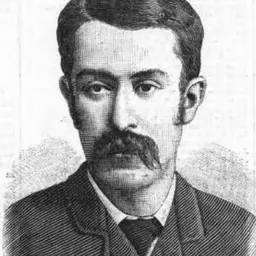

Related people
Same field, nearest in time
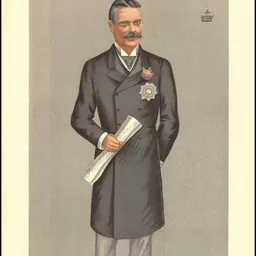


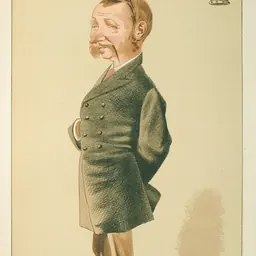


Contemporaries
People whose lives overlapped William Herbert Fowler's
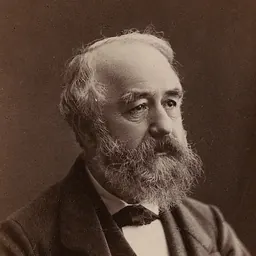

Frequently asked questions
Who was William Herbert Fowler?
Amateur cricketer and golf course architect (1856-1941)
When was William Herbert Fowler born?
William Herbert Fowler was born on 28 May 1856 in Tottenham.
When did William Herbert Fowler die?
William Herbert Fowler died on 13 April 1941 in Chelsea.
What was William Herbert Fowler's occupation?
William Herbert Fowler was a cricketer and golf course designer.
What nationality was William Herbert Fowler?
William Herbert Fowler was British.
Sources & further reading
· Wikipedia: William Herbert Fowler
· DBpedia: William Herbert Fowler
Cite this page
APA: Biography.guide. (2026). William Herbert Fowler. https://biography.guide/william-herbert-fowler/
MLA: "William Herbert Fowler." Biography.guide, https://biography.guide/william-herbert-fowler/.
Chicago: "William Herbert Fowler." Biography.guide. https://biography.guide/william-herbert-fowler/.
Data last updated: 2026-09-20 · Spot an error? Report a correction.
Page generated 2026-09-27 05:20 UTC