
About William Hely
Lived 1909 – 1970 (aged 60). William Hely was an Australian aircraft pilot.
Air Vice Marshal William Lloyd Hely, CB, CBE, AFC (24 August 1909 – 20 May 1970) was a senior commander in the Royal Australian Air Force (RAAF). He graduated from the Royal Military College, Duntroon, in 1930 before transferring to the RAAF as a cadet pilot. Hely came to public attention in 1936–37, first when he crashed on a survey flight in the Northern Territory, and later when he undertook two successful missions to locate missing aircraft in the same vicinity. His rescue efforts earned him the Air Force Cross. After occupying staff positions during the early years of World War II, Hely was appointed Officer Commanding No. 72 Wing in Dutch New Guinea in May 1944. Later that year he formed No. 84 (Army Cooperation) Wing, commanding it during the Bougainville campaign until the end of the Pacific War.
Hely spent the immediate post-war period on the staff of RAAF Headquarters, Melbourne. From 1951 to 1953 he served as Air Officer Commanding (AOC) Western Area Command in Perth, after which he was appointed a Commander of the Order of the British Empire. He was Deputy Chief of the Air Staff from 1953 to 1956, AOC Training Command from 1956 to 1957, and Head of the Australian Joint Services Staff in Washington, D.C. from 1957 to 1960. He then served as Air Member for Personnel (AMP) for six years, his tenure coinciding with a significant increase in manpower to meet commitments in South East Asia and the demands of a major re-equipment program. Having been promoted acting air vice marshal in 1953 (substantive in 1956), he was appointed a Companion of the Order of the Bath in 1964 for his service as AMP. He retired from the Air Force in 1966 and made his home in Canberra, where he died in 1970 at the age of sixty.
Early career
The third child of Prosper Frederick Hely, a storekeeper, and his wife Alice (née Lloyd), William Lloyd (Bill) Hely was born on 24 August 1909 at Wellington, New South Wales. He was educated to Intermediate Certificate level at Mudgee, Wollongong and Rozelle Public Schools, and at Fort Street High School, Petersham. Leaving school in 1926, he worked as a clerk and studied accountancy in his spare time. On 16 February 1927, Hely entered the Royal Military College, Duntroon, as one of four cadets sponsored that year by the Royal Australian Air Force (RAAF), which did not yet have its own officer training college. He graduated as a lieutenant on 9 December 1930, and the following day enlisted in the RAAF.
As well as the four graduates the Air Force had enrolled in 1927, budgetary constraints imposed during the Great Depression necessitated the transfer from Duntroon to Point Cook of eight other RAAF-sponsored cadets midway through their four-year course, including Alister Murdoch, Bill Garing and Douglas Candy. His early postings as a pilot in 1932 and 1933 were to RAAF Station Richmond, New South Wales, and RAAF Station Laverton, Victoria. Qualifying in aerial photography, he served at Point Cook from 1933 to 1936.
In April 1936, Hely took command of No. 3 Squadron's North Australia Survey Flight, one of two such flights formed by the Air Force that month to carry out photographic surveys. Flying a twin-engined de Havilland Dragon Rapide (serial number A3-2), Hely departed Richmond on 11 April for Port Hedland, which was to be the flight's base for its initial survey work in Western Australia. Over the Northern Territory, between Newcastle Waters and Wave Hill, he became lost, ran out of fuel, and had to crash land. He and his crew of two were found by RAAF search aircraft ten days later, on 22 April. The Argus had reported that "grave fears" were held for their safety, but they were largely uninjured, Hely having suffered cuts and abrasions to his head and leg. The aircraft was badly damaged and had to be transported back to Richmond in pieces.
For its 1937 aerial survey program, the RAAF formed the Communications and Survey Flight under No. 1 Aircraft Depot's Recruit Training Squadron at Laverton on 3 May. The flight was divided into Western and Eastern Air Detachments, the former under Hely. Flying a Tugan Gannet, Hely's first task became searching for survey director Sir Herbert Gepp, whose Rapide (A3-2, the same one Hely crash landed the previous year) had gone missing on an inspection flight in the Northern Territory between Tennant Creek and Tanimi. Hely located the downed Rapide on 23 May, guiding in a ground party that was able to clear a makeshift runway and allow Gepp and his team to take off and resume their journey. On 25 September, Hely was again diverted from survey work to search for a lost plane, this time the de Havilland Gipsy Moth of flying doctor Clyde Fenton, who had gone missing north-east of Newcastle Waters. Hely, once more piloting Rapide A3-2, found the Moth three days later and landed to rescue the lost doctor. Fenton was subsequently quoted as saying "I have only the highest praise for the efficient manner in which Hely conducted a difficult search and the skilful way in which he located me and picked me up." The rescue efforts made Hely one of the RAAF's best-known public figures. Completing his posting to the survey flight, he served as adjutant at Laverton in 1938. On 29 November 1938, he married secretary Jean McDonald at St Aidan's Anglican Church in Launceston, Tasmania; the couple had two daughters. Hely spent the following year in Britain, attending the Royal Air Force Staff College, Andover, and was promoted to squadron leader in September. Hely was promoted to temporary wing commander the following January, and was the ranking Air Force delegate at a series of staff talks in Batavia and Singapore regarding the defence of the Dutch East Indies. He became Director of Operations at RAAF Headquarters in August. Two days later, the Japanese bombed Darwin, Northern Territory; Hely circulated a memo early the next month to all commands on the lessons learnt from the raid. He was posted to Darwin in May to join North-Western Area headquarters as senior air staff officer, and was granted the temporary rank of group captain in January 1943. Hely returned to RAAF Headquarters in March to become Director of Air Staff Plans. Comprising fighter and dive-bomber squadrons, the wing had been established to undertake air defence and patrol tasks in and around western New Guinea. Hely departed Merauke in September 1944 to establish an army cooperation formation, No. 84 Wing, in Cairns, Queensland. They were, as described by the official history of the RAAF in the Pacific, "essentially non-offensive in character", responsible for reconnaissance, artillery spotting, supply drops to ground forces, spraying DDT to combat malaria, and guiding close support aircraft to their objectives. The wing could also carry out its own strikes on "targets of opportunity". No. 84 Wing comprised No. 5 (Tactical Reconnaissance) Squadron, No. 17 Air Observation Post Flight, No. 10 Communication Unit (subsequently renamed No. 10 Local Air Supply Unit), and No. 39 Operational Base Unit. Between December 1944 and January 1945, the wing lost one Auster, one Wirraway, and one Boomerang on operations. He was by this time among a coterie of officers at group captain level, including Val Hancock, Alister Murdoch and Bill Garing, earmarked by the Australian Air Board for leadership roles in the post-war RAAF, which was to shrink rapidly with demobilisation. At RAAF Headquarters, Hely was appointed deputy director of Operations, in which capacity he served on a committee to investigate proposals for an officer training college, later established as RAAF College, Point Cook. Along with Hely, all officers associated with the proposal's examination were former Duntroon students, including the Deputy Chief of the Air Staff, Air Commodore Frank Bladin, the Director of Postings, Group Captain Murdoch, and the Director of Training, Group Captain Paddy Heffernan. Another Duntroon graduate, Air Commodore Hancock, became the college's first commandant. Hely was appointed Director of Organisation and Staff Duties in 1946. That November, he became Director of Postings. The following year, he took up the position of Director of Personal Services, before departing for Britain in December 1948 to study at the Imperial Defence College, London. In September, he was appointed Officer Commanding Western Area, Perth, taking up his new post in mid-October. He was promoted to acting air commodore in July 1952, becoming Air Officer Commanding (AOC) Western Area. His rank was made permanent in September, and the same month he was appointed aide-de-camp to Queen Elizabeth II. Among Hely's duties as AOC Western Area was coordinating air support for the British atomic test on Montebello in October 1952, including supply and observation flights by Dakotas of No. 86 (Transport) Wing. He was appointed a Commander of the Order of the British Empire (CBE) in the Queen's Coronation Honours promulgated on 1 June 1953, for his war service and his work during the Montebello test. In August, he was named Deputy Chief of the Air Staff (DCAS), with the acting rank of air vice marshal, effective from October; he replaced Air Vice Marshal Hancock.
Between October 1953 and February 1954, the RAAF underwent major organisational change, as it transitioned from a geographically based command-and-control system to one based on function, resulting in the establishment of Home (operational), Training, and Maintenance Commands. At the same time, RAAF Headquarters in Melbourne was absorbed by the Department of Air in Canberra. Hely was acting Air Member for Personnel from 3 January to 7 March 1955, between the terms of Air Vice Marshals Val Hancock and Fred Scherger. On 24 January 1956, he became AOC Training Command, taking over from Air Vice Marshal Murdoch. He was succeeded as DCAS by Air Vice Marshal Douglas Candy. Hely's rank of air vice marshal became substantive on 5 September. That May, Hely was seconded to the Department of Defence and posted to Washington, D.C., to head up the Australian Joint Services Staff.
Hely became Air Member for Personnel (AMP) on 28 March 1960, taking over from the acting AMP, Air Commodore Frank Headlam. The Air Force expanded greatly during Hely's term as AMP, owing to Australia's increasing commitment to the security of South East Asia, and the most significant rearmament program the RAAF had undertaken outside of World War II. Its permanent establishment increased from a steady 15,000 or so in the 1950s to over 18,000 by 1966. Hely himself initiated a scheme to attract staff from the Royal Air Force, which was suffering cutbacks, by opening a recruitment office in London and taking advantage of the Australian government's assisted passage scheme to import trained personnel and their families. As AMP, Hely put forward proposals to increase the number of diploma-qualified engineering and equipment officers in the Air Force. He was also closely involved in deliberations concerning the balance of academic and military studies at the RAAF Academy (previously RAAF College), the outcome of which is considered to have left the course biased towards pure science, rather than its applications to air power.
Retirement Hely retired on 24 August 1966, after almost forty years in the military. He was succeeded the following day as AMP by Air Vice Marshal Candy. The official mourning party included Chairman of the Chiefs of Staff Committee (CCOSC) General Sir John Wilton, former CCOSC Air Chief Marshal Sir Frederick Scherger, Secretary of Defence Sir Arthur Tange, CAS Air Marshal Colin Hannah, former CAS Air Marshal Sir Alister Murdoch, Vice Admiral Sir Victor Smith, Air Vice Marshal Brian Eaton, and Group Captain John Waddy. The guns at Duntroon were fired in salute as the cortege left the church.
Don’t just read it —
keep it.
Full-length biographies made to live with: read them, listen on the way to work, watch them tonight.
- E-book
- Audio
- Video
Instant download · yours to keep · every purchase keeps this site free
Important facts
People in William Hely's life
Named in this biography and alive at the same time





Related people
Same field, nearest in time



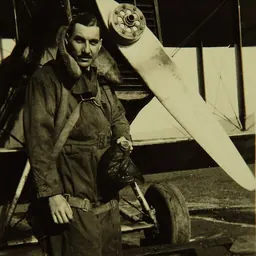
Contemporaries
People whose lives overlapped William Hely's
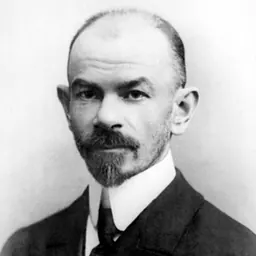



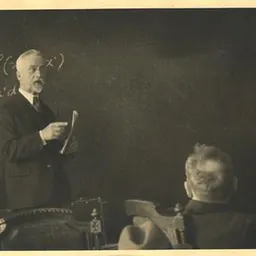
Frequently asked questions
Who was William Hely?
RAAF senior commander
When was William Hely born?
William Hely was born on 24 August 1909 in Wellington.
When did William Hely die?
William Hely died on 20 May 1970 in Canberra.
What was William Hely's occupation?
William Hely was an aircraft pilot.
What nationality was William Hely?
William Hely was Australian.
Sources & further reading
Cite this page
APA: Biography.guide. (2026). William Hely. https://biography.guide/william-hely/
MLA: "William Hely." Biography.guide, https://biography.guide/william-hely/.
Chicago: "William Hely." Biography.guide. https://biography.guide/william-hely/.
Data last updated: 2026-09-20 · Spot an error? Report a correction.
Page generated 2026-09-27 05:27 UTC