
William H. Johnson
President Lincoln's valet
About William H. Johnson
Lived 1833 – 1864 (aged 30). William H. Johnson was a valet.
Abraham Lincoln arriving in Washington; the figure in the lower left hand corner is sometimes said to be William H. Johnson but this is not documented. Date unknown. Lincoln, Ward Hill Lamon, and detectives traveled a secret route from Harrisburg, Pennsylvania to Washington, D.C. to prevent an assassination attempt, called the Baltimore Plot. William Henry Johnson (March 4, 1833 – January 28, 1864) was a free African American and a sometime personal valet of Abraham Lincoln. Having first worked for Lincoln in Springfield, Illinois, Johnson accompanied the President-Elect to Washington, D.C. for his first inauguration (1861).
Once there, he was employed in various jobs, part-time as President's valet and barber, and later, following strife with others on the White House staff, as a messenger for the Treasury Department at $600 per year. Johnson traveled with Lincoln in November 1863 to Gettysburg, Pennsylvania, where Lincoln gave the Gettysburg Address. While traveling, Lincoln experienced symptoms of the onset of smallpox. At that time, an epidemic was spreading through Washington, D.C. and Lincoln's son Tad Lincoln had smallpox. Johnson tended to Lincoln and became quite ill by January 12, 1864, when he was admitted to a hospital. Johnson died within the next couple of weeks.
Personal life Johnson's mother was an enslaved woman. He had a growing family while living in Washington, D.C. In Washington, Lincoln co-guaranteed the mortgage on the house Johnson bought for his family. Abraham Lincoln employed Johnson as a valet and driver in Springfield, Illinois during the time of the 1860 United States presidential election. The Lincolns hosted an event for the Republican Presidential Nomination Notification Committee on May 19, 1860, at their house in Springfield, Illinois. Johnson announced people as they entered the house and directed them to the parlour to meet Abraham and Mary Todd Lincoln.
Lincoln brought Johnson with him to the White House for his first inauguration. To evade an assassination attempt (called the Baltimore Plot), Lincoln left the train he was expected to arrive on in Washington. He boarded another train that took him from Harrisburg, Pennsylvania to Washington, transferring under cover of darkness in Baltimore. Lincoln's lawyer friend, Ward Hill Lamon, was the only person from Lincoln's Illinois entourage known to have traveled from Harrisburg through Baltimore to Washington with Lincoln to elude potential assassins of the Baltimore Plot, and there is no record that Johnson was present on this dangerous stretch of the journey. [Lamon, 42–47; Holzer, 392–396].
Johnson worked for Lincoln as a barber, valet, handyman, messenger, and bodyguard. The president said of him, "although not exactly the most prominent, [he] is yet the most useful member of the presidential party."
Johnson was shunned and treated miserably by others on the White House serving staff, because they were not welcoming of newcomers, did not want a change in the established pecking order among staff, and disliked that he was a particularly dark-skinned African-American.
Besides both men having felt free to ask favors of one another, it is assumed that Johnson was treated equitably as any other man.
Smallpox There was a smallpox epidemic in Washington, D.C. during the winter of 1863–1864. On November 18, 1863, Johnson traveled by train with Lincoln to Gettysburg, Pennsylvania, for the dedication of the Soldiers' National Cemetery where Lincoln would deliver the Gettysburg Address. On the train ride to Gettysburg, Lincoln looked "sallow, sunken-eyed, thin, [and] careworn".
Lincoln's son, Tad Lincoln, had smallpox on the day that Lincoln left for Gettysburg, which prevented Mary Todd Lincoln from traveling with the President.
Lincoln's illness was diagnosed as "Varioloid" which is a mild form of smallpox. He was bedridden and finally recovering on December 15. Lincoln also paid for Johnson's burial at an unknown location. While many modern accounts have placed Johnson's grave in Arlington National Cemetery, all such claims are ultimately based on the same, almost certainly incorrect assumption by the historian Roy P. Basler.
In 1972, Basler claimed that Lincoln had buried Johnson in grave no. 3346 in Section 27 of Arlington National Cemetery, where there is indeed a headstone for one "William H. Johnson, Citizen." In 1977, Basler admitted, however, that he had originally decided to search Arlington "on a hunch," and that he had no evidence connecting the occupant of that grave (or even the cemetery at large) to Lincoln's valet of the same name. In 2006, Gabor Boritt repeated Basler's original anecdote, adding, without substantiation, that Lincoln himself had ordered that Johnson's headstone be inscribed with the epitaph, "Citizen." In 2010, Eric Foner in turn cited Boritt's work, further adding, also without substantiation, that Lincoln "chose the one-word-inscription [as] a direct refutation of the Dred Scott decision."
In 2012, Phillip W. Magness and Sebastian N. Page challenged all the above "embellishments" to the simple fact of Lincoln having paid for Johnson's coffin. Magness and Page observed that "Citizen" appears on all headstones in Section 27 at Arlington, having been used as a synonym for "Civilian" in the brief period before the cemetery became an exclusively military one. Moreover, they noted that the headstone visible today is a 1990s replacement for an original erected only in the 1870s, thus precluding Lincoln's involvement with any inscription; that Johnson's name, even with his middle initial, was too common for historians to reasonably assume the relevant grave his; and that, when Johnson died, the official conversion of the Arlington estate to a cemetery lay some months in the future.
In popular culture William H. Johnson was a character in the 2012 film Abraham Lincoln: Vampire Hunter, played by actor Anthony Mackie. In the film, Lincoln and Johnson are portrayed as childhood friends. In the film's opening scene, a young Lincoln rushes to the aid of a young Johnson, who is being whipped by a slaver. Johnson then goes on to work in the Lincoln White House and assist President Lincoln in his fight against the vampiric forces of the Confederate Army.
Don’t just read it —
keep it.
Full-length biographies made to live with: read them, listen on the way to work, watch them tonight.
- E-book
- Audio
- Video
Instant download · yours to keep · every purchase keeps this site free
Important facts
People in William H. Johnson's life
Named in this biography and alive at the same time
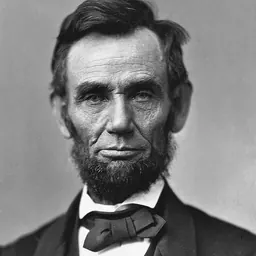


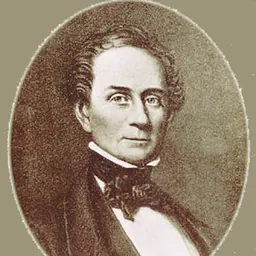
Related people
Same field, nearest in time
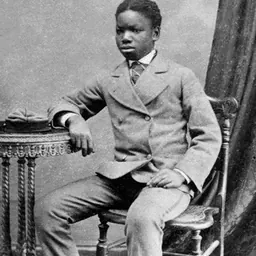
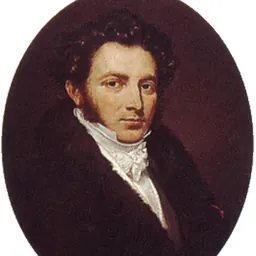
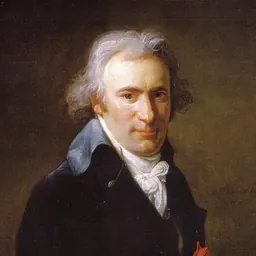


Contemporaries
People whose lives overlapped William H. Johnson's



Frequently asked questions
Who was William H. Johnson?
President Lincoln's valet (1833–1864)
When was William H. Johnson born?
William H. Johnson was born on 4 March 1833.
When did William H. Johnson die?
William H. Johnson died on 28 January 1864.
What was William H. Johnson's occupation?
William H. Johnson was a valet.
Sources & further reading
· Wikipedia: William H. Johnson
· DBpedia: William Henry Johnson (valet)
Cite this page
APA: Biography.guide. (2026). William H. Johnson. https://biography.guide/william-h-johnson-valet/
MLA: "William H. Johnson." Biography.guide, https://biography.guide/william-h-johnson-valet/.
Chicago: "William H. Johnson." Biography.guide. https://biography.guide/william-h-johnson-valet/.
Data last updated: 2026-09-20 · Spot an error? Report a correction.
Page generated 2026-09-27 05:06 UTC