
William G. Whittaker
English-Scottish composer, pedagogue, conductor, musicologist, Bach scholar, publisher and writer
About William G. Whittaker
Lived 1876 – 1944 (aged 67). William G. Whittaker was a British composer, musicologist, music journalist, conductor, music professor and choir director.
William Gillies Whittaker (Newcastle upon Tyne, July 23, 1876 – Orkney Islands, July 5, 1944) was an English composer, pedagogue, conductor, musicologist, Bach scholar, publisher and writer. He spent his life promoting music. The University of Durham, where he once studied and taught, called him one of "Britain's most influential musicians during the first half of the twentieth century". An autodidact, he was a prodigious creator of Gebrauchsmusik.
Early life and education in Newcastle
Whittaker was born into a Methodist family in the Shieldfield district of Newcastle upon Tyne. His father, John Whittaker, the illegitimate son of a farm labourer's daughter, came from Little Corby in Cumberland. His mother, Ellen Gillies, was an orphan from a respected family in Hexham in Northumberland. From an early age Whittaker showed an interest in music: he learnt to play the flute and his father bought him a piccolo; and he played as a schoolboy organist at St George's Church in Jesmond. His father encouraged him to follow a career in science, which led to Whittaker initially studying mathematics—without great success—at Armstrong College, at that time part of the University of Durham (it later formed the nucleus of the present-day University of Newcastle upon Tyne). Subsequently, he resumed organ and singing lessons, obtaining performing and teaching qualifications from the Associated Board of the Royal Schools of Music; and, from 1898, he commenced studies in musicology at the University of Durham.
After graduating he continued at Armstrong College; he had successive appointments as instructor, lecturer and reader in music; and he embarked on a doctorate in 1902, submitting a dissertation in 1909, although he had to wait until 1921 for the degree to be awarded. He also worked as a music master at two of the main girls' schools in Newcastle, teaching singing at the Central Newcastle High School in Jesmond and Rutherford Girls' School at Rye Hill (which opened in 1907 in former buildings of the Royal Grammar School). In 1903 Whittaker married Clara Watkins, an amateur musician from Gateshead and the daughter of a South Shields ship owner. Together they had two daughters, Clarrie and Mary, brought up as strict vegetarians with an equally strict regime of pre-breakfast instrumental practice on the cello and the violin.
Choir work on Tyneside
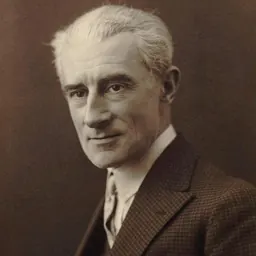
Whittaker conducted several choirs on Tyneside, working with the Newcastle Choral Union, Newcastle Bach Choir, the Whitley Bay Choral Society, the Tynemouth Choral Society and the Gateshead Choral Union. With these ensembles, he achieved excellent results. He also knew many composers of the period, with Gustav Holst amongst his friends; and he met Maurice Ravel on a visit to Newcastle, during which Ravel accompanied his newly composed song cycle Histoires Naturelles and attended a rehearsal of his own string quartet. He was friendly with Edgar Bainton (who arrived in Newcastle in 1901) and Alfred Wall. Whittaker's mentor Charles Sanford Terry, who was at the University of Durham before taking up a post at the University of Aberdeen, encouraged Whittaker's enthusiasm for J.S. Bach, particularly his choral music. Whittaker performed all of Bach's cantatas during his career. Despite the difficulties he encountered, Whittaker nevertheless found a kindred spirit and friend in the main professor of pianoforte Philip Halstead, whom he described as a "splendid all-round musician"; and was given unpaid support by Harold Thomson, a former student at the Academy who became a close friend. Assisted by them and others, he succeeded in setting up a three-year Diploma course. Somewhat unexpectedly he also discovered that the local Glasgow Bach Choir had performed very few of Bach's cantatas; they willingly agreed to become part of Whittaker's new Bach Cantata Choir which performed in Stevenson Hall, the newly built concert hall of the Academy. As a result, Whittaker was able to realise his lifelong ambition of performing all of Bach's cantatas: he performed one third of them in Newcastle and the remaining two thirds in Glasgow. He later described his activities with the Bach Cantata Choir as the "chief joy" of his period in Glasgow.
Other activities in the concert hall included "Opera Week" for operas, oratorios and incidental music, including works of Purcell, Handel, Bach, Gluck, Mozart and Schubert; some governors of the Academy attempted unsuccessfully to have these performances stopped as "profligate", their preference being for Gilbert and Sullivan and Offenbach. Whittaker succeeded in raising funds from the Carnegie Foundation for a library, now the Whittaker Library in the Royal Conservatoire of Scotland; and also set up a museum of ancient instruments in the Academy and an archive of musical manuscripts, now the Whittaker Collection, in the university.
Other works include The Celestial Sphere for chorus and orchestra, and Psalm CXXXIX. He also had a strong interest in folk music from his native Tyneside and Northumberland, championing the Northumbrian smallpipes; he published arrangements of folk songs, including choral versions of the "Keel Row", "Bobby Shaftoe", "Blow the Wind Southerly" and "Waters of Tyne".
Don’t just read it —
keep it.
Full-length biographies made to live with: read them, listen on the way to work, watch them tonight.
- E-book
- Audio
- Video
Instant download · yours to keep · every purchase keeps this site free
Important facts
People in William G. Whittaker's life
Named in this biography and alive at the same time







Related people
Same field, nearest in time

Contemporaries
People whose lives overlapped William G. Whittaker's
Frequently asked questions
Who was William G. Whittaker?
English-Scottish composer, pedagogue, conductor, musicologist, Bach scholar, publisher and writer
When was William G. Whittaker born?
William G. Whittaker was born on 23 July 1876 in Newcastle upon Tyne.
When did William G. Whittaker die?
William G. Whittaker died on 5 July 1944 in Stromness.
What was William G. Whittaker's occupation?
William G. Whittaker was a composer, musicologist, music journalist, conductor, music professor and choir director.
What nationality was William G. Whittaker?
William G. Whittaker was British.
Sources & further reading
· Wikipedia: William G. Whittaker
· DBpedia: William G. Whittaker
Cite this page
APA: Biography.guide. (2026). William G. Whittaker. https://biography.guide/william-g-whittaker/
MLA: "William G. Whittaker." Biography.guide, https://biography.guide/william-g-whittaker/.
Chicago: "William G. Whittaker." Biography.guide. https://biography.guide/william-g-whittaker/.
Data last updated: 2026-09-20 · Spot an error? Report a correction.
Page generated 2026-09-27 05:25 UTC