
About William Dwight Porter Bliss
Lived 1856 – 1926 (aged 70). William Dwight Porter Bliss was a priest.
William Dwight Porter Bliss (1856–1926) was an American Episcopal priest and one of the most famous and influential Christian socialists at the turn of 20th century. As a devout churchman, organizer, public speaker and an editor of numerous publications for over 40 years, Bliss became a central figure for the entire Christian socialist movement.
Early life
William Dwight Porter Bliss was born in Istanbul, Ottoman Empire, on August 20, 1856, the son of Edwin Elisha Bliss and Isabella Holmes (Porter) Bliss. His parents were Christian missionaries at the time. He was educated at Phillips Academy, Andover, Amherst College, and the Hartford Theological Seminary in Hartford, Connecticut.
Religious and social influences Hartford Theological Seminary was where Bliss first learned about religion in relation to social problems. The most notable influencers during his time of theological study being Henry George and articles in the Christian Union. His immediate work after seminary also greatly impacted the trajectory of his future career as a socialist preacher who engaged in activism. Following his graduation from Hartford Theological Seminary in 1882, Bliss was ordained a Congregationalist minister where he was forced to deal with, first hand, the serious labor problems that faced working-class people in America. After witnessing the effects that working unbearably long hours had on family life, the limited amount of food, and the harsh conditions working-class people faced in Boston, Bliss was convinced that the church had a direct duty to improve such terrible conditions.
These thinkers along with Bliss's experiences helping working-class folk eventually led him to Christian socialism, a movement which sought to apply socialism principles to the teachings of Christ in order to address modern social difficulties, caused, by industrialization and urbanization.
His radical views on Christianity eventually pushed Bliss to leave Congregationalism to join the Episcopal Church on October 25, 1885. On June 16, 1886, he was ordained a deacon in the Episcopal Church, and became a priest on June 8, 1887. He then served at Grace Church in Boston from 1887 until 1890, and finally, he helped organize an inner-city ministry, the Church of the Carpenter, where he served for four years.
Bliss’s thoughts on Christian Socialism Once Bliss adopted the ideas of Christian Socialism he began to create a very clear distinct understanding of what it meant. While Bliss recognized that the label Christian Socialism on its surface seemed to be a paradox, he believed that "Christianity and socialism were not only compatible, but that socialism was the natural economic expression of christian life." He sought to rid socialism of its philosophical materialism because he believed Christianity was the most effective way to bring socialism to fruition in America. He did argue, however, that if Christians were to truly live according to the Gospel and the words of Jesus, they would intuitively advocate for a socialist society in America. Moreover, the socialist aspect of Christian Socialism for Bliss was not hampered by the word Christian preceding it. He defined socialism as “that mode of social life which, based upon the recognition of the natural brotherhood and unity of mankind would have land and capital owned by the community collectively, and operated cooperatively for the good of all. He was not interested in merely implementing more state intervention or cooperatives. He, like the scientific socialist, believed that in order to create a just society, where the children of God were all treated with dignity and respect, it would require a complete overhaul of the economic system. Reform was merely a halfway measure for Bliss. Therefore for Bliss, Christian socialism was a fundamentally socialist ideology rooted in Christian principles. He hated the idea that people who tried to apply Christianity to social problems would even try to apply the label Christian Socialism to their work.
Scholarly dispute Bliss’s understanding of Christian Socialism and its fit with “genuine political socialism” is a point of contention, however, for many radical Marxist historians. Although his ideas were distinctively separate from and more radical than the popular social gospel thinkers Despite condemning capitalism as a dangerous plutocracy founded on economic individualism and his demands for an entirely new political economic order, many historians still find Bliss to be too moderate for socialist standards because of his wiliness to work with progressive reform centered institutions. These scholars argue that Bliss and other Christian socialists of the day offered watered-down versions of socialism due to their practical goals, respect for unions and the insentience on gradualism. Bliss's willingness to work with the Knights of labor, the populist and other less radical political affiliations push critics to assert that Bliss was not only comfortable with simply achieving small piecemeal reform but that he thought this was the most effective way to achieve a socialist society.
There has been some push back on the idea that Bliss was too moderate to be classified within the socialist movement of the Gilded Age. Richard Dressner, in particular, argues that scholars who have labeled Bliss as a moderate have limited the scope of their analysis to the first few decades of his work and have not considered the entire trajectory of his work as a preacher and activist. Most notably, his years with the Christian Socialist Fellowship. According to Dressner, not only was Bliss pushing socialist principles from the pulpit, he was also trying to destigmatize the anti-religious nature of the socialist party itself. Dresser argues that to suggest that Bliss was merely lukewarm to socialism is to not understand the complexity of Bliss. Although early on he frequently worked with moderate progressive reformers, as the times and circumstances changed, Bliss saw his view of Christian socialism directly in line with even the most radical socialist of the day.
Political career Bliss had a lengthy and diverse political career while serving as a minister in the Episcopal church.
For one his first political projects, Bliss helped found the American branch of the leftist-leaning Christian Social Union to condemn capitalism and push Christianity to take on a socialist agenda (1884 to 1887).
Bliss also served as member of the Knights of Labor, beginning in 1886, advocating more moderate reform he believed would be a necessary foundation in order to achieve his socialist vision for America.
In 1887 Bliss ran for Lieutenant Governorship of Massachusetts as a candidate of the Labor Party, but lost the election. Shortly after his political campaign for lieutenant Governor, Bliss founded the Society of Christian Socialists (SCS) in 1889. During that same time he also helped to create a Christian socialist newspaper called The Dawn, which he later bought in 1891 in order to bring a more socialist message to the paper. Much like his more general philosophy in regards to Christian Socialism, the goal of these projects were to the show that “the aim of socialism is embraced in the aim of christianity” and that the” teachings of Jesus Christ lead directly to some specific form of socialism”. This was the definitive reference work on social movements published during the Progressive Era. Not only did it describe social movements, The Encyclopedia of Social Reform further articulated Bliss's belief that the church and organized religion were viable vehicles of social and economic revolution in America.
Bliss and the Christian Socialist Fellowship Bliss played an integral role within the Christian Socialist Fellowship. As the Fellowship convention, Bliss was elected to the Committee on Constitution, and his entire speech was included in the Christian Socialist Report of the conference.
Works
The Communism of John Ruskin. Editor. Boston. 1891.
"What Is Socialism?" Roslindale, Massachusetts: The Dawn. 1894. .
What to Do: A Programme of Christian Socialism. San Francisco: Rembaugh. [1890s]. A Plea for the Union of the Reform Forces with the Democratic Party. New York: Commercial Printing House. .
The New Encyclopedia of Social Reform. Edited with Binder, Rudolph Michael; Gaston, Edward Page. New York: Funk & Wagnalls. 1908.
Don’t just read it —
keep it.
Full-length biographies made to live with: read them, listen on the way to work, watch them tonight.
- E-book
- Audio
- Video
Instant download · yours to keep · every purchase keeps this site free
Important facts
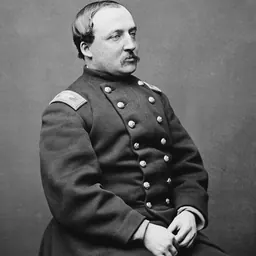
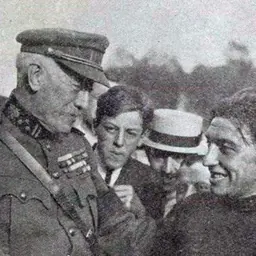
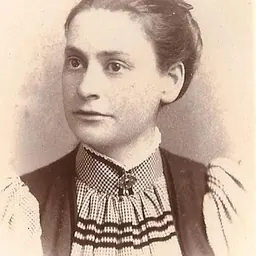
People in William Dwight Porter Bliss's life
Named in this biography and alive at the same time



Related people
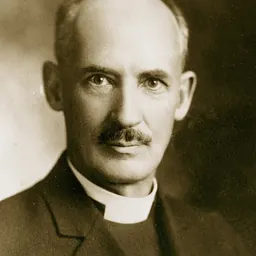
Same field, nearest in time


Contemporaries
People whose lives overlapped William Dwight Porter Bliss's



Frequently asked questions
Who was William Dwight Porter Bliss?
American writer (1856–1926)
When was William Dwight Porter Bliss born?
William Dwight Porter Bliss was born on 20 August 1856 in Istanbul.
When did William Dwight Porter Bliss die?
William Dwight Porter Bliss died on 8 October 1926 in New York (state), New York City.
What was William Dwight Porter Bliss's occupation?
William Dwight Porter Bliss was a priest.
Sources & further reading
· Wikipedia: William Dwight Porter Bliss
· DBpedia: William Dwight Porter Bliss
Cite this page
APA: Biography.guide. (2026). William Dwight Porter Bliss. https://biography.guide/william-dwight-porter-bliss/
MLA: "William Dwight Porter Bliss." Biography.guide, https://biography.guide/william-dwight-porter-bliss/.
Chicago: "William Dwight Porter Bliss." Biography.guide. https://biography.guide/william-dwight-porter-bliss/.
Data last updated: 2026-09-20 · Spot an error? Report a correction.
Page generated 2026-09-27 04:57 UTC