
About William Day
Lived 1823 – 1908 (aged 84–85). William Day was a British horse trainer.
William Day (c. 1823–1908) was a British jockey and trainer. A member of a large and successful racing family, Day had some success as a jockey before setting up as a trainer at Woodyates, Dorset in 1848. In a training career of over thirty years he sent out the winners of three classics and numerous major handicap races before retiring in the 1880s. His best horse was probably the American colt Foxhall. Day was also a gambler who was involved in scandals and clashes with other racing figures.
Background Day was one of twelve children of the jockey and trainer John Barham Day, making him the nephew of the jockey Sam Day. William's brothers included John Day, who trained twelve classic winners, and the successful jockeys Samuel and Alfred.
Riding career Day began his career as a jockey when in his mid-teens, but had limited success at a time when his uncle Sam was the Day family's favoured jockey. When still in his early twenties, Day was involved in a scandal surrounding a horse named Old England, trained by his father and owned by John Gully. Old England was fancied for the 1845 Epsom Derby, but Day wagered heavily against the colt and was involved in a plot to "nobble" (deliberately injure) it at the Danebury stable. Gully discovered the scheme and reported the matter to the Jockey Club. William Day was formally "warned off", meaning that he was indefinitely banned from any involvement from the sport. The ban was eventually revoked.
Training career In 1847, John Barham Day moved away from Danebury, leaving the stable to his son John. Shortly afterwards, William, having been reinstated by the Jockey Club, set up as a trainer near the village of Woodyates, on the border of Dorset and Wiltshire. In 1852, he trained his first major winner when he sent out Joe Miller to defeat forty-two rivals the Chester Cup, at that time one of the year's most important and valuable races. A month later the same horse won the Gold Cup at Royal Ascot.
In 1855, the Day family appeared to have three of the best three-year-old colts in England: William trained Lord of the Isles for James Merry, his father trained Henry Padwick's St Hubert, while John, Jr.'s classic candidate was a colt named Kingstown. According to one version of events,
A third Cambridgeshire win with Catch 'em Alive followed in 1863 and in 1869, Day won The Oaks and Ascot Gold Cup with the filly Brigantine. For a time, Day was employed as a private trainer by Brigantine's owners Frederick Johnstone and Henry Sturt. Other important wins in major handicaps included two Stewards' Cups, three Royal Hunt Cups and a Lincolnshire Handicap.
After a relatively quiet period in the 1870s, Day had his last big success with the Kentucky-bred Foxhall who was sent to England in 1880 by his owner James R. Keene. Foxhall was not entered in the classics but established himself as one of the best horses in Europe by beating Tristan in the Grand Prix de Paris in June 1881. Later in the year he won both legs of the Autumn Double. Day was unable to travel to Newmarket to witness the Cambridgeshire, being confined to bed with a broken collarbone, but nevertheless took more than £10,000 in winning bets. The following year, Foxhall won the Ascot Gold Cup but was beaten when odds-on favourite for the Alexandra Plate. The relationship between Day and Keene appears to have broken down at this point, with critical articles appearing in both the British and American press. Keene's horses were removed from Day's stable and sent to Richard Marsh at Newmarket, Suffolk.
Retirement Foxhall's Gold Cup win was Day's last important success. He left Woodyates to train at his own Cholderton Lodge Estate near Grateley, Hampshire, but retired shortly afterwards and lived at Salisbury till his death in 1908. In retirement, Day turned to writing and produced two volumes of memoirs entitled Reminiscences of the Turf (1886) and Turf Celebrities I Have Known (1891). He also published books on breeding and training racehorses. William's son Alfred Day (not to be confused with his uncle) was a successful trainer, winning races including the Goodwood Cup, Stewards' Cup and Lincolnshire Handicap. He was also one of the founders of Fontwell Racecourse.
Don’t just read it —
keep it.
Full-length biographies made to live with: read them, listen on the way to work, watch them tonight.
- E-book
- Audio
- Video
Instant download · yours to keep · every purchase keeps this site free
Important facts
People in William Day's life
Named in this biography and alive at the same time



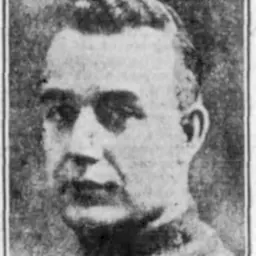

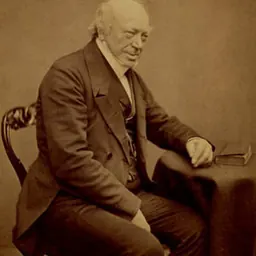
Related people
Same field, nearest in time
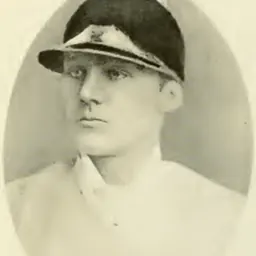
Contemporaries
People whose lives overlapped William Day's


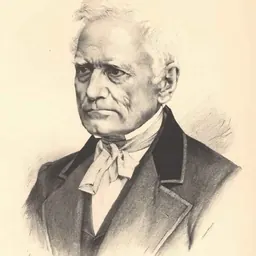


Frequently asked questions
Who was William Day?
British jockey and horse trainer
When was William Day born?
William Day was born in 1823 in Hampshire.
When did William Day die?
William Day died in 1908.
What was William Day's occupation?
William Day was a horse trainer.
What nationality was William Day?
William Day was British.
Sources & further reading
· DBpedia: William Day (horseman)
Cite this page
APA: Biography.guide. (2026). William Day. https://biography.guide/william-day-horse-trainer/
MLA: "William Day." Biography.guide, https://biography.guide/william-day-horse-trainer/.
Chicago: "William Day." Biography.guide. https://biography.guide/william-day-horse-trainer/.
Data last updated: 2026-09-20 · Spot an error? Report a correction.
Page generated 2026-09-27 05:15 UTC