
About William Curtis Green
Lived 1875 – 1960 (aged 84). William Curtis Green was a British architect, barrister, designer, jurist and judge.
William Curtis Green (16 July 1875 – 26 March 1960) was an English architect, designer and barrister who was based in London for much of his career. His works include the Dorchester Hotel, Wolseley House, New Scotland Yard, and the buildings, including the former Manor House, in Stockgrove Country Park. He was awarded the Royal Gold Medal in 1942. Around 20 of his designs are listed buildings. He was the younger brother of the craftsman and furniture designer Arthur Romney Green.
Born in Hampshire, Curtis Green studied architecture in West Bromwich and Birmingham. He became articled to John Belcher and trained at the Royal Academy Schools. Curtis Green took up his own practice in 1898 and was soon in demand. His first commissions included several power stations and small houses. He became an Associate Member of the Royal Academy of Arts in 1903 and won a first prize in the Romford Garden Suburb exhibition in 1910.
In 1921 he designed 160 Piccadilly for the Wolseley Motor Company, for which he was awarded a RIBA bronze medal. Several years later, he was commissioned by Barclays Bank to build several offices. He was elected as an associate of the Royal Academy in 1923, and became a full academician ten years later. He died in London in 1960 aged 84.
Early life Curtis Green was born in Alton, Hampshire, and was the second son to Fredric Green, a barrister, and his wife Maria Heath Curtis. an industry in which he intended to work, at West Bromwich Technical School.
Career Early years
Curtis Green took up his own practice in 1898; He also designed the building used for the Painswick Institute in 1907. He was elected fellow of the Royal Institute of British Architects (RIBA) two years later. Curtis Green went into partnership with London-based architects Dunn & Watson who frequently left him in charge of the practice. but it was also a chance for competing architects to showcase their talents. Curtis Green designed two properties for the competition; one, a Class II cottage, and a Class I house, 43 Heath Drive, for which he received £25 for the garden design. When his friend Edwin Lutyens went to New Delhi to build the Rashtrapati Bhavan in 1912, he asked Curtis Green to take charge of his office while he was away. The opportunity allowed Curtis Green to build upon his understanding of how to conduct large works in a grand manner. which he had designed seven years previously for the Wolseley Motor Company, and for which, in 1922, he was awarded a RIBA bronze medal. At around the same time as the construction of 160 Piccadilly, Curtis Green was asked by the National Westminster to build them a new Piccadilly branch, which was to be located directly opposite. |group= n Other structures in Piccadilly followed, including the Westminster Bank in 1926, Stratton House (1929), 6 King Street, and the London Life Association building in King William Street. Among their many buildings include the Church of All Saints in Shirley, Croydon, Their offices were based at 5 Pickering Place, St. James's Street, London. At around this time, Curtis Green also designed the Equity and Law Life Assurance Society building in Lincoln's Inn Fields (1936–7).
In 1942 Green was awarded the Royal Gold Medal of the Royal Institute of British Architects and was chairman of RIBA's board of architectural education. He was appointed as the president of the Architectural Association, a member of the Royal Fine Arts Commission, and an officer of the Académie Française. He served the Artists' General Benevolent Institution for 38 years.
A memorial to Curtis Green lies within St James's Church, Piccadilly. His estate was worth £93,921.
Soon after Cicely's death in 1934, Curtis Green met Laura Gwenllian James Rice (c.1874–1952), whom he married on 2 August 1935 at Lambeth Palace. and the artist and designer Elizabeth Jane Lloyd (1928–1995). Sam Lloyd carried on the Lloyd Green and Adams business after the retirement of his father, Antony, in 1970.
Notes, references and sources
Don’t just read it —
keep it.
Full-length biographies made to live with: read them, listen on the way to work, watch them tonight.
- E-book
- Audio
- Video
Instant download · yours to keep · every purchase keeps this site free
Important facts
People in William Curtis Green's life
Named in this biography and alive at the same time



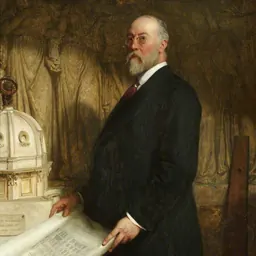

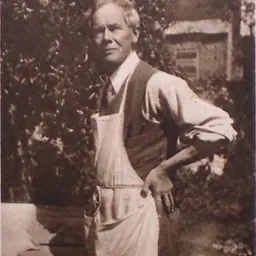

Related people
Same field, nearest in time
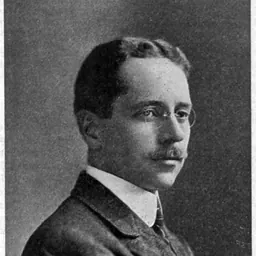


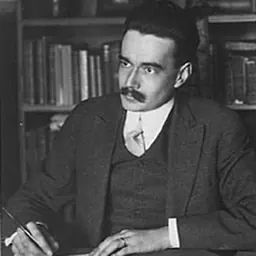
Contemporaries
People whose lives overlapped William Curtis Green's
Frequently asked questions
Who was William Curtis Green?
English architect (1875–1960)
When was William Curtis Green born?
William Curtis Green was born on 16 July 1875 in Alton.
When did William Curtis Green die?
William Curtis Green died on 26 March 1960 in Pall Mall, London.
What was William Curtis Green's occupation?
William Curtis Green was an architect, barrister, designer, jurist and judge.
What nationality was William Curtis Green?
William Curtis Green was British.
Sources & further reading
· Wikipedia: William Curtis Green
· DBpedia: William Curtis Green
Cite this page
APA: Biography.guide. (2026). William Curtis Green. https://biography.guide/william-curtis-green/
MLA: "William Curtis Green." Biography.guide, https://biography.guide/william-curtis-green/.
Chicago: "William Curtis Green." Biography.guide. https://biography.guide/william-curtis-green/.
Data last updated: 2026-09-20 · Spot an error? Report a correction.
Page generated 2026-09-27 05:23 UTC