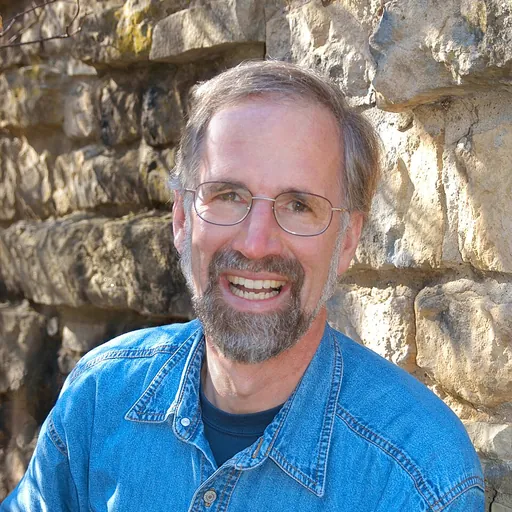
About William Cronon
Born 1954. William Cronon is an American geographer, historian, university teacher and environmental scientist.
William Cronon (born September 11, 1954) is an American environmental historian. He is Frederick Jackson Turner and Vilas Research Professor of History, Geography, and Environmental Studies emeritus at the University of Wisconsin–Madison. He is best known for his books Changes in the Land about the history of the New England landscape, winner of the Francis Parkman Prize, and Nature's Metropolis (1991) about the history of Chicago and its environs, winner of the Bancroft Prize and Marsh Prize and a finalist for the Pulitzer Prize for History, and also known for his New York Times essay "The Trouble with Wilderness" (1995) and for being targeted with FOIA requests for his university emails after speaking in support of the 2011 Wisconsin protests.
He served as president of the American Society for Environmental History 1989–1993 and of the American Historical Association in 2012, and he has led environmental activism on the boards of the Wilderness Society and the Trust for Public Land.
Early life and education Cronon was born in New Haven, Connecticut, where his father E. David Cronon (1924–2006) was a history professor at Yale University. The senior Cronon moved to a professorship at the University of Wisconsin–Madison in 1962, where he chaired the history department 1966–1969 and served as dean 1974–1988 before retiring in 1993.
Cronon received a Bachelor of Arts with double major in history and English from the University of Wisconsin–Madison in 1976. His undergraduate thesis was a biography of Robinson Jeffers, mentored by Dick Ringler.
He received a Doctor of Philosophy in American history from Yale in 1990, where he was advised by Howard R. Lamar and Edmund Sears Morgan.
He moved back to the University of Wisconsin–Madison (UW–Madison) in 1992 to become the named chair Frederick Jackson Turner Professor of History, Geography, and Environmental Studies. In 2003 he rose to become Vilas Research Professor at UW–Madison as well, and he retired emeritus in 2020.
Alongside these university positions, he has been an active leader in outside scholarly organizations. He was president of the American Society for Environmental History (ASEH) 1989–1993 He received ASEH's Distinguished Scholar Award in 2008 and its Lisa Maghetto Distinguished Service Award in 2022. He was elected to the American Philosophical Society in 1999,
In addition to his scholarly work, Cronon has been an environmental activist and political activist. He has been a member of the governing council of the Wilderness Society since 1995 and has served as vice chair of the council since 2010; he was awarded its highest honor for private citizens, the Robert Marshall Award, in 2014. He served on the national board of directors for The Trust for Public Land, a U.S. national land conservation group, 2003–2020, after which he sat on its emeritus board. He was featured in Ken Burns's 2009 documentary The National Parks: America's Best Idea. In 2011, participating in public conversation around the 2011 Wisconsin protests, he became the focal point of a contest over academic freedom and the target of FOIA requests for his university emails; see below at .
2011 political activism During the 2011 Wisconsin protests over state budget bill 2011 Wisconsin Act 10, Cronon started a blog called "Scholar as Citizen." He began by investigating then-governor Scott Walker's criticism of public unions. His first blog post, on March 15, 2011, alleged a national campaign by an out-of-state group called the American Legislative Exchange Council (ALEC). Allegedly, this conservative group was tied to the Koch network and lobbying Republican legislators to adopt legislation favoring the private sector. According to Anthony Grafton of The New Yorker, "Cronon argued from indirect evidence that ALEC had played a major role behind the scenes in Governor Walker's attacks on public employee unions in Wisconsin. [Cronon] also argued that this sort of political work, though legitimate, should be done in the open."
On March 17, Stephan Thompson of the Republican Party of Wisconsin (RPW) filed a freedom of information request for email sent from or to Cronon's taxpayer-funded University of Wisconsin–Madison (UW–M) account that contained keywords related to the ongoing political events, including "Republican", "Scott Walker", "recall", "collective bargaining", "AFSCME", "WEAC", "rally", "union", and the names of 12 Republican senators who supported 2011 Wisconsin Act 10.
Cronon wrote an op-ed criticizing Walker for The New York Times, published on March 21, 2011.
On March 24, Cronon wrote a second blog entry announcing the RPW's freedom of information request for his emails, claiming the party's action had "the nakedly political purpose of trying to embarrass, harass, or silence a university professor". Citing Wisconsin's history of protecting the right to academic freedom, Cronon asked the RPW to withdraw its request. UW–M Chancellor Carolyn "Biddy" Martin described this decision in an email to the UW–M campus community on the same day:
Martin also discussed the idea of academic freedom and the university's firm commitment to protecting all academics' right to engage in the "open intellectual exchange" of ideas.
In response to these events, on April 4 the Faculty Senate of UW–M passed a resolution to protect academic freedom. The body decided, according to University Committee Chair Judith Burstyn, that the university needed to take a public position to defend academic freedom in the wake of the FOIA records request directed at Cronon. Political scientist Howard Schweber, who was involved in writing the resolution with colleague Donald Downs, commented: "The university can't change the law, but the university can take a leading position on behalf of public employees everywhere and make a statement that we think this is wrong. What was begun as a classic notion of sunshine being the best disinfectant has turned into a law that's used as a weapon to target not government officials and offices but individual public employees."
The RPW had made no report on the contents of Cronon's emails as of August 5, 2011. The party also filed other open records requests. The American Association of University Professors (quoting Cronon) said that "this action by the Wisconsin Republican Party is an 'obvious assault on academic freedom'".
Selected works
Books Changes in the Land: Indians, Colonists, and the Ecology of New England. 1983. 20th anniversary ed., Hill & Wang. 2003. Nature's Metropolis: Chicago and the Great West. W. W. Norton. 1991.
Articles and chapters "Telling Tales on Canvas: Landscapes of Frontier Change," in Discovered Lands, Invented Pasts: Transforming Visions of the American West (New Haven: Yale University Press, 1992). "A Place for Stories: Nature, History, and Narrative," Journal of American History 78:4 (March, 1992), p. 1347–1376. "The Uses of Environmental History" (Presidential Address, American Society for Environmental History), Environmental History Review, 17:3 (Fall 1993), p. 1–22. "The Trouble with Wilderness: Or, Getting Back to the Wrong Nature," Environmental History, 1(1) (January 1996), pp. 7–28. read online "Only Connect...: The Goals of a Liberal Education," The American Scholar, (Autumn, 1998), p. 73–80. "Why the Past Matters," Wisconsin Magazine of History, 84:1 (Autumn 2000), p. 2–13. Awarded the William Best Hesseltine Award for the best article published in the Wisconsin Magazine of History in 2000–2001. pdf "The Riddle of the Apostle Islands: How Do You Manage a Wilderness Full of Human Stories?" Orion (May–June 2003), 36–42. "The Densest, Richest, Most Suggestive 19 Pages I Know," Environmental History, 10 (4) (October 2005), pp. 679–681. "Storytelling" (AHA Presidential Address), The American Historical Review (2013) 118 (1): 1–19.
Don’t just read it —
keep it.
Full-length biographies made to live with: read them, listen on the way to work, watch them tonight.
- E-book
- Audio
- Video
Instant download · yours to keep · every purchase keeps this site free
Important facts
People in William Cronon's life
Named in this biography and alive at the same time





Related people
Same field, nearest in time

Contemporaries
People whose lives overlapped William Cronon's


Frequently asked questions
Who is William Cronon?
American historian
When was William Cronon born?
William Cronon was born on 11 September 1954 in New Haven.
What is William Cronon's occupation?
William Cronon is a geographer, historian, university teacher and environmental scientist.
What nationality is William Cronon?
William Cronon is American.
Sources & further reading
Cite this page
APA: Biography.guide. (2026). William Cronon. https://biography.guide/william-cronon/
MLA: "William Cronon." Biography.guide, https://biography.guide/william-cronon/.
Chicago: "William Cronon." Biography.guide. https://biography.guide/william-cronon/.
Data last updated: 2026-09-22 · Spot an error? Report a correction.
Portrait: Wikimedia Commons · author & licence
Page generated 2026-09-27 05:03 UTC