
About William Crashaw
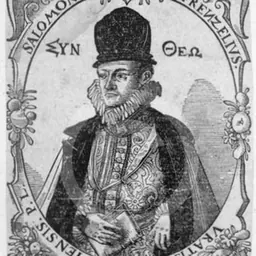
Lived 1572 – 1626 (aged 53–54). William Crashaw was a poet and preacher.
William Crashaw or Crashawe (1572–1626) was an English cleric, academic, and poet.
Life The son of Richard Crashaw of Handsworth, South Yorkshire, by his wife, Helen, daughter of John Routh of Waleswood, he was born at Handsworth, and baptised there on 26 October 1572. He was educated at St John's College, Cambridge, admitted a sizar there on 1 May 1591. Two years afterwards the bishop of Ely's fellowship at St John's became vacant by the death of Humphrey Hammond; and as the see was then unoccupied, the right of nomination became vested in Queen Elizabeth, who recommended Crashaw.
After being ordained Crashaw became a preacher, first at Bridlington and then at Beverley in Yorkshire. He commenced M.A. in 1595, and proceeded to the degree of B.D. in 1603. In 1604 he was collated to the second prebend in Ripon Minster, and he held it till his death. He was appointed preacher at the Inner Temple. He became prebend of Osbaldwick in York Minster on 2 April 1617, and on 13 November 1618 was admitted to St Mary Matfelon, Whitechapel, London, on the presentation of Sir John North and William Baker. The Sermon preached at the Crosse, Feb. xiiij. 1607. Justified by the Authour, both against Papist and Brownist, to be the truth: Wherein this point is principally followed; namely, that the religion of Rome, as now it stands established, is worse than ever it was, London, 1608. A Sermon preached before the right honorable the Lord Lawarre, Lord Governour and Captaine Generall of Virginea, and others of his Maiesties Counsell for that Kingdome, and the rest of the Adventurers in that Plantation, Feb. 21, 1609, London, 1610. Alexander Balloch Grosart wrote that "there is no nobler sermon than this of the period". It has an anti-theatrical theme, and finishes with a dialogue involving God, England and Virginia. The Jesuites Gospel, written by themselves, discovered and published, London, 1610, 1621; reprinted in 1641 under the title of The Bespotted Jesuite, whose Gospell is full of Blasphemy against the Blood of Christ, London, 1641; and again in 1643, under the title of Loyola's Disloyalty, or the Jesuites in Open Rebellion against God and His Church, London, 1643. Manuale Catholicorum: a Manuall for true Catholickes (Enchiridion piarum Precum et Meditationum. A Handful, or rather a Heartfull of Holy Meditations and Prayers), Latin and English, London, 1611. A poetical work, in two divisions. Other editions appeared in 1616 and 1622. Consilium quorundam Episcoporum Bononiæ congregatorum quod de ratione stabiliendæ Romanæ Ecclesiæ Julio III Pont. Max. datum est. Quo artes et astutiæ Romanensium et arcana Imperii Papalis non pauca propalantur, London, 1613. Dedicated to Henry Wriothesley, 3rd Earl of Southampton. The Complaint, or Dialogue betwixt the Soule and the Bodie of a damned man. Supposed to be written by S. Bernard, from a nightly vision of his; and now published out of an ancient manuscript copie, London, 1616. The poem, the original and translation occupying alternate pages, is divided into 85 verses, as a dialogue between the author, a soul departed, a dead carcase, and the devils. The volume, consisting of thirty-four leaves, is dedicated to some of the translator's friends, benchers of the Inner Temple. Fiscus Papalis, sive Catalogus Indulgentiarum et reliquiarum septem principalium Ecclesiarum Urbis Romæ, ex vet. MS. descriptus, London, 1617, 1621. Milke for Babes, or a North Countrie Catechisme, made plaine and easy to the capacitie of the countrie people, second impression, London, 1618. The Parable of Poyson. In five sermons of spirituale poyson, London, 1618. The New Man; or a Supplication from an unknowne person, a Roman Catholike, unto James, the Monarch of Great Brittaine, touching a necessity of a Generall Councell to be forthwith assembled against him that now usurps the Papall Chaire under the name of Paul the Fifth, London, 1622. The Fatall Vesper, or a trve and pvnctvall relation of that lamentable and fearfull accident, hapning on the 26 of October last by the fall of a roome in the Black-Friers, in which were assembled many people at a Sermon which was to be preached by Father Drvrie, a Iesvite London, 1623. Tract on the Fatal Vespers, generally attributed to Crashaw. Ad Severinum Binnium Lovaniensem Theologum Epistola Commonitoria super Conciliorum Generalium editione ab ipso nuper adornata, London, 1624. Mittimus to the Jubilee at Rome, or the Rates of the Pope's Custom-House, sent to the Pope as a New Year's Gift from England, London, 1625. A Discoverye of Popishe Corruption, requiring a kingley reformation, left in manuscript (Royal MS. 17 B. viii).
Don’t just read it —
keep it.
Full-length biographies made to live with: read them, listen on the way to work, watch them tonight.
- E-book
- Audio
- Video
Instant download · yours to keep · every purchase keeps this site free
Important facts
People in William Crashaw's life
Named in this biography and alive at the same time

Related people
Same field, nearest in time

Contemporaries
People whose lives overlapped William Crashaw's



Frequently asked questions
Who was William Crashaw?
Church of England cleric
When was William Crashaw born?
William Crashaw was born in 1572.
When did William Crashaw die?
William Crashaw died in 1626.
What was William Crashaw's occupation?
William Crashaw was a poet and preacher.
Sources & further reading
Cite this page
APA: Biography.guide. (2026). William Crashaw. https://biography.guide/william-crashaw/
MLA: "William Crashaw." Biography.guide, https://biography.guide/william-crashaw/.
Chicago: "William Crashaw." Biography.guide. https://biography.guide/william-crashaw/.
Data last updated: 2026-09-20 · Spot an error? Report a correction.
Page generated 2026-09-27 05:34 UTC