
About William Carney
Lived 1942 – 2017 (aged 74). William Carney was an American politician.
William Carney (July 1, 1942 – May 22, 2017) was an American politician from New York who served in the Suffolk County, New York Legislature and United States House of Representatives as a member of the Conservative and Republican parties. He is the only registered member of the Conservative Party of New York State to be elected to the United States House of Representatives.
In April 1965, he met Barbara Ann Haverlin, proposed to her on May 14, 1965, married her on May 14, 1966, and later had two children with her. He took office in January 1976, and served until December 1978, as he had chosen to seek election to the United States House of Representatives. He was succeeded by Donald C. Allgrove, a member of the Republican Party.
United States House of Representatives Elections
During New York's gubernatorial election in 1978, Perry B. Duryea Jr., who had received the Republican gubernatorial nomination, sought the Conservative Party's ballot line in his attempt to defeat incumbent Democratic Governor Hugh Carey. The Conservative and New York Republican parties created a compromise in which Duryea would be given the Conservative ballot line in the gubernatorial election and Carney would be allowed to run in the 1st congressional district's Republican primary. Although Duryea had the nominations of both the Republican and Conservative parties through electoral fusion, he lost to Carey in the general election with 45% of the popular vote.
In 1978, Carney ran for the Republican nomination in New York's 1st congressional district and defeated four opponents. In the general election he defeated John Randolph. He and Gerald Solomon were the only Republicans to flip seats held by the Democratic Party and Carney was the first registered member of the Conservative Party to win election to the United States House of Representatives. In the general election he defeated Democratic nominee Thomas Twomey.
On May 24, 1982, Carney announced that he would seek reelection and easily defeated Democratic nominee Ethan Eldon, receiving over sixty percent of the popular vote, with the Republican, Conservative, and Right to Life parties' nominations.
On March 19, 1984, he announced that he would seek reelection and defeated Suffolk County legislator Gregory Blass in the Republican primary, although Blass attempted to have a recount conducted. In the general election he narrowly defeated Democratic and Ratepayers Against Lilco nominee George J. Hochbrueckner, a member of the New York State Assembly. The Ratepayers Against Lilco ballot line was created by Hockbrueckner in opposition of the Long Island Lighting Company's construction of the Shoreham Nuclear Power Plant, which Carney supported.
Tenure
In 1979, Carney had the lowest income out of all of the members of the House of Representatives and had a 100% voting attendance rate. In 1980, the American Civil Liberties Union gave him a zero percent rating; Carney and Earl Hutto, the Democratic representative from Florida's 1st congressional district, were the only members of the House of Representatives to receive a zero percent rating. In 1981, President Ronald Reagan selected him as one of forty-eight people to meet with Pope John Paul II during a refueling stop in Anchorage, Alaska. On May 23, 1983, he became the chairman of Suffolk County Executive Peter Cohalan's reelection committee.
In 1985, he was appointed to the House Committee on Armed Services during the 99th session of the House of Representatives.
On October 8, 1985, he announced that he had changed his party affiliation from Conservative to Republican in an attempt to improve his chances of receiving the Deputy Minority Whip position. Tom Loeffler, the current Deputy Minority Whip, had announced that he would run for the Republican nomination in the 1986 Texas gubernatorial election. The Conservative Party leader in the 1st congressional district, Harold Haar, stated that he regretted Carney's decision, but that he understood why.
On May 22, 1986, Carney announced that he would not seek reelection as his unpopularity was rising due to his support of the construction of the Shoreham Nuclear Power Plant.
Later life
After leaving the House of Representatives Carney was given a position on the American Security Council Foundation that paid $100,000 per year.
In 2013, he contracted prostate cancer and later died from it on May 22, 2017, in Washington, D.C. Following his death he was praised by Representative Lee Zeldin. Carney was buried in Arlington National Cemetery in Arlington County, Virginia. In 1981, $690,000 was earmarked for the creation of a new post office in Farmingville, New York, where Carney's district office was located.
In 1982, President Reagan vetoed legislation that would grant $14.2 billion in fiscal spending. Four Republicans, including Carney, out of seventeen in the House of Representatives from New York voted to sustain Reagan's veto. Only six members of New York's thirty-nine House delegation voted to sustain Reagan's veto.
On August 2, 1983, the House of Representatives voted 338 to 90, with Carney voting against, in favor of legislation that would create a federally recognized holiday in honor of Martin Luther King Jr. Carney, Guy Molinari, Barber Conable, David O'Brien Martin, and Gerald Solomon were the only members of New York's House delegation to vote against the legislation.
Foreign
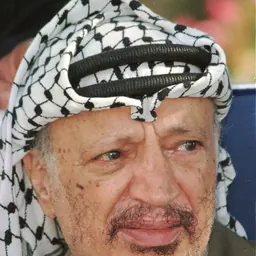
In 1979, Carney, Norman F. Lent, and Gerald Solomon sent a letter to Attorney General Benjamin Civiletti asking him to investigate black leaders who met with Yasser Arafat for violation of the Logan Act.
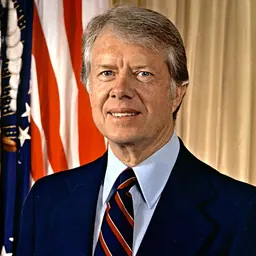
In 1981, Carney and 107 other members of the House of Representatives signed a letter asking for the withdrawal of the visa given to Ian Paisley, the leader of the Democratic Unionist Party, by President Jimmy Carter. Carney signed the letter and presented it to Deputy Secretary of State William P. Clark Jr. The Department of State later chose to revoke Paisley's visa in December.
In 1982, he supported President Reagan's opposition to a non-binding resolution in favor of a nuclear freeze. On December 21, 1982, twenty-four members of the House of Representative, including Carney, sent an eight-page letter to Archbishop Joseph Bernardin defending Reagan's nuclear policy.
In 1983, he praised President Reagan for sending Marines to Grenada to restore the government overthrown by the People's Revolutionary Government. Carney supported giving aid to the Contras during the Nicaraguan Revolution.
On April 29, 1985, and January 23, 1986, he introduced resolutions that would designate June 14, as Baltic Freedom Day and show disapproval of the Soviet Union's refusal to recognize the independence of Lithuania, Estonia, and Latvia.
Electoral history
Don’t just read it —
keep it.
Full-length biographies made to live with: read them, listen on the way to work, watch them tonight.
- E-book
- Audio
- Video
Instant download · yours to keep · every purchase keeps this site free
Important facts
People in William Carney's life
Named in this biography and alive at the same time




Related people
Same field, nearest in time




Contemporaries
People whose lives overlapped William Carney's


Frequently asked questions
Who was William Carney?
American politician (1942-2017)
When was William Carney born?
William Carney was born on 1 July 1942 in Brooklyn.
When did William Carney die?
William Carney died on 23 May 2017 in Washington, D.C..
What was William Carney's occupation?
William Carney was a politician.
What nationality was William Carney?
William Carney was American.
Sources & further reading
· DBpedia: William Carney (politician)
Cite this page
APA: Biography.guide. (2026). William Carney. https://biography.guide/william-carney/
MLA: "William Carney." Biography.guide, https://biography.guide/william-carney/.
Chicago: "William Carney." Biography.guide. https://biography.guide/william-carney/.
Data last updated: 2026-09-20 · Spot an error? Report a correction.
Page generated 2026-09-27 05:30 UTC