
About William C. Martel
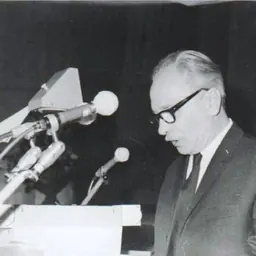
Lived 1955 – 2015 (aged 59). William C. Martel was an American political scientist and university teacher, known for Cyberwarfare and Militarisation of space.
Works Books authored
Grand Strategy in Theory and Practice: The Need for an Effective American Foreign Policy. (Cambridge University Press, 2014) Victory in War: Foundations of Modern Military Policy (Cambridge University Press, 2007) (Revised and Expanded Edition in 2011) Russia's Democratic Moment: Defining U.S. Policy to Promote Democratic Opportunities in Russia (co-authored with Theodore C. Hailes) (Montgomery: Air War College Studies in National Security No. 2, 1995.) Nuclear Coexistence: Rethinking U.S. Policy to Promote Stability in an Era of Proliferation (co-authored with William T. Pendley) (Montgomery: Air War College Studies in National Security No. 1, 1994.) How To Stop A War: Research on Two Hundred Years of War and Peace (co-author) (NY: Doubleday, 1987.) Strategic Nuclear War: What the Superpowers Target and Why (co-authored with Paul L. Savage) (Westport, CT: Greenwood Press, 1986.)
Books edited The Technological Arsenal: Emerging Defense Capabilities (editor & author) (Washington, DC: Smithsonian Institution Press, 2001)
Book chapters
Reformulating Grand Strategy in the Indian Ocean Region: The Case for Containment, in Peter Dombrowski and Andrew C. Winner (editors), American Strategy in the Indian Ocean (Washington, DC: Georgetown University Press, 2014). Deterrence and Alternative Images of Nuclear Possession, in T. V. Paul, Richard J. Harknett, and James J. Wirtz (editors), The Absolute Weapon Revisited: Nuclear Arms and the Emerging International Order (Ann Arbor: The University of Michigan Press, 1998) Controlling Borders and Nuclear Exports, (chapter coauthored with Steven E. Miller) in Graham Allison, Ashton B. Carter, Steven E. Miller, Philip Zelikow, (eds.), Cooperative Denuclearization: From Pledges to Deeds (Cambridge: CSIA Studies in International Security, No. 2, Center for Science and International Affairs, Harvard University, 1993), pp. 198–220. Deterrence After the Cold War., in Stephen J. Cimbala, Sidney R. Waldman (editors), Controlling and Ending Conflict: Issues Before and After the Cold War (1992). Nuclear Strategy: What It Is and Is Not, in Charles Kegley and Eugene Wittkopf (editors), The Nuclear Reader: Strategy, Weapons, and War (New York: St. Martin's Press) Why Ukraine Gave Up Nuclear Weapons. in Pulling Back from the Nuclear Brink: Slowing, Stopping, Reversing, and Countering Nuclear Threats (1998). Non-Superpower Nuclear Crisis De-Escalation. in The De-escalation of Nuclear Crises (1992). Nuclear Strategy: What It Is and Is Not. The Nuclear Reader: Strategy, Weapons, and War (1989). Exchange Calculus of Nuclear War. in Strategic War Termination (1987).
Monographs
Global Vigilance, Global reach, Global Power for America. (Washington, DC: Department of the United States Air Force, August 2013) Technology, Systems Architecture, and Policy. in Report on Availability and Survivability of Militarily Relevant Commercial Space Systems (March 2002) ‘‘Rethinking U.S. Proliferation Policy for the Future.’‘ Weapons of Mass Destruction: New Perspectives on Counterproliferation (1995). Improving the USAF Technology Transfer Process. (Santa Monica, CA: The Rand Corporation, 1991, Report No. R-4081-AF.) Review of Bases Abroad: The Global Foreign Military Presence. (Santa Monica, CA: The Rand Corporation, 1990, P-7649.) A Preliminary Perspective on Regulatory Activities and Effects in Weapons Acquisition. (Santa Monica, CA: The Rand Corporation, 1988, Report No. R-3578-ACQ.)
Articles American Grand Strategy after November 2012, Social Science and Modern Society, September 2012, Volume 49, Issue 5 Victory in Scholarship in Strategy and War, Cambridge Review of International Affairs, Volume 24, Issue 3, 2011 Grand Strategy of "Restrainment", Orbis, Vol. 54, No. 3, Summer 2010, pp. 356–73. Review of Space as a Strategic Asset, Journal of Strategic Studies (Spring 2009). Undeclared War and the Future of US Foreign Policy, Political Science Quarterly (2009) A Strategy for Victory and Implications for Policy, Orbis. Fall, 2008, Volume 52, No. 4, pp. 613–626 Transparency is the Key to Avoiding Space Conflict, Arms Control Today (December 2008). Formulating Victory and Implications for Policy, Orbis (2008) Technologies That May Yet Revolutionize Warfare. Naval War College Review (Autumn 2006): 131–133. Review of Seapower and Space: From the Dawn of the Missile Age to Net-Centric Warfare. Naval War College Review (Winter 2004). Averting a Sino-U.S. Space Race. (authored with Toshi Yoshihara)The Washington Quarterly 26, no. 4 (2003): 19–35. Averting a Sino-U.S. Space Race, Washington Quarterly, Fall 2003 Technology and Military Power, The Fletcher Forum of World Affairs, Fall 2001 The End of Non-Proliferation? Strategic Review, Fall 2000 Information Revolution and American Military Power, (co-author) Orbis (2000) The Risks of a Networked Military. Orbis (Winter 2000). (co-authored) Our Failure to Convert Russia's Arms Industry. Orbis (Summer 1999). (co-authored) Is Ukraine a Universal Example of Nonproliferation?. Defense Analysis (December 1998). Collective Insecurity: U.S. Defense Policy and the New World Disorder. American Political Science Review (September 1996): 691–692. Defense Conversion and Missing Markets. EDI Forum: A Review of Ideas and Experiences (1996). Controlling Borders and Nuclear Exports. Harvard University, CSIA Studies in International Security no. 2 (1993). Russia's Foreign Policy Bureaucracies and Uncontrolled Nuclear Proliferation. Northeastern University Political Review 1, no. 2 (Spring 1993). Bases Abroad: The Global Foreign Military Presence. Armed Forces & Society (Winter 1991): 305–307. A Framework and Approach to Foreign Policy. Strategic Air Defense (1989). America's Commitment to Europe in Decline? The End of Extended Deterrence, Deterrence Workshop Session Five: Nuclear Weapons and Extended Deterrence (1989), Santa Monica, CA: The RAND Corporation, Report No. WD-4422-AF. Nuclear Crisis Exercise at Harvard University. Nuclear War Education: Conference Proceedings (1988). Review of Nuclear Battlefields: Global Links in the Arms Race. Armed Forces & Society (Winter 1987): 308–309. The East German Army. World Armies: NATO and the Warsaw Pact (1983). The Soviet Army. World Armies: NATO and the Warsaw Pact (1983). A Historical Review of U.S. Participation in Military Exercises, 1959–1989. The Role of the Office of the Secretary of Defense in Major Command Post Exercises, Santa Monica, CA: The RAND Corporation, R-3973-USDP ‘‘Technologies and Techniques: Satellites.’‘ Encyclopedia of International Security Congressional Quarterly Press
Short essays America’s Grand Strategy Disaster, The National Interest, June 9, 2014 On Syria: Don't Take Regime Change Off the Table The National Interest, September 9, 2013 Seven Reasons Moscow Will Say "Nyet" to Nuke Cuts, RealClearDefense, June 27, 2013 Strong Defense Begins at Home, RealClearDefense, June 12, 2013 A Roadmap for American Grand Strategy, The Diplomat, March 4, 2013 For America, Decline is a Choice, The Diplomat, March 15, 2013 America’s Dangerous Drift, The Diplomat, February 25, 2013 R.I.P. Containment, The Diplomat, September 24, 2012 A Challenge for the West, Cognoscenti, WBUR Grand Strategy of the Authoritarian Axis: How Will the West Respond? The Diplomat, July 24, 2012 An Authoritarian Axis Rising? The Diplomat, June 29, 2012 Why America Needs a Grand Strategy, The Diplomat, June 18, 2012 Can we win the war on terror?, The Providence Journal, March 18, 2010 The West must face facts – Why U.S. can't live with a nuclear Iran, The Providence Journal, September 21, 2006
Select interview Martel: The Future of U.S. Space Policy, Interviewee: William Martel, Interviewer: Michael Moran, Council on Foreign Relations, December 5, 2006
Don’t just read it —
keep it.
Full-length biographies made to live with: read them, listen on the way to work, watch them tonight.
- E-book
- Audio
- Video
Instant download · yours to keep · every purchase keeps this site free
Important facts
People in William C. Martel's life
Named in this biography and alive at the same time



Related people
Same field, nearest in time





Contemporaries
People whose lives overlapped William C. Martel's


Frequently asked questions
Who was William C. Martel?
American political scientist
When was William C. Martel born?
William C. Martel was born on 15 July 1955 in Hartford.
When did William C. Martel die?
William C. Martel died on 12 January 2015 in Bedford.
What was William C. Martel's occupation?
William C. Martel was a political scientist and university teacher.
What was William C. Martel known for?
William C. Martel was known for Cyberwarfare and Militarisation of space.
What nationality was William C. Martel?
William C. Martel was American.
Sources & further reading
· Wikipedia: William C. Martel
Cite this page
APA: Biography.guide. (2026). William C. Martel. https://biography.guide/william-c-martel/
MLA: "William C. Martel." Biography.guide, https://biography.guide/william-c-martel/.
Chicago: "William C. Martel." Biography.guide. https://biography.guide/william-c-martel/.
Data last updated: 2026-09-22 · Spot an error? Report a correction.
Page generated 2026-09-27 05:03 UTC