
About William Busch
Lived 1901 – 1945 (aged 43). William Busch was a British conductor, composer, pianist and musician, known for Cello concerto, Piano concerto and Piano quartet.
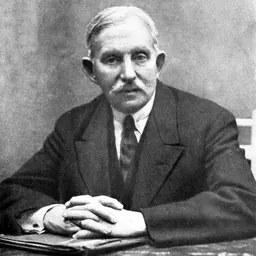
William Busch (24 June 1901 – 30 January 1945) was a British composer and musician. Busch studied music in London, Berlin and the United States. His composition teachers included John Ireland and Bernard van Dieren. He worked as a concert pianist before devoting himself more to music composition. But his pacifism during World War II resulted in decreased reception for his works during this time.
Busch died in 1945 in Woolacombe, North Devon, England. Music critic John Amis wrote that his works would have a lasting legacy due to their value.
Early life and education William Busch was born on 24 June 1901 in London. His parents were originally from Germany, and later went through the naturalization process to become citizens of the United Kingdom. His musical studies took him to London, Berlin and the United States. His piano skills were further honed by Leonid Kreutzer, Wilhelm Backhaus and Egon Petri.
Busch composed a piano concerto for the BBC Contemporary Music concert which he himself performed in 1938, and wrote a piano quartet in 1939. Their letters mainly focused on the sanctions imposed on Jews at the time in Germany by Adolf Hitler, with Finzi arguing staunchly against segregation. His cello concerto, written in 1941, was performed at The Proms on 13 August 1943 with soloist Florence Hooton.
Death and legacy Busch married his wife Sheila in 1935. Their son Nicholas was born in 1939 and their daughter Julia on 26 January 1945. Visiting his newly born daughter in an Ilfracombe nursing home, Busch was forced to make the long journey back to Woolacombe on foot in the deep snow (because all transport had been cancelled). The resulting cold and exhaustion led to a severe internal haemorrhage, and to his tragic death on 30 January. At the time he was in the early stages of receiving significant recognition for his music works. Raphael Wallfisch released an album in 2014, British Music for Cello and Piano, featuring compositions by Busch. Simon Callaghan has recorded the complete piano music.
Works
Piano Gigue (1923) Theme, Variations and Fugue (1928) Allegretto quasi Pastorale (1933) Intermezzo (1935) Nicholas Variations (1942)
Chamber Passacaglia for violin and cello (1939) Piano Quartet in G Minor (1939) Cantilena for violin and piano (1942) Caprice for violin and piano (1943) Suite for cello and piano (1943) Lacrimosa for violin and piano (1944) Elegy for cello and piano (1944) A Memory for cello and piano (1944)
Orchestral Ode to Autumn for voice and strings (1937) Two Pieces for Wind Instruments (1924) Piano Concerto (1937-9) Prelude for Orchestra (1940) Cello Concerto (1940–41) Violin Concerto (1944-5 - unfinished)
Songs Slumber Song (1930) Sweet Content, Harvest Moon, Rest, Weep You No More, The Fairies (1933) Weep You no More (1935) Ode to Autumn, When Thou Did’st Give Thy Love To Me (1937) The Snowdrop in the Wind, The Centaurs, The Echoing Green, The Shepherd, If Thou Wilt Ease Thine Heart, Come, O Come My Life’s Delight, Laughing Song, Merry Hither Come (1942-3) The Bellman, L'Oiseau bleu, The Lowest Trees have Tops (1944) There Have Been Happy Days (1944), song cycle, texts by Wilfred Gibson 'There Have Been Happy Days' 'The Soldier' 'The Goldfinches' 'The Kitbag' 'The Promise'
Recordings Chamber music (including Piano Quartet and Cello Suite: Members of the Piatti Quartet, Ashok Klouda (cello), Simon Callaghan (piano). Lyrita SRCD.439 (2024) Concertos (Cello Concerto and Piano Concerto): Raphael Wallfisch (cello), Piers Lane (piano), Royal Philharmonic Orchestra/Vernon Handley. Lyrita SRCD320 (2008) Piano music (including Allegretto quasi Pastorale, Gigue, Intermezzo, Nicholas Variations and Theme, Variations and Fugue): Simon Callaghan, piano. Lyrita SRCD408 (2022) Songs: Diana Moore (mezzo-soprano), Roderick Williams (baritone), Robin Tritschler (tenor), John Reid (piano). Lyrita SRCD409 (2022)
Don’t just read it —
keep it.
Full-length biographies made to live with: read them, listen on the way to work, watch them tonight.
- E-book
- Audio
- Video
Instant download · yours to keep · every purchase keeps this site free
Important facts
People in William Busch's life
Named in this biography and alive at the same time



Related people
Same field, nearest in time


Contemporaries
People whose lives overlapped William Busch's



Frequently asked questions
Who was William Busch?
British composer
When was William Busch born?
William Busch was born on 25 June 1901 in London.
When did William Busch die?
William Busch died on 30 January 1945 in Woolacombe.
What was William Busch's occupation?
William Busch was a conductor, composer, pianist and musician.
What was William Busch known for?
William Busch was known for Cello concerto, Piano concerto and Piano quartet.
What nationality was William Busch?
William Busch was British.
Sources & further reading
Cite this page
APA: Biography.guide. (2026). William Busch. https://biography.guide/william-busch/
MLA: "William Busch." Biography.guide, https://biography.guide/william-busch/.
Chicago: "William Busch." Biography.guide. https://biography.guide/william-busch/.
Data last updated: 2026-09-22 · Spot an error? Report a correction.
Page generated 2026-09-27 05:32 UTC