
About William Burt Pope
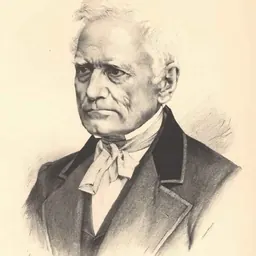
Lived 1822 – 1903 (aged 80–81). William Burt Pope was a British theologian, christian minister, translator and linguist.
William Burt Pope (19 February 1822–5 July 1903) was an English Wesleyan Methodist minister and theologian, who was president of the Methodist Conference.
Biography Early life William Burt Pope was born at Horton, Nova Scotia, on 19 February 1822. He was the younger son of John Pope (1791–1863), Wesleyan missionary and Catherine, born Uglow, who was originally of Stratton, Cornwall. He was the younger brother of George Uglow Pope. After education at a village school at Hooe and at a secondary school at Saltash, near Plymouth, William spent a year in boyhood (1837-8) at Bedeque, Prince Edward Island, assisting an uncle, a shipbuilder and general merchant.
In 1845, he married Ann Ehza Lethbridge, daughter of a yeoman farmer of Modbury, near Plymouth. By her he had six sons, two of whom died in early life, and four daughters.
Career Pope was accepted, in 1840, by the Methodist synod of Cornwall as a candidate for the ministry, and entered the Methodist Theological Institution at Hoxton. Ordained in 1842, he began his active ministry at Kingsbridge, Devonshire. He served for short periods at Liskeard, Jersey, Sandhurst, Dover and Halifax. He served also for longer periods at City Road, London, Hull, Manchester, Leeds, and Southport.
In 1846, he became a successful linguist and translator of German anti-rationalist critics.
In 1860, he became editor, having as his co-editor (1883-6) James Harrison Rigg, of the London Quarterly Review''' to which he was already a contributor.
In 1867, he succeeded Dr. John Hannah the elder as tutor of systematic theology at Didsbury. He received the degree of D.D. from the Wesleyan University, U.S.A., in 1865 and from the University of Edinburgh in 1877. In 1876, he visited America with Dr. Rigg as delegate to the general conference of the methodist episcopal church at Baltimore.
In 1877, he was President of the Methodist Conference at Bristol.
From 1867 to 1886, he taught at Didsbury Wesleyan College in Manchester, England.
Theological contribution Pope made notable contributions to theological literature which were deemed authoritative by his own church. His greatest work, a systematic theology, Compendium of Christian Theology'' (1875-1876), set forth influential arguments for the "holiness doctrine of all Methodist systematic theology" and defended Methodist doctrine against its critics. Wayne Grudem writes that, "This work […] is one of the greatest systematic theologies written from a Wesleyan or Arminian perspective." He had Arminian soteriological views.
Death Pope died on 5 July 1903, and was buried in Abney Park Cemetery, London.
Works Books as author
Books as translator
Chapters
Notes and references
Don’t just read it —
keep it.
Full-length biographies made to live with: read them, listen on the way to work, watch them tonight.
- E-book
- Audio
- Video
Instant download · yours to keep · every purchase keeps this site free
Important facts
People in William Burt Pope's life
Named in this biography and alive at the same time



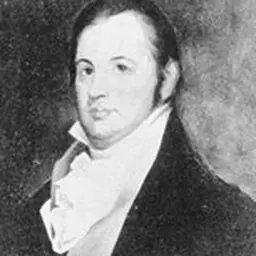

Related people
Same field, nearest in time
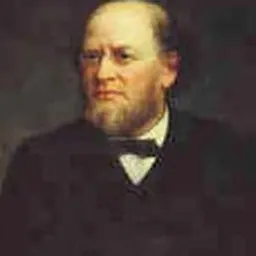
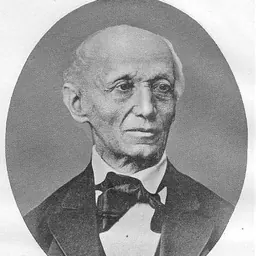


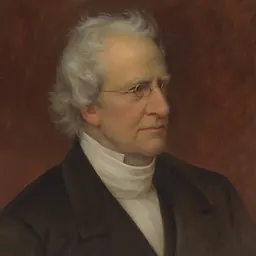

Contemporaries
People whose lives overlapped William Burt Pope's



Frequently asked questions
Who was William Burt Pope?
English Methodist theologian (1822–1903)
When was William Burt Pope born?
William Burt Pope was born in 1822 in Wolfville.
When did William Burt Pope die?
William Burt Pope died in 1903.
What was William Burt Pope's occupation?
William Burt Pope was a theologian, christian minister, translator and linguist.
What nationality was William Burt Pope?
William Burt Pope was British.
Sources & further reading
· Wikipedia: William Burt Pope
Cite this page
APA: Biography.guide. (2026). William Burt Pope. https://biography.guide/william-burt-pope/
MLA: "William Burt Pope." Biography.guide, https://biography.guide/william-burt-pope/.
Chicago: "William Burt Pope." Biography.guide. https://biography.guide/william-burt-pope/.
Data last updated: 2026-09-24 · Spot an error? Report a correction.
Page generated 2026-09-27 05:06 UTC