
William Bolitho Ryall
South African journalist, writer and biographer
About William Bolitho Ryall
Lived 1891 – 1930 (aged 39). William Bolitho Ryall was a South African journalist, biographer, writer and novelist.
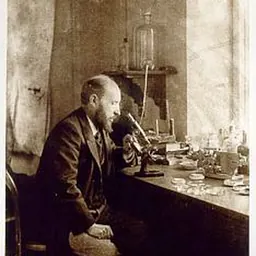
William Bolitho Ryall (1891–1930) was a South African journalist, writer and biographer who was a valued friend of prominent writers such as Ernest Hemingway, Noël Coward, Walter Lippmann and Walter Duranty. He wrote under the name 'William Bolitho' but was known to his friends as 'Bill Ryall'. He died on 2 June 1930 at the age of 39 just as his reputation was being established. His father was a Baptist minister, born in South Africa and he was taken there as an infant. He changed his name to 'William Bolitho Ryall' which was his uncle's name who died in South Africa and who wrote the book Pensam: His Mysterious Tribulation published in 1883. Before enlisting in the British Army he had gone to seminary in Gordonstown South African and become a deacon in the Anglican Church. In 1916 he was buried alive with fifteen other men in a mine explosion on the Somme. He was the only survivor and was initially thought to be dead, but was unconscious with a broken neck and other injuries. In 1923 he was appointed correspondent with the New York World to which he contributed many notable dispatches. He then had a thrice weekly column with the New York World. He points out that their lives show the difficulties involved, and the scant reward to be expected from such adventuring. His play, Overture, was later performed at the Longacre Theatre, New York from 5 Dec 1930 to Jan 1931 with 41 performances. This is its only known performance.
Reputation Noël Coward: "He died young enough to be called 'brilliant', and not decrepit enough to be called 'great', which is sad, because he would have enjoyed hugely that particular form of eminence, and I feel that he would have given his wreath of laurels a slightly rakish tilt, however old he was." Ernest Hemingway: "In the old days, when your correspondent was a working newspaper man, he had a friend named Bill Ryall, then a European correspondent for the Manchester Guardian. This Ryall had a white, lantern-jawed face of the sort that is supposed to haunt you if seen suddenly in a London fog, but on a bright windy day in Paris meeting him on the boulevard wearing a long fur-collared great coat he had the never-far-from-tragic look of a ham Shakespearean actor. None of us thought of him as a genius then and I do not think he thought of himself as one either, being too busy, too intelligent, and, then, too sardonic to go in for being a genius in a city where they were a nickel a dozen and it was much more distinguished to be hard working. He was a South African and had been very badly blown up in the war while commanding infantry. Afterwards he had gotten into the intelligence service and at the time of the peace conference he had been a sort of pay-off man for the disbursing of certain sums spent by the British to subsidize and influence certain individuals and certain organs of the French press. He talked very frankly about this and as I was a kid then he told me many things that were the beginning of whatever education I received in international politics. Later Ryall wrote under the name of William Bolitho, went to New York, became a genius, and worked at it until he died. You may have read his Murder For Profit, his Twelve Against The Gods, or some of the pieces he wrote in the old N.Y. World. I never saw him after he became Bolitho, but when he was Ryall he was a wonderful guy. He may have been even finer when he was Bolitho but I do not see how it would be possible. I think sometimes being a genius in that hick town must have bored him very much. But I never saw him to ask him.” Walter Lippmann: “For Bolitho was a radiant person. In his company ordinary things were transfigured, acquiring the glamour of mystery and great import. His talk had a quality which belonged to one who dwelt familiarly, so it seemed, with the hidden elements of man's life and with the infinite permutations of his affairs. In his presence it was easy to believe that one had a private revelation of those great concerns which in prosaic living seem verbal and remote; with him one walked quickly through portals, that are usually closed, into the statelier mansions of the soul. He was an eager guide. Whoever happened to be there, he took with him in his explorations, not pausing to ask whether his companion had the wit or the courage for such adventures. He was lavish in his talk." Walter Duranty: "Of all the people I have met in the last twenty years, and there have been some high-sounding names amongst them, I think Bolitho had the finest intellect. Under forty when he died, he had already made his name as a forceful and original writer, but his mental range wait far beyond the limits of literature. He possessed to a remarkable degree the same quality which proved the key to Lenin's success, namely, the gift of making a quick and accurate summary of facts and drawing therefrom the right, logical and inevitable conclusions. . . . Unlike most people, he never blindly accepted the opinion of others, but always thought things out for himself, and never ceased to impress on me the necessity of doing that at all times."
Publications Leviathan, (Essays, chiefly on international politics), London: Chapman & Dodd, 1923. Cancer of Empire, (On housing in Glasgow.) Illustrated with photographs by James McKissack. London, New York: G. P. Putnam's Sons, 1924. Murder for Profit, (Profiles of murderers), First published September 1926. London: Jonathan Cape, 1933. The Travellers' library Italy under Mussolini, New York: The Press Publishing Company, (New York World) 1926, London: The Macmillan Company, 1926. Twelve against the Gods: The Story of Adventure, London: William Heinemann Ltd, 1930, Harmondsworth: Penguin Books, 1939. [Penguin Books. no. 230.] Camera Obscura (A collection of his essays and articles), with Preface by Noël Coward, William Heinemann: London; [printed in U.S.A., 1931.] Overture. A drama in three acts, New York, [1931.] [French's Standard Library Edition.]
Don’t just read it —
keep it.
Full-length biographies made to live with: read them, listen on the way to work, watch them tonight.
- E-book
- Audio
- Video
Instant download · yours to keep · every purchase keeps this site free
Important facts
People in William Bolitho Ryall's life
Named in this biography and alive at the same time


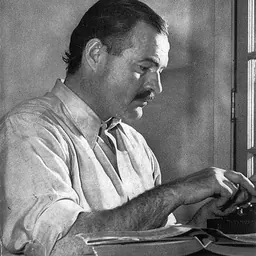
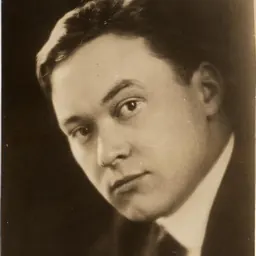
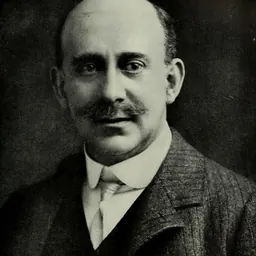
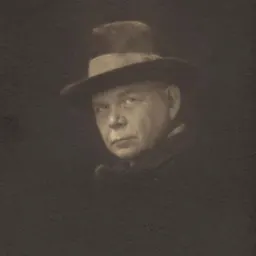

Related people
Same field, nearest in time




Contemporaries
People whose lives overlapped William Bolitho Ryall's


Frequently asked questions
Who was William Bolitho Ryall?
South African journalist, writer and biographer
When was William Bolitho Ryall born?
William Bolitho Ryall was born on 2 February 1891 in Droitwich Spa.
When did William Bolitho Ryall die?
William Bolitho Ryall died on 2 June 1930 in Avignon.
What was William Bolitho Ryall's occupation?
William Bolitho Ryall was a journalist, biographer, writer and novelist.
What nationality was William Bolitho Ryall?
William Bolitho Ryall was South African.
Sources & further reading
· Wikipedia: William Bolitho Ryall
· DBpedia: William Bolitho Ryall
Cite this page
APA: Biography.guide. (2026). William Bolitho Ryall. https://biography.guide/william-bolitho-ryall/
MLA: "William Bolitho Ryall." Biography.guide, https://biography.guide/william-bolitho-ryall/.
Chicago: "William Bolitho Ryall." Biography.guide. https://biography.guide/william-bolitho-ryall/.
Data last updated: 2026-09-20 · Spot an error? Report a correction.
Page generated 2026-09-27 05:27 UTC