
About William B. Kouwenhoven
Lived 1886 – 1975 (aged 89). William B. Kouwenhoven was an American inventor, university teacher and engineer.
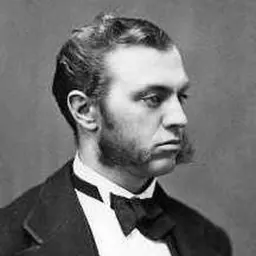
William Bennet Kouwenhoven (13 January 1886 – 10 November 1975) was an American electrical engineer. Known as the "Father of Cardiopulmonary Resuscitation", he is best known for his contributions to the development of the closed-chest cardiac massage and his invention of the cardiac defibrillator. After obtaining his doctorate degree in engineering from the Karlsruhe Technische Hochschule in Germany, Kouwenhoven began his career as the dean at the Johns Hopkins University in Baltimore. Kouwenhoven focused his research mainly on improving and saving lives of patients through the application of electricity. With the help and cooperation of the Johns Hopkins School of Medicine's Department of Surgery and an Edison Electric Institute grant, Kouwenhoven was able to develop a closed-chest defibrillator. For his contributions to the field of medical science, he became the first ever recipient of an honorary degree conferred by the Johns Hopkins School of Medicine. Two years before his death, Kouwenhoven was also awarded the Albert Lasker Award for Clinical Medical Research.
Biography
Early life and education William Bennet Kouwenhoven was born in Brooklyn, NY, on January 13, 1886. Kouwenhoven attended the Polytechnic Institute of Brooklyn beginning in 1903. As a college freshman, Kouwenhoven was intrigued by the relationship between electricity and medicine, which later became the topics for his English thesis. Three years later, he graduated with a BA in electrical engineering. Then in 1907, he earned his MS in mechanical engineering and began teaching physics and electrical engineering at the institute. In 1910, Kouwenhoven married Abigail Baxter Remsen and traveled to Germany to study at the Karlsruhe Technische Hochschule. Kouwenhoven had only one child, whom he named William G. Kouwenhoven. After obtaining his doctorate in engineering in 1913, Kouwenhoven moved back to the United States. He then taught engineering at Washington University in St. Louis for a year.
Career at Johns Hopkins In 1914, William Kouwenhoven was hired as a professor at Johns Hopkins University's School of Engineering. His research interests consisted of the effects of electricity on the human body and cardiac arrest. By 1919, he worked as an associate professor at Johns Hopkins and was later promoted to full professor in 1930. Kouwenhoven was able to hold that position for 24 years during his tenure at Johns Hopkins. Due to the success of his research, Kouwenhoven was promoted to an administrative position as the Dean of Johns Hopkins University's School of Engineering from 1938 to 1954. During his tenure as dean, Kouwenhoven developed and perfected his most famous project on the electric cardiac defibrillator. At the age of 68, William Kouwenhoven retired as dean but continued to focus on his medical research at Hopkins after retirement. By the end of his career at Hopkins, Kouwenhoven was awarded two awards for his work at the institution: the Edison Medal (1961) and the Albert Lasker Clinical Medical Research Award. The principal investigator of this Consolidated Edison study, Johns Hopkins neurologist Othello Langworthy, brought William Kouwenhoven, who was currently the professor of electrical engineering, to this team. By 1928, Kouwenhoven and his team were able to observe the effects of DC and AC shock on the heart. They noticed that when low-voltage shocks were applied to the heart, ventricular fibrillation was induced. The dog's heart originally went through ventricular fibrillation, which occurs when the heart goes through rapid, electric impulses. However, through a process called defibrillation, the heart was able to be revived.
By 1957, Kouwenhoven and his team had designed a prototype specifically to work on humans. This novel device weighed approximately 200 pounds and consisted of a small box with two insulated cables with copper electrodes, which administered an AC current. One electrode was to be placed over the suprasternal notch, and the other electrode was to be placed over the apex of the heart. Closed-Chest Defibrillator developed at Johns Hopkins University.
First successful case In the year 1957, the defibrillator was used for the first time to save the life of a patient suffering from ventricular fibrillation in an operating room at the Johns Hopkins Hospital. Around 2 a.m., a patient entered the Hopkins emergency room complaining of indigestion. While undressing for his examination, the patient collapsed when his heart went into ventricular fibrillation. The resident at the time, Gottlieb Friesinger, M.D., had assisted Kouwenhoven in his studies dealing with the closed-chest defibrillator. As the intern performed CPR on the patient's chest, Friesinger rushed to the laboratory located on the hospital's 11th floor. He managed to persuade the security officer to let him take the defibrillator, which was mounted on a wheeled cart. After returning to the ER, Friesinger administered the first shock, which failed to restart the patient's heart. However, the second shock was able to revive the patient's heart back to a normal sinus rhythm. It was later discovered that the patient had suffered an anterior myocardial infarction. This case became known as the world's first emergency defibrillation for a cardiac arrest. Friesinger later remarked that "he was quite a dramatic Saturday morning Grand Rounds presentation."
In Kouwenhoven's honor and memory, the Whiting School of Engineering at Johns Hopkins University established the William B. Kouwenhoven Professorship in Electrical Engineering in 1981. The current holder of this Kouwenhoven Professorship is Jerry L. Prince, the associate director for research at the Center of Computer Integrated Surgical Systems and Technology. Prince has worked on co-developing HARP MRI, which provides doctors with the ability to assess the condition of heart muscles within seconds. He is also currently researching image processing and computer vision with primary application to medical imaging.
Publications Hooker DR, Kouwenhoven WB, Langworthy OR. "The effect of alternating electrical currents on the heart." American Journal of Physiology 1933; 103:444–454
Jude JR, Kouwenhoven WB, Knickerbocker GG. External cardiac resuscitation. Monographs in Surgical Science 1964; I:65
Kouwenhoven WB, Jude JR, Knickerbocker GG. "Closed-chest cardiac massage." Journal of the American Medical Association 1960; 173:94–97.
Don’t just read it —
keep it.
Full-length biographies made to live with: read them, listen on the way to work, watch them tonight.
- E-book
- Audio
- Video
Instant download · yours to keep · every purchase keeps this site free
Important facts
People in William B. Kouwenhoven's life
Named in this biography and alive at the same time


Related people
Same field, nearest in time


Contemporaries
People whose lives overlapped William B. Kouwenhoven's





Frequently asked questions
Who was William B. Kouwenhoven?
American electrical engineer (1886–1975)
When was William B. Kouwenhoven born?
William B. Kouwenhoven was born on 13 January 1886 in Brooklyn.
When did William B. Kouwenhoven die?
William B. Kouwenhoven died on 10 November 1975 in Baltimore.
What was William B. Kouwenhoven's occupation?
William B. Kouwenhoven was an inventor, university teacher and engineer.
What nationality was William B. Kouwenhoven?
William B. Kouwenhoven was American.
Sources & further reading
· Wikipedia: William B. Kouwenhoven
· DBpedia: William B. Kouwenhoven
Cite this page
APA: Biography.guide. (2026). William B. Kouwenhoven. https://biography.guide/william-b-kouwenhoven/
MLA: "William B. Kouwenhoven." Biography.guide, https://biography.guide/william-b-kouwenhoven/.
Chicago: "William B. Kouwenhoven." Biography.guide. https://biography.guide/william-b-kouwenhoven/.
Data last updated: 2026-09-20 · Spot an error? Report a correction.
Page generated 2026-09-27 05:22 UTC