
About William Augustus Edwards
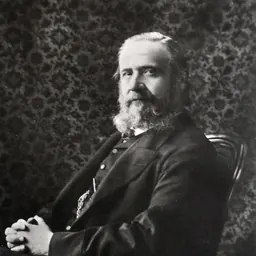
Lived 1866 – 1939 (aged 72). William Augustus Edwards was an American architect.
The Westcott Building of Florida State University, designed by Edwards & Walter in the Collegiate Gothic style and completed in 1910.
William Augustus Edwards (December 8, 1866 – March 30, 1939) was an American architect. Based first in Columbia, South Carolina, and second in Atlanta, he was renowned for the educational buildings, courthouses and other public and private buildings that he designed in Florida, Georgia and his native South Carolina in the early 20th century. As Architect to the Florida Board of Control he designed his best known works, the Collegiate Gothic campuses of the University of Florida and Florida State University. Edwards' firm, founded by him in 1902, survived under his successors' leadership until 1971.
Early life and education William Augustus Edwards was born December 8, 1866, in Darlington, South Carolina, the son of Augustus F. Edwards, a lawyer and Confederate veteran, and Elizabeth Sarah Edwards, née Hart. After graduating from St. David's School in Society Hill, Edwards attended Richmond College, now the University of Richmond for one year and then entered the University of South Carolina where he received a degree in mechanical engineering in 1889.
Career history His activities between 1889 and 1893 to not appear to have been recorded. In the latter year he moved to Roanoke, Virginia, where he joined architect Charles C. Wilson, another Darlington County native, as a drafter. Wilson moved to Lynchburg in 1895 and to Columbia, South Carolina, in 1896, apparently accompanied by Edwards. In 1899 they formed a partnership, Wilson & Edwards, architects. Their most visible work was the First Baptist Church (1904) in Selma, Alabama, though construction delays meant it was not completed until two years after they dissolved their partnership in 1902.
In January 1902 Edwards formed the new partnership of Edwards & Walter with Frank C. Walter. In 1908 the partners moved to Atlanta, a city then rapidly expanding. There the firm was briefly known as Edwards, Walter & Parnham with C. D. Parnham. Edwards & Walter dissolved their partnership in 1910 and for five years Edwards practiced without a partner, the only time in his career where he would do so. Edwards & Sayward continued until Edwards' death in 1939.
Edwards' role in Florida was initially that of University Architect, but his mandate soon expanded to include a new campus for Florida State University and buildings for Florida A&M University and the Florida School for the Deaf and Blind as Architect to the Board of Control. In 1925 an architectural department was established at the university under the leadership of Rudolph Weaver, who became the new architect to the board.
Marriage and family In 1898 Edwards was married to India Pearl Brown. They had three children, including two sons and one daughter. He was a Unitarian and a member of the American Institute of Architects.
One of his sons, H. Griffith Edwards, was also an architect. He graduated from Georgia Tech and worked for Edwards & Sayward and Henry J. Toombs until 1940, when he established an independent practice. In 1946 he also joined the Georgia Tech faculty. In 1956 he formed the partnership of Edwards & Portman with John C. Portman Jr., one of his students. He retired in 1968.
Educational buildings
Among the academic institutions for which Edwards designed buildings were:
Alabama Tallapoosa Hall, Southern Preparatory Academy, Camp Hill
Florida From 1905 to 1925, Edwards was architect for the Florida Board of Control and designed many buildings in the Collegiate Gothic style for the three existing state institutions of higher learning as well as other public schools. NRHP-listed. Peabody Hall (Edwards, 1913) Florida School for the Deaf and Blind, St. Augustine Buttrick Hall, Agnes Scott College, Decatur (Edwards & Sayward, 1930) McCain Library, Agnes Scott College, Decatur (Edwards & Sayward, 1936) Demolished. Walhalla Graded School, Walhalla (Edwards & Walter, 1902) Sumter County Courthouse, Bushnell (Edwards, 1914)
Georgia Tift County Courthouse, Tifton (Edwards, 1913) Neoclassical in style, NRHP-listed individually and as part of Tifton Commercial Historic District Replaced 2004 by a new courthouse next door. The old one is NRHP-listed and is now the Georgia Mountain Center for the Arts.
South Carolina Darlington County Courthouse, Darlington (Edwards & Walter, 1903) Demolished. South Carolina State Armory, Columbia (Edwards & Walter, 1905) Demolished. Sumter County Courthouse, Sumter (Edwards & Walter 1907) NRHP-listed. Abbeville County Courthouse, Abbeville (Edwards & Walter, 1908) NRHP-listed. Lee County Courthouse, Bishopville (Edwards & Walter, 1909) NRHP-listed. Dillon County Courthouse, Dillon (Edwards, 1911) NRHP-listed. Calhoun County Courthouse, St. Matthews (Edwards, 1913) NRHP-listed. York County Courthouse, York (Edwards, 1914) NRHP-listed. Jasper County Courthouse, Ridgeland (Edwards, 1915) NRHP-listed.
Other buildings Florida Covington House, Tallahassee (Edwards & Sayward, 1927) Pythagoras Lodge No. 41, Free and Accepted Masons, Decatur (Edwards & Sayward, 1924) A segregated public housing project for Black residents. Demolished. One or more works in Lakewood Heights Historic District, Atlanta NRHP-listed.
Legacy After Edwards' 1939 death, Sayward continued the firm as Sayward & Logan with Robert B. Logan, a long-time employee. Under than name the firm built little due to World War II. After Sayward died in 1945, Logan continued the firm as Sayward, Logan & Williams with H. Eugene Williams, an employee since 1929. Sayward's name was dropped in 1948. Logan, who had maintained the firm's adherence to the Collegiate Gothic and other revival styles, died in 1962 and the firm, with the addition of Larry Craig Dean, was renamed Williams & Dean. After Dean's departure the firm became Williams & Associates in 1968 and Williams died in 1971.
Works of the successor firm include Presser Hall (1940) and Letitia Pate Evans Hall (1950) of Agnes Scott College, the Emory Presbyterian Church (1954) in Atlanta, the Monastery of the Holy Spirit (1959) in Conyers, and three high-rise dormitories for the University of Georgia: Creswell Hall (1965), Brumby Hall (1966) and Russell Hall (1967).
More than 25 works by Edwards and his partners have been listed on the National Register of Historic Places, either as individual buildings or as contributing buildings within historic districts.
Don’t just read it —
keep it.
Full-length biographies made to live with: read them, listen on the way to work, watch them tonight.
- E-book
- Audio
- Video
Instant download · yours to keep · every purchase keeps this site free
Important facts
People in William Augustus Edwards's life
Named in this biography and alive at the same time






Related people
Same field, nearest in time


Contemporaries
People whose lives overlapped William Augustus Edwards's



Frequently asked questions
Who was William Augustus Edwards?
American architect (1866–1939)
When was William Augustus Edwards born?
William Augustus Edwards was born on 8 December 1866 in Darlington.
When did William Augustus Edwards die?
William Augustus Edwards died on 30 March 1939 in Atlanta.
What was William Augustus Edwards's occupation?
William Augustus Edwards was an architect.
What nationality was William Augustus Edwards?
William Augustus Edwards was American.
Sources & further reading
· Wikipedia: William Augustus Edwards
· DBpedia: William Augustus Edwards
Cite this page
APA: Biography.guide. (2026). William Augustus Edwards. https://biography.guide/william-augustus-edwards/
MLA: "William Augustus Edwards." Biography.guide, https://biography.guide/william-augustus-edwards/.
Chicago: "William Augustus Edwards." Biography.guide. https://biography.guide/william-augustus-edwards/.
Data last updated: 2026-09-20 · Spot an error? Report a correction.
Page generated 2026-09-27 05:28 UTC