
William Alwyn
English composer, conductor, and music teacher
About William Alwyn
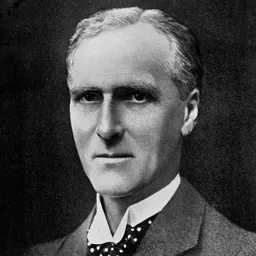
Lived 1905 – 1985 (aged 79). William Alwyn was a British composer, conductor, music educator, university teacher, film score composer and painter.
William Alwyn (born William Alwyn Smith; 7 November 1905 – 11 September 1985) was an English composer, conductor, and music teacher who composed over 200 cinematic scores, of which some 70 were for full-length features, as well as number of operas, concertos and symphonies.
Alwyn's wartime work in particular was to lead him to be placed on a Nazi death list.
Life and music
William Alwyn was born William Alwyn Smith in Northampton, England, the son of Ada Tyler (Tompkins) and William James Smith. He showed an early interest in music and began to learn to play the piccolo. At the age of 15, he entered the Royal Academy of Music in London, where he studied flute, piano and composition. For a time he was a flautist with the London Symphony Orchestra. Alwyn served as professor of composition at the Royal Academy of Music from 1926 to 1955.
Alwyn was a polyglot, poet, and artist, as well as musician. He was also sometime Director of the Mechanical-Copyright Protection Society, a Vice-President of the Society for the Promotion of New Music (SPNM) and Director of the Performing Right Society. For many years he was one of the panel engaged by the BBC to read new scores to help assess whether the works should be performed and broadcast. He was appointed a Commander of the Order of the British Empire (CBE) in the 1978 Birthday Honours in recognition of his services to music.
His compositional output included five symphonies, four operas, several concertos, film scores and string quartets.
In addition to scores for documentaries, Alwyn wrote more than 70 feature film scores from 1941 to 1962. His classic film scores included Green for Danger (1944), Odd Man Out (1947), Desert Victory (1943), Fires Were Started (1943), The History of Mr. Polly (1949), The Fallen Idol (1948), The Black Tent (1956), The Way Ahead (1944), The True Glory (1945) and The Crimson Pirate (1952). Some of the scores have been lost, although many scores and sketches are now in the William Alwyn Archive at Cambridge University Library. In recent years CD recordings have been made. Some works, for which only fragmentary sketches remained, were reconstructed by Philip Lane or Christopher Palmer from the film soundtracks themselves.
Alwyn's wartime scores were considered to be so critical to boosting public morale that he was placed on a Nazi German 'death list', a post-war discovery that apparently thrilled him.
Alwyn relished dissonance, and devised his own alternative to 12-tone serialism. For instance, in his Third Symphony (1955–56), eight notes of the possible 12 are used in the first movement, with the remaining four (D, E, F, and A) constituting the middle movement, and all 12 being combined for the finale. The work was premièred on 10 October 1956 at the Royal Festival Hall by Sir Thomas Beecham.
Alwyn's concerto for harp and string orchestra, Lyra Angelica, was popularized when the American figure skater Michelle Kwan performed to it at the 1998 Winter Olympics.
Alwyn spent the last 25 years of his life at Lark Rise, Dunwich Road, Blythburgh, Suffolk, where he composed his Concerto Grosso no. 3 (1964), two operas, Juan, or the Libertine and Miss Julie, and his last major orchestral work, Symphony No. 5 Hydriotaphia (1972–73).
Alwyn recorded his five symphonies as conductor for the Lyrita label in the 1970s, recordings that have since been reissued on CD. Most of Alwyn's orchestral and chamber music has more recently been recorded on CD for Chandos Records: the five symphonies were played by the London Symphony Orchestra, conducted by Richard Hickox.
Alwyn's opera Miss Julie has been recorded twice: for Lyrita, and in 2019 for Chandos, conducted by Sakari Oramo.
Personal life Alwyn was first married to Olive Mary Audrey (née Pull), with whom he had two sons, Jonathan Alwyn and Nicholas Alwyn. His second wife was the composer Doreen Carwithen. His great-grandson is the actor Joe Alwyn. He died in Southwold, Suffolk, in 1985 and is buried in the churchyard of Holy Trinity Church, Blythburgh, Suffolk.
Selected works
Stage The Fairy Fiddler, opera (1922) Fedelma, mime ballet in one scene (February 1931); libretto: Padraic Colum, choreography: Ninette de Valois; costumes: Dolly Travers-Smith; Abbey Theatre Dublin Farewell, Companions, Radio opera (1955); libretto by H.A.L. Craig Juan, or The Libertine, opera in 4 acts (1965–1971); libretto by the composer freely adapted from James Elroy Flecker's play Don Juan and other works Miss Julie, opera in 2 acts (1972–1976); libretto by the composer after the 1888 play by August Strindberg
Orchestral Five Preludes (1927) Aphrodite in Aulis, Eclogue after George Moore for small orchestra (1932) The Innumerable Dance, an English Overture (1933) Tragic Interlude for 2 horns, timpani and string orchestra (1936) Overture to a Masque (1940) Concerto Grosso No. 1 in B major (1942) Score for Country Town (1943) Suite of Scottish Dances for small orchestra (1946) Concerto Grosso No. 2 in G major for string quartet and string orchestra (1948) Symphony No. 1 (1948–1949) Festival March (1951) The Magic Island, Symphonic Prelude (1952) Symphony No. 2 (1953) Symphony No. 3 (1955–1956) Elizabethan Dances (1956–1957) Fanfare for a Joyful Occasion for brass and percussion (1958) Symphony No. 4 (1959) Derby Day, Overture (1960) Concerto Grosso No. 3 (1964) Sinfonietta [No. 1] for string orchestra (1970) Symphony No. 5 Hydriotaphia (1972–1973) Sinfonietta No. 2 for string orchestra (1976)
Band The Moor of Venice, Overture for brass band (1956)
Concertante Piano Concerto No. 1 (1930) Violin Concerto (1939) Pastoral Fantasia for viola and string orchestra (1939) Concerto for oboe, harp and strings (1944) Autumn Legend for cor anglais and string orchestra (1954) Lyra Angelica, Concerto for harp and string orchestra (1954) Piano Concerto No. 2 (1960) Concerto for flute and 8 wind instruments (1980)
Chamber music Sonatina for violin and piano (1933) Sonata for oboe and piano (1934) 2 Folk Tunes for cello or viola and piano (or harp) (1936) Novelette for string quartet (1938) Ballade for viola and piano (1939) Sonata Impromptu for violin and viola (1939) Rhapsody for violin, viola, cello and piano (1939) Divertimento for solo flute (1940) Sonatina for viola and piano (1941) Suite for oboe and harp (1944) Sonata for flute and piano (1948) Three Winter Poems for string quartet (1948) Conversations for violin, clarinet and piano (1950) Trio for flute, cello and piano (1951) String Quartet No. 1 in D minor (1953) Crepuscule for harp (1955) Sonata for clarinet and piano (1962) String Trio (1962) Moto Perpetuo for recorders (1970) Naiades, Fantasy Sonata for flute and harp (1971) String Quartet No. 2 Spring Waters (1975) Chaconne for Tom for descant recorder and piano (1982) String Quartet No. 3 (1984)
Piano Hunter's Moon (1920s) Odd Moments, Suite (1920s) The Orchard (1920s) Haze of Noon (1926) Two Irish Pieces April Morn, 4 Petites Pièces (1924–1926) Fancy Free, 4 Pieces Contes Barbares, Hommage à Paul Gauguin (1930–1933) Night Thoughts (1940) Prelude and Fugue Formed on an Indian Scale (1945) Sonata alla Toccata (1946) By the Farmyard Gate, 4 Pieces From Ireland, 7 Traditional Tunes Wooden Walls, Suite Midsummer Night, Suite Green Hills Five Pieces, Suite Two Intermezzi Two Pieces Harvest Home, Suite The Tinker's Tune Down by the Riverside Nine Children's Pieces Fantasy-Waltzes (1956) Twelve Preludes (1958) Movements (1961) Twelve Diversions for the Five Fingers
Vocal and Choral The Marriage of Heaven and Hell, oratorio (1936, fp. 18 February 2023, King's College, London) 3 Songs to Words by Trevor Blakemore for voice and piano (1940) Mirages, song cycle for baritone and piano (1970) 6 Nocturnes for baritone and piano (1973) Invocations, song cycle for soprano and piano (1977) A Leave Taking, songs for tenor and piano (1978) Seascapes, song cycle for soprano, treble recorder and piano (1980)
Film scores DateTitleDirectorNotes1941 Penn of Pennsylvania 1941 They Flew Alone 1942 Squadron Leader X 1942 The Harvest Shall Come 1943 Escape to Danger Victor Hanbury 1943 Desert Victory 1943 Summer on the Farm 1944 Medal for the General 1944 The Way Ahead 1944 The True Glory 1945 Great Day 1945 The Rake's Progress 1946 I See a Dark Stranger a.k.a. The Adventuress1946 Odd Man Out 1946 Green for Danger 1947 Take My Life 1947 The October Man 1947 Captain Boycott 1948 Escape 1948 So Evil My Love music also by Victor Young1948 The Fallen Idol 1948 The Winslow Boy 1949 The History of Mr. Polly 1949 The Rocking Horse Winner 1949 The Cure for Love 1949 Madeleine 1949 Golden Salamander 1950 State Secret 1950 The Magnet 1950 The Mudlark 1950 Morning Departure 1951 Night Without Stars 1951 No Resting Place 1951 The Magic Box 1951 The House in the Square a.k.a. I'll Never Forget You1951 Lady Godiva Rides Again a.k.a. Bikini Baby1952 The Card 1952 Saturday Island a.k.a. Island of Desire1952 Mandy Fred F. Sears 1952 The Crimson Pirate 1952 The Long Memory 1953 Malta Story 1953 The Master of Ballantrae 1953 Personal Affair 1954 The Million Pound Note 1954 The Rainbow Jacket 1954 The Seekers 1954 Svengali 1955 Bedevilled 1955 The Ship That Died of Shame 1955 Geordie 1955 Safari 1956 The Black Tent 1956 Smiley 1956 Zarak 1957 The Smallest Show on Earth 1957 Manuela a.k.a. Stowaway Girl1958 Fortune Is a Woman 1958 Carve Her Name with Pride 1958 I Accuse! 1958 The Silent Enemy 1958 A Night to Remember 1959 Shake Hands with the Devil 1959 Killers of Kilimanjaro 1959 Third Man on the Mountain 1959 Devil's Bait 1960 The Professionals 1960 Swiss Family Robinson 1961 The Naked Edge 1962 Night of the Eagle 1962 Life for Ruth 1962 In Search of the Castaways 1963 The Running Man
Don’t just read it —
keep it.
Full-length biographies made to live with: read them, listen on the way to work, watch them tonight.
- E-book
- Audio
- Video
Instant download · yours to keep · every purchase keeps this site free
Important facts
Family & relationships
People in William Alwyn's life
Named in this biography and alive at the same time





Related people
Same field, nearest in time




Contemporaries
People whose lives overlapped William Alwyn's

Frequently asked questions
Who was William Alwyn?
English composer, conductor, and music teacher (1905–1985)
When was William Alwyn born?
William Alwyn was born on 7 November 1905 in Northampton.
When did William Alwyn die?
William Alwyn died on 11 September 1985 in Southwold.
What was William Alwyn's occupation?
William Alwyn was a composer, conductor, music educator, university teacher, film score composer and painter.
What nationality was William Alwyn?
William Alwyn was British.
Sources & further reading
Cite this page
APA: Biography.guide. (2026). William Alwyn. https://biography.guide/william-alwyn/
MLA: "William Alwyn." Biography.guide, https://biography.guide/william-alwyn/.
Chicago: "William Alwyn." Biography.guide. https://biography.guide/william-alwyn/.
Data last updated: 2026-09-20 · Spot an error? Report a correction.
Page generated 2026-09-27 04:59 UTC