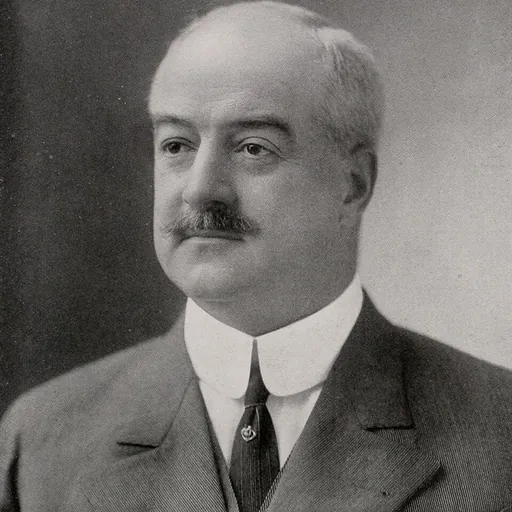
About William A. Brooks
Lived 1864 – 1921 (aged 56). William A. Brooks was an american football player, rower and surgeon.
William Allen Brooks Jr. (August 15, 1864 – May 20, 1921) was an American surgeon, college football player, coach, referee, and rower. He played football and participated in rowing at Harvard and afterwards was a prominent surgeon as well as official, additionally serving one year as the Harvard football coach.
A native of Haverhill, Massachusetts, Brooks graduated from Phillips Exeter Academy. He afterwards attended Harvard College from 1883 to 1886, playing football and being a member of their rowing team. He was team captain in football as a senior, and led them to a 12–2 record. Following his graduation from the college, Brooks enrolled at the Harvard Medical School, at which he received a Doctor of Medicine in 1891. In the next years, he received positions at several hospitals as a surgeon and became a faculty member of Harvard. During this time, he was also a highly-respected sports official and served one season as Harvard's head football coach, compiling an 11–2 record.
By the early 1900s, Brooks had become one of the most prominent surgeons in the area, serving for a time as the surgeon-in-chief at St. Elizabeth's Hospital and establishing his own hospital for appendicitis in 1912. Around that time, he also became a faculty member of the Tufts University School of Medicine and made several medical inventions. Brooks had built in 1915 a hospital bearing his name in Brookline, Massachusetts. During World War I, he served as the chief surgeon Massachusetts State Guard, the acting surgeon general of the state, and a medical director for the United States Shipping Board. He served as an important figure in the relief efforts of the Halifax Explosion in 1917.
When the Spanish flu pandemic began in 1918, Brooks devoted much time towards combating the virus and had established an emergency tent hospital in Brookline. His research showed that sunshine and fresh air were the best treatments for the disease, and his tent hospital had significantly lower death rates than most others, despite taking in most of the worst cases. He later had another hospital built the following year, making a permanent facility to apply the same treatment as the tent hospital. Brooks continued his practice until his death from heart failure in May 1921.
Early life and education
Brooks was born on August 15, 1864, in Haverhill, Massachusetts. He began attending Phillips Exeter Academy at age 15 in 1880, and graduated in 1883. He played football there and was team captain in 1886. He also participated in rowing and was mentioned in The Phillips Exeter Academy: A History as one of the players in the declining era of school boating who went on to "shine as college oarsmen."
After graduating from Phillips Exeter, Brooks enrolled at Harvard College in 1883. He played on the freshman football team in 1883 before moving to the varsity team.
Brooks became a very prominent Harvard student for his accomplishments in football and rowing, with one source writing that he "was one of the best known Harvard men of his time." He was elected second marshal at the school, which was the equivalent of vice class president. He was also active in several undergraduate matters. were unscored upon with the exception of the games against Princeton and Yale, and included among their wins was a 158–0 defeat of Phillips Exeter Academy, Brooks' former school, which was the largest win in football history by that point. They also defeated Wesleyan in a championship game by a score of 110–0,
Brooks received much praise for his 1886 Harvard team, and was credited with "starting the ball a-rolling" at the school, according to Outing. He was also a member of the Harvard Hasty Pudding Club, Union, University, Athletic and Country Clubs, and was a founder and director of the "Varsity Club." He later was an officer for the Beta Theta Pi fraternity, serving as its president for a time.
Later athletic career Officiating Brooks was highly regarded as an official for his knowledge of the game, An article from 1892 wrote that Brooks "is to-day a favorite referee for all football matches–his firmness, knowledge of the game and honesty of purpose being proverbial." 1888, 1889, 1890, 1891, 1892, and 1893. He refused to officiate Yale games after what was considered dirty play in their 1894 match against Harvard. He also refereed several of his alma mater's games, including at least three in 1894 when he also served as their head coach. Other schools he officiated games for included Michigan, Andover, Cornell, Brown, Amherst, Williams, and Dartmouth, among others. Brooks additionally served as referee for several rowing matches.
Involvement at Harvard
Brooks was active in Harvard sports for years after his graduation. He occasionally served as the football team's trainer, was for a time their medical advisor, and was a member of several of Harvard's athletic boards, in addition to helping train the rowing team. He also served until at least 1906 as the physician for several of Harvard's teams. At the start of 1894, Brooks was appointed to serve on the college football rules committee, with a goal of improving how the sport was played (due to several accidents and severe injuries that occurred in 1893), along with Walter Camp (Yale), John C. Bell (Penn), and Alexander Moffat (Princeton), later being joined by P. J. Dashiell (Lehigh). The following is a report from The Philadelphia Times detailing the results of their meetings:
Brooks was also named Harvard's football head coach in 1894, a position in which he served for one season. The Brooks-led Crimson started the season by shutting out Dartmouth (22–0), Phillips Exeter (48–0), and Andover (46–0), followed by an 18–4 victory against Brown, which was considered a "big surprise" as they were expected to continue their shutout streak. Harvard then shutout the Orange Athletic Club (14–0), Amherst (30–0), and Williams (32–0), before allowing 12 points in their 22–12 victory over Cornell. and re-matched Brown, whom they defeated 18–0.
Game against Yale Brooks' team by this point in the season was 11–0, having shutout all but two opponents. The next game on their schedule was an all-important match against the undefeated Yale Bulldogs, their biggest rival. The match was played before 25,000 fans in Springfield, Massachusetts, and despite the recent rule changes to make football safer, proved to be one of the most violent games in the history of the sport. He admitted that his team had played violent as well, but stated that "If they had not adopted Yale's tactics there would not have been a Harvard player left." The controversy over this game, escalated by Brooks' criticisms of Yale and a published letter attacking Hinkey, led to all sports between the schools being discontinued. Brooks' team ended with an overall record of 11–2, and he did not return in the position for the 1895 season. He remained active at Harvard, however, being named in 1895 graduate member of the athletic board. Brooks eventually apologized for his criticisms of Yale and his attack letter of Hinkey, saying "That darn letter is the one thing I regret in my athletic career," and made peace with the school and their coach, Walter Camp.
Brooks was a strong supporter of the Harvard rowing team after graduating, with The Boston Globe describing him as "a Harvard crew supporter of the staunchest type," while writing he "has followed the ups and downs of Harvard boating from the day when he pulled in the shell that rowed away from the Yale crew in 85. Win or lose, the doctor has always been on hand, with his courage never failing and oftentimes scenting victory because of his deep loyalty to Harvard."
Career as a surgeon
After graduating from Harvard College, Brooks entered the Harvard Medical School in the fall of 1887. He was appointed "Demonstrator of Anatomy" that year, succeeding Dr. Dexter, and later in June 1896 was re-appointed for five more years. By 1901, he was the school's instructor in minor surgery and by 1903, became "Assistant in Surgery."
Brooks was named "House Pupil" (the same as an intern) In the winter of 1897, Brooks was also appointed a surgeon at St. Elizabeth's Hospital.
By 1906, according to Munsey's Magazine, Brooks had become "one of the most prominent physicians of Boston, with a splendidly lucrative practie." but continued his practice. About one year later, he became the surgeon-in-chief at St. Elizabeth's Hospital. In 1912, he was appointed assistant of the surgery department at the Tufts University School of Medicine. He also became assistant professor of clinical surgery and an instructor. The Medical Times described this as follows: A distinct innovation, but one which is bound to be followed by scores of others throughout the country before long, is the new hospital for appendicitis in Boston, opened by Dr. W. A. Brooks, Jr., of the surgical faculty of Tufts Medical School. It has been felt for some time that institutions for the medical and surgical treatment of diseases of the appendix would prove advantageous and it is believed Dr. Brooks' experiment will be crowned with success. At the end of 1913, he announced his resignation as surgeon-in-chief at St. Elizabeth's after having served in the position for three years. Brooks also, that year, invented what the magazine Power Wagon described as " motor ambulance unlike anything that has ever been seen before." It said:
In May 1917, as the United States was preparing for World War I, Brooks, at the time head of the hospital bearing his name, was appointed chief surgeon of the Massachusetts State Guard. While in the position, to help transport the wounded in the war, Brooks invented a form of the stretcher with wheels attached. Later becoming the acting surgeon general of the commonwealth, Brooks organized the first medical unit that was dispatched to Halifax, Nova Scotia, after the Halifax Explosion in December 1917.
In 1918, Brooks sent letters urging for more hospital facilities, with the Spanish flu pandemic and injuries from the war placing a strain on the services. As the pandemic worsened, he began devoting all his time to supervision of hospitals and studying the disease. The hospital took 351 patients from the 1,200 sick among the merchant sailors in the East Boston harbor, receiving many of the worst cases. Additionally, among the 150 doctors and nurses, only eight contracted influenza, and five of those were thought to have caught it from outside the camp. One year later, he established nearby the "Brooks Cubicle Hospital," for a more permanent facility to apply the same type of treatment. He continued practicing until his death in 1921.
In his career as a surgeon, Brooks specialized in abdominal surgery, although he was also an "acknowledged authority on general surgical practice." One magazine described him as being among "the best known American practitioners."
Personal life and death
Brooks was a member of the Sons of the American Revolution, having been a descendant of Robert Brooks who served in the war. He was the medical director for the Massachusetts Employees Insurance Association and was an officer for the Massachusetts Medical Benevolent Society. Brooks was also a member of the Medical Sciences Association, American Medical Association, American Anatomists, and Medical Improvement Society. In July 1894, he wrote an article for the magazine Harper's Monthly about "The Picturesque Side Of The Yale–Harvard Race." They had a daughter, Katharine, born March 10, 1895, who died January 11, 1896.
Brooks died of heart failure on May 20, 1921, at his private hospital in Brookline, Massachusetts.
Head coaching record
Works
(with Walton, George L.)
Don’t just read it —
keep it.
Full-length biographies made to live with: read them, listen on the way to work, watch them tonight.
- E-book
- Audio
- Video
Instant download · yours to keep · every purchase keeps this site free
Important facts
People in William A. Brooks's life
Named in this biography and alive at the same time



Related people
Same field, nearest in time


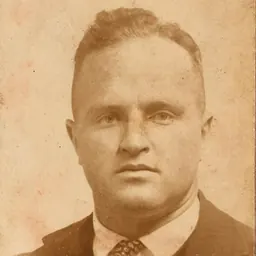
Contemporaries
People whose lives overlapped William A. Brooks's

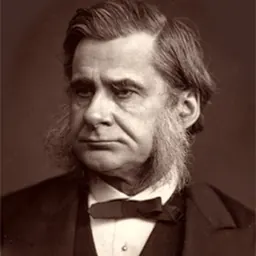
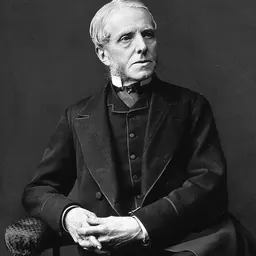


Frequently asked questions
Who was William A. Brooks?
American surgeon
When was William A. Brooks born?
William A. Brooks was born on 15 August 1864.
When did William A. Brooks die?
William A. Brooks died on 20 May 1921.
What was William A. Brooks's occupation?
William A. Brooks was an american football player, rower and surgeon.
Sources & further reading
· Wikipedia: William A. Brooks
Cite this page
APA: Biography.guide. (2026). William A. Brooks. https://biography.guide/william-a-brooks/
MLA: "William A. Brooks." Biography.guide, https://biography.guide/william-a-brooks/.
Chicago: "William A. Brooks." Biography.guide. https://biography.guide/william-a-brooks/.
Data last updated: 2026-09-20 · Spot an error? Report a correction.
Portrait: Wikimedia Commons · author & licence
Page generated 2026-09-27 04:58 UTC