
About Willem van der Haegen
Lived 1430 – 1507 (aged 76–77). Willem van der Haegen was a merchant and explorer.
D. Willem van der Haegen (1430; County of Flanders – 21 December 1507/9; São Jorge, Azores), or Willem De Kersemakere, was a Flemish-born Azorean entrepreneur, explorer, and colonizer. He was a pioneer colonizer in Azorean history and his descendants formed part of the original Azorean nobility.
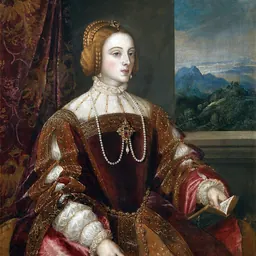
Colonization of the Azores As part of his inheritance, King Edward of Portugal bequeathed the islands of the Azores to his brother, the Infante D. Henriques (Henry the Navigator), in 1433. This was subsequently left to Henry's nephew and adopted son, Infante D. Fernando, in addition to Henry's title as Grand Master of the Order of Christ. A grant was made by the Infante to his aunt, D. Isabella of Portugal (Edward and Henry's sister), the Duchess of Burgundy, in the Low Countries. For many of the Flemish who were recuperating from the Hundred Years' War, this grant offered an opportunity of alleviating their suffering.
Willem, a wealthy Flemish merchant who traded with the Portuguese, was invited by Joost de Hurtere (for four-years Captain-General of the island of Faial) to settle the island with him, in an archipelago that was becoming known as a New Flanders (or the Flemish Islands). Consequently, in 1470, with his wife, Marguerite, and at his own expense, he offloaded two ships carrying his extended family, slaves and professionals of various services, to begin what was characterised as a "second-wave" of immigration to the island (the first having been pioneered by de Hurtere in the 1460s). Willem, by his virtues and distinguished personality, became popular on the island. But, sensing a level of bad faith on the part of de Hurtere and a growing rivalry, he abandoned his holdings on Faial, to settle in Quatro Ribeiras, on the island of Terceira. He began to cultivate wheat and gather woad plants for export (specifically Isatis tinctoria which was also produced in the Picardy and Normandy Regions of France until that time). These plants, along with other species, were essential in the production of many of the dyes popular with mercantile classes. Most islands in the archipelago were populated, and the plants commercialized by the landed gentry for their exportable nature; early settlements were founded on the basis of agricultural and dye-based exports, such as woad. Willem's colonies were no exception.
On a trip to Lisbon he encountered D. Maria de Vilhena (widow of D. Fernão Teles de Meneses, the Donatary of the islands of Flores and Corvo, then administratively one fiefdom) and his son Rui Teles. After some negotiation, D. Maria would cede the rights to the exploration of the islands to Willem, in exchange for monthly payments. Around 1478, he settled in Ribeira da Cruz, where he built homes, developed agriculture (primarily wheat), collected more woad species for export, and explored for tin, silver or other minerals (under the assumption that the islands were part of the mythic Ilhas Cassterides, the islands of silver and tin). Owing to the island's isolation and difficulties in communication his crops became difficult to export. After several years, he decided to leave the island and return to Terceira. But his return was brief; after seven years he left Quatro Ribeiras and settled in the area of Topo, São Jorge Island, effectively establishing the community with other Flemish citizens. He died there on December 21, 1507/09,
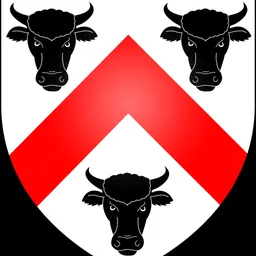
Possible origins alt=Coat of Arms originally used by the De Keersmaeker family in Flanders. Coat of Arms originally used by the De Keersmaeker family in Flanders. Civil sentence in the archives of Bruges detailing Willem's commercial relations with Portuguese merchants. In 2006, in his article 'Les Flamads au Portugal au XV Siècle', the French historian Jacques Paviot wrote about the existence of a civil sentence in the archives of Bruges, written in medieval dialects of French and Dutch, which details the commercial relations of an individual named Willem De Kersemakere with various Portuguese merchants, including Lopo Mendes.
According to Paviot and to further research published in 2011 by the Belgian genealogist André L. Fr. Claeys, this document, in comparison to the will of Willem van der Haegen's wife, Magarida de Sabuya, dated from 14 September 1510 and registered by the notary André Fernandes (in which Willem is referred to as Guilherme Casmaca), concluded that the real name of the colonizer until then known as Willem van der Haegen was in fact Willem De Kersemakere. throughout the centuries have referred to Willem as Guilherme Casmaca or Cosmacra (a possible linguistical corruption of Kersemakere), with the earliest attestation, besides the will of his wife, being a description of his life and family by Gaspar Frutuoso written in the years 1586–1590, published in 1506.
Paviot speculates that De Kersemakere may originate from the Dutch word Kaarsenmaker (candle maker),
Willem van der Haegen's parentage is uncertain; however, he might have been a member of the 'De Keersmaeker' patrician family. although, his allegations are heavily contested by Claeys, because Guill never cites any sources for this information, and never consulted the archives of Bruges, or other Flemish sources, always referring to Willem as 'Van der Haegen', and never 'Casmaca' or 'De Kersemakere'. Instead, Claeys argues that Margarida was probably born 'Marguerite Zabeau' from the petty nobility of Wallonia, observing that since before 1322 the surname Zabeau is found on the regions of Liège, Luxembourg (Belgium) and Ardennes (with variants such as Sabau, Sabia, Sabiau). Claeys also notes that even if Margarida was in fact a Savoy, she was probably the daughter of other members of this family who settled in Wallonia, as he claims to have found two coats of arms of lineages named Savoi or Savoye (Jehan de Savoye, 1444). Also in the same region, there are records of Aimé, Count of Savoy (record of 23 December 1304, cartularum of 1 September 1316) and Jacop van Savoye, Count of Romand and Saint-Pol (record of 8 April 1484).
It is very likely that Guill based his allegations on the claim made by Gaspar Frutuoso that Willem was the grandson of a Count of Flanders. However, the noble origin of Van der Haeghen has been disputed by various posterior authors. The first of which, Diogos das Chagas, claimed in his manuscript 'Espelho Cristalino''' from 1646 that there were two people named Silveira: "João de Silveyra, a very important man and great merchant (or cunning merchant)", to whom Joost de Hurtere (Joz de Utra) made many promises if he would agree to settle on the Azores, and another "Guilherme de Silveyra of the Silveyras of Brandath"'' who traveled to Flores and then São Jorge. In regards to the latter, das Chagas writes that the name Brandath is a linguistical corruption of Vandraga.
Don’t just read it —
keep it.
Full-length biographies made to live with: read them, listen on the way to work, watch them tonight.
- E-book
- Audio
- Video
Instant download · yours to keep · every purchase keeps this site free
Important facts
People in Willem van der Haegen's life
Named in this biography and alive at the same time
Related people
Same field, nearest in time


Contemporaries
People whose lives overlapped Willem van der Haegen's

Frequently asked questions
Who was Willem van der Haegen?
Flemish merchant
When was Willem van der Haegen born?
Willem van der Haegen was born in 1430 in West Flanders.
When did Willem van der Haegen die?
Willem van der Haegen died in 1507 in Topo.
What was Willem van der Haegen's occupation?
Willem van der Haegen was a merchant and explorer.
What nationality was Willem van der Haegen?
Willem van der Haegen's recorded nationality: Duchy of Burgundy.
Sources & further reading
· Wikipedia: Willem van der Haegen
· DBpedia: Willem van der Haegen
Cite this page
APA: Biography.guide. (2026). Willem van der Haegen. https://biography.guide/willem-van-der-haegen/
MLA: "Willem van der Haegen." Biography.guide, https://biography.guide/willem-van-der-haegen/.
Chicago: "Willem van der Haegen." Biography.guide. https://biography.guide/willem-van-der-haegen/.
Data last updated: 2026-09-20 · Spot an error? Report a correction.
Page generated 2026-09-27 05:25 UTC