
Willem Siebenhaar
Twentieth-century Australian poet and public servant
About Willem Siebenhaar
Lived 1863 – 1936 (aged 73). Willem Siebenhaar was an Australian and British chess player, poet, translator and social activist.
Willem Siebenhaar (; 28 July 1863 – 29 December 1936) was a social activist and writer in Western Australia from the 1890s until he left Australia in 1924. His literary contributions and opposition to policies such as conscription were his most notable contributions to the history of the state.
Biography Siebenhaar was born in The Hague on 28 July 1863, beginning a lifelong interest in chess at the age of fifteen. His early life saw him exposed to the Christian anarchist, Ferdinand Domela Nieuwenhuis. In 1882 he graduated from Delft University, the Netherlands, and two years later, he emigrated to England to become a teacher.
He sailed to Western Australia in 1891, taking up a position on the staff of Perth High School (now Hale School). The following year he defeated the South Australian chess player Ernest Hack, becoming unofficial Western Australian Chess Champion, and taking over Hack's chess column in The Western Mail. In 1895 he joined the public service, initially as sub-editor of the Western Australian Yearbook. Later he would rise to become Government Statistician and Registrar-General.
In 1910, Siebenhaar founded the literary magazine Leeuwin, which was co-edited by Alfred Chandler (Spinifex) and Plate. It ran for only six issues, but featured four contributions by A. G. Stephens on 'The Manly Poetry of Western Australia'. The same year saw the London publication of his Dorothea: A Lyrical Romance in Verse, which would later be scrutinised for sedition.
Shortly afterwards, apparently suffering from poor health, he visited Britain. During this time he married Lydia Bruce Dixon, and may have had contact with the Russian Peter Kropotkin. His health having improved, he returned to Western Australia, apparently in late 1913.
He became heavily involved in a number of social movements, including the advancement of women's suffrage, and the anti-conscription movement. Siebenhaar's participating in the latter movement saw him removed from his position in the public service in 1916, with the press release condemning him as a "German" in league with the notorious Industrial Workers of the World (IWW). Siebenhaar freely admitted campaigning for the release of Monty Miller, who had toured for the IWW. Later, an inquiry into his politics and character exonerated him of disloyalty and reinstated his position with restitution.
In 1919, Siebenhaar published his Sentinel Sonnets (with Alfred Chandler), a eulogy for the anarchist Monty Miller. Other contributions to the literature of the state include his work in collecting and editing material for James Sykes Battye's Western Australia: a history from its discovery to the inauguration of the Commonwealth. His various contributions to newspapers and magazines also reflected the views promulgated by the esoteric society, the Theosophical Society, of which he was a member. He continued to write and critique poetry, entering into debates with early poets such as Edwin Murphy, whose style contrasted his own romantic approach.
Siebenhaar returned to England in 1924, living in Findon in Sussex. There, in 1927, he translated Eduard Douwes Dekker's Max Havelaar. The preface was supplied by his friend D. H. Lawrence, whose left-wing activist Willie Struthers in the novel Kangaroo was likely based on Siebenhaar. He was struck by a motor car and died from injuries on 29 December 1936 at Littlehampton, West Sussex.
Don’t just read it —
keep it.
Full-length biographies made to live with: read them, listen on the way to work, watch them tonight.
- E-book
- Audio
- Video
Instant download · yours to keep · every purchase keeps this site free
Important facts
People in Willem Siebenhaar's life
Named in this biography and alive at the same time

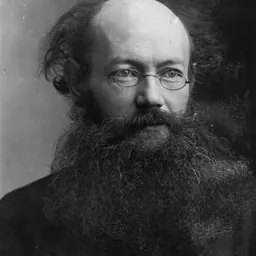
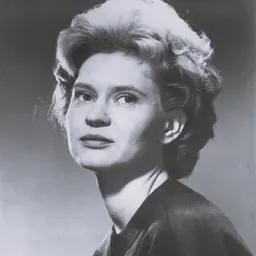
Related people
Same field, nearest in time
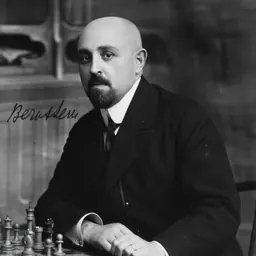

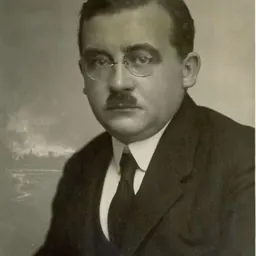


Contemporaries
People whose lives overlapped Willem Siebenhaar's



Frequently asked questions
Who was Willem Siebenhaar?
Twentieth-century Australian poet and public servant
When was Willem Siebenhaar born?
Willem Siebenhaar was born on 28 July 1863 in The Hague.
When did Willem Siebenhaar die?
Willem Siebenhaar died on 29 December 1936 in Littlehampton.
What was Willem Siebenhaar's occupation?
Willem Siebenhaar was a chess player, poet, translator and social activist.
What nationality was Willem Siebenhaar?
Willem Siebenhaar was Australian and British.
Sources & further reading
· Wikipedia: Willem Siebenhaar
Cite this page
APA: Biography.guide. (2026). Willem Siebenhaar. https://biography.guide/willem-siebenhaar/
MLA: "Willem Siebenhaar." Biography.guide, https://biography.guide/willem-siebenhaar/.
Chicago: "Willem Siebenhaar." Biography.guide. https://biography.guide/willem-siebenhaar/.
Data last updated: 2026-09-22 · Spot an error? Report a correction.
Page generated 2026-09-27 05:17 UTC