
About Will D. Campbell
Lived 1924 – 2013 (aged 88). Will D. Campbell was an American novelist and biographer.
Will Davis Campbell (Amite County, Mississippi, July 18, 1924 – Nashville, Tennessee June 3, 2013) was a Baptist minister, lecturer, and activist. He was a Southern white supporter of African-American civil rights. Campbell was also a lecturer and author, most notably for his autobiographical work Brother to a Dragonfly, a finalist for the National Book Award in 1978.
Early life and career Campbell was born in Amite County, Mississippi, in 1924, the son of a farmer and his wife. He credited his family with having raised him to be culturally tolerant, even though his family church had Bibles emblazoned with a Ku Klux Klan symbol.
Though he held a pastorate in Louisiana from 1952 to 1954, Campbell spent most of his career in other settings. In 1954, he took a position as director of religious life at the University of Mississippi, only to resign in 1956. This was in part due to the hostility—including death threats—he received for supporting racial integration.
He subsequently took a position as a field officer for the National Council of Churches (NCC), and joined the civil rights movement. In 1963, Campbell left the NCC to become director of the Committee of Southern Churchmen (CSC), which was his base for continuing activism.
The CSC published a journal, Katallagete, its title deriving from New Testament Greek for the Pauline phrase 'be reconciled', a reference to 2 Corinthians 5:20. The journal published articles about politics and social change, as understood through the lens of the Christian faith. It expressed ideas of the neo-orthodox movement, which Campbell had become acquainted with at Yale. Edited by James Y. Holloway of Kentucky's Berea College, Katallagete was published from 1965 until the early 1990s. The CSC relinquished control of the journal to Campbell and Holloway in 1983.
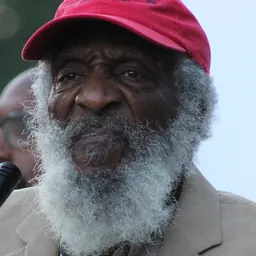
By 2005, Campbell described the CSC as "nothing ... a name and a tax exemption and whatever I and a few other people were doing on a given day." He continued to work on his own together with a network of acquaintances, including singers Johnny Cash and Willie Nelson, comedian Dick Gregory, cartoonist and playwright Jules Feiffer, and writer Studs Terkel.
Although remaining a Baptist, Campbell reportedly conducted house church worship services at his home in Mt. Juliet, Tennessee until late in his life.
Campbell died on June 3, 2013, in Nashville, from complications of a stroke he suffered in May 2011. He was 88 and was survived by his wife of 67 years, Brenda Fisher, a son, Webb, and two daughters, Bonnie and Penny.
Activism
Civil rights
In 1957, while working for the National Council of Churches, Campbell participated in two notable events of the civil rights movement: he was one of four people who escorted the black students who integrated the Little Rock, Arkansas, public schools; and he was the only white person present at the founding of the Southern Christian Leadership Conference (SCLC) by Martin Luther King Jr. In 1961, he helped "Freedom Riders" of the Congress of Racial Equality (CORE) and the Student Nonviolent Coordinating Committee (SNCC) to integrate interstate bus travel, despite white mob violence, in Alabama.
He appealed to Southern Christian churches to end their own segregation and fight discrimination, rather than remain silent. Campbell eventually left organized religion, though he remained firmly Christian. and that "Mr. Jesus died for the bigots as well". These convictions sometimes caused friction between Campbell and other civil rights figures. Chris Hedges in 2021 wrote that Campbell was an He visited James Earl Ray in prison. In the late 1970s, he spoke out against the death penalty, particularly after forming a relationship with John Spenkelink, whom the state of Florida executed in 1979. Campbell also expressed his opposition to abortion.
Like William Stringfellow and Jacques Ellul—both contributors to Katallagete—Campbell expressed his distrust of government and his belief that people must make their own history. These views distinguish Campbell's thought from that of most religious liberal activists. He is considered aligned with more recent postliberal theologians, who denounce the liberal (as well as conservative) esteem for civil society as a misplaced faith, a form of idolatry taking the place of God and Jesus Christ in Christian life.
Works This list contains every, or nearly every, book-length work authored primarily by Campbell, but it makes no attempt to list shorter works.
Race and the Renewal of the Church (1962) Up to Our Steeples in Politics (1970, reprint 2005) (with James Y. Holloway) The Failure and the Hope: Essays of Southern Churchmen (1972, reprint 2005) (edited with James Y. Holloway) ... and the criminals with him ..." Lk 23:33: A first-person book about prisons (1972) Brother to a Dragonfly (1977): part autobiography, part elegy for Campbell's brother, part oral history of the Civil Rights Movement The Glad River (1982): novel Cecelia's Sin (1983): historical novel set among the early Baptists The Lord's Prayer for Our Time (1983) (with Will McBride and Bonnie Campbell) Forty Acres and a Goat (1986): autobiography (40 acres is about 16 hectares) The Convention: A Parable (1988): allegory based on the conflict between moderates and fundamentalists within the Southern Baptist Convention Covenant: Faces, Voices, Places (1989) (with photographs by Al Clayton) Chester and Chun Ling (1989): children's book, illustrated by Jim Hsieh Providence (1992, reprint 2002) The Stem of Jesse: The Costs of Community at a 1960's Southern School (1995, reprint 2002): account of racial integration at Mercer University "Little Red Riding: The Baptist Red-headed Girl" (1996, reprinted 2001): children's book, illustrated by Picasso "Elvis Presley as Redneck" (1995): address delivered at First Elvis Presley Symposium, University of Mississippi The Pear Tree That Bloomed in the Fall (1996): children's book, illustrated by Elaine Kernea And Also With You: Duncan Gray and the American Dilemma (1997): a tribute to the Rt. Rev. Duncan M. Gray, whom Campbell calls one of his heroes Bluebirds Always Come on Sunday (1997) Shugah and Doops (1997) Soul Among Lions: Musings of a Bootleg Preacher (1999) Robert G. Clark's Journey to the House (2003): a biography of the man who, in 1967, was elected Mississippi's first black state legislator since Reconstruction "Writings on Reconciliation and Resistance" (2010) "Crashing the Idols: The Vocation of Will D. Campbell" (2010) "And the Criminals With Him: Essays in Honor of Will D. Campbell and the Reconciled" Edited by Will D. Campbell and Richard C. Goode. (2012)
Don’t just read it —
keep it.
Full-length biographies made to live with: read them, listen on the way to work, watch them tonight.
- E-book
- Audio
- Video
Instant download · yours to keep · every purchase keeps this site free
Important facts
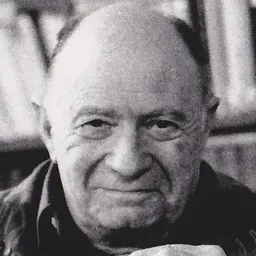
People in Will D. Campbell's life
Named in this biography and alive at the same time





Related people
Same field, nearest in time



Contemporaries
People whose lives overlapped Will D. Campbell's


Frequently asked questions
Who was Will D. Campbell?
American writer (1924-2013)
When was Will D. Campbell born?
Will D. Campbell was born on 18 July 1924.
When did Will D. Campbell die?
Will D. Campbell died on 3 June 2013.
What was Will D. Campbell's occupation?
Will D. Campbell was a novelist and biographer.
What nationality was Will D. Campbell?
Will D. Campbell was American.
Sources & further reading
· DBpedia: Will Campbell (Baptist minister)
Cite this page
APA: Biography.guide. (2026). Will D. Campbell. https://biography.guide/will-d-campbell/
MLA: "Will D. Campbell." Biography.guide, https://biography.guide/will-d-campbell/.
Chicago: "Will D. Campbell." Biography.guide. https://biography.guide/will-d-campbell/.
Data last updated: 2026-09-20 · Spot an error? Report a correction.
Page generated 2026-09-27 05:06 UTC