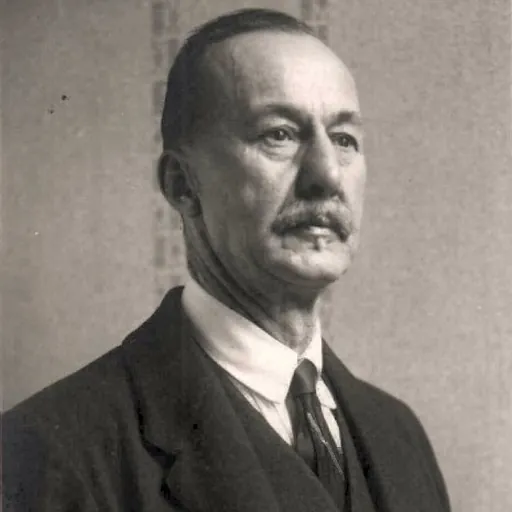
About Wilhelm Wirtinger
Lived 1865 – 1945 (aged 79). Wilhelm Wirtinger was an Austrian mathematician and university teacher, known for Complex analysis, Kähler manifold and Several complex variables.
Wilhelm Wirtinger (19 July 1865 – 16 January 1945) was an Austrian mathematician, working in complex analysis, geometry, algebra, number theory, Lie groups, and knot theory.
Biography
He was born at Ybbs on the Danube and studied at the University of Vienna, where he received his doctorate in 1887, and his habilitation in 1890. Wirtinger was greatly influenced by Felix Klein with whom he studied at the University of Berlin and the University of Göttingen.
Honours
In 1907 the Royal Society of London awarded him the Sylvester Medal, for his contributions to the general theory of functions.
Work
Research activity
He worked in many areas of mathematics, publishing 71 works. His first significant work, published in 1896, was on theta functions. He proposed as a generalization of eigenvalues, the concept of the spectrum of an operator, in an 1897 paper; the concept was further extended by David Hilbert and now it forms the main object of investigation in the field of spectral theory. Wirtinger also contributed papers on complex analysis, geometry, algebra, number theory, and Lie groups. He collaborated with Kurt Reidemeister on knot theory, showing in 1905 how to compute the knot group. Also, he was one of the editors of the Analysis section of Klein's encyclopedia.
During a conversation, Wirtinger attracted the attention of Stanisław Zaremba to a particular boundary value problem, which later became known as the mixed boundary value problem.
Teaching activity A partial list of his students includes the following scientists:
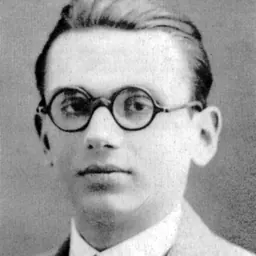
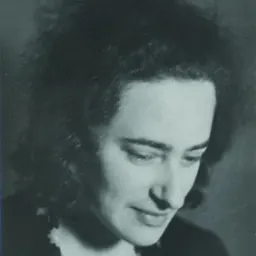
Wilhelm Blaschke Hilda Geiringer Kurt Gödel Wilhelm Gross Eduard Helly
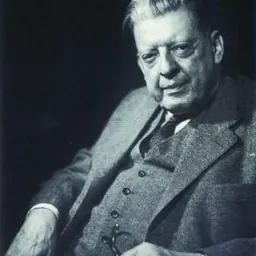
Erwin Schrödinger
Gábor Szegő Olga Taussky-Todd Leopold Vietoris Roland Weitzenböck
Selected publications
, available at DigiZeitschirften. In this important paper, Wirtinger introduces several important concepts in the theory of functions of several complex variables, namely Wirtinger derivatives and the tangential Cauchy–Riemann condition. The paper is deliberately written from a formal point of view, i.e. without giving a rigorous derivation of the properties deduced. . .
Don’t just read it —
keep it.
Full-length biographies made to live with: read them, listen on the way to work, watch them tonight.
- E-book
- Audio
- Video
Instant download · yours to keep · every purchase keeps this site free
Important facts
more
Wirtinger's representation and projection theoremPeople in Wilhelm Wirtinger's life
Named in this biography and alive at the same time





Related people
Same field, nearest in time


Contemporaries
People whose lives overlapped Wilhelm Wirtinger's



Frequently asked questions
Who was Wilhelm Wirtinger?
Austrian mathematician (1865–1945)
When was Wilhelm Wirtinger born?
Wilhelm Wirtinger was born on 15 July 1865 in Ybbs an der Donau.
When did Wilhelm Wirtinger die?
Wilhelm Wirtinger died on 15 January 1945 in Ybbs an der Donau.
What was Wilhelm Wirtinger's occupation?
Wilhelm Wirtinger was a mathematician and university teacher.
What was Wilhelm Wirtinger known for?
Wilhelm Wirtinger was known for Complex analysis, Kähler manifold, Several complex variables, Wirtinger derivatives, Wirtinger presentation and Wirtinger's inequality for functions.
What nationality was Wilhelm Wirtinger?
Wilhelm Wirtinger was Austrian.
Sources & further reading
· Wikipedia: Wilhelm Wirtinger
Cite this page
APA: Biography.guide. (2026). Wilhelm Wirtinger. https://biography.guide/wilhelm-wirtinger/
MLA: "Wilhelm Wirtinger." Biography.guide, https://biography.guide/wilhelm-wirtinger/.
Chicago: "Wilhelm Wirtinger." Biography.guide. https://biography.guide/wilhelm-wirtinger/.
Data last updated: 2026-09-21 · Spot an error? Report a correction.
Portrait: Wikimedia Commons · author & licence
Page generated 2026-09-27 04:59 UTC