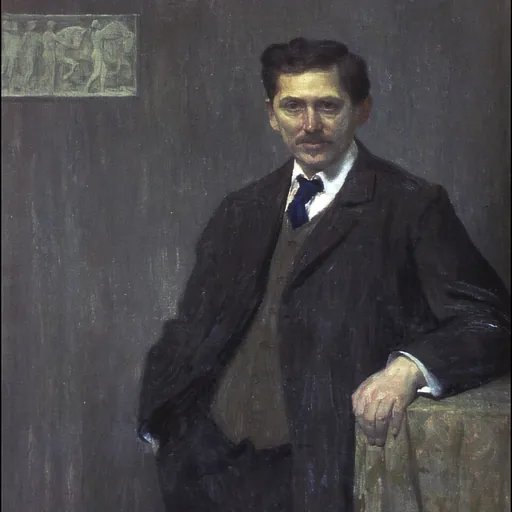
About Wilhelm Wandschneider
Lived 1866 – 1942 (aged 76). Wilhelm Wandschneider was a sculptor.
Wilhelm Georg Johannes Wandschneider (6 June 1866, Plau am See – 23 September 1942, Plau am See) was a German sculptor.
Life His father was a commercial decorative painter. At an early age, he began an after-school apprenticeship in the family workshop, taking advantage of a few free hours for more artistic endeavors. In 1885, after having served as an assistant on a trip to Rostock and Güstrow, his father gave him permission to go to Berlin and look for work. After passing the entrance exam in 1886, he studied with Albert Wolff, Paul Friedrich Meyerheim, Fritz Schaper and Gerhard Janensch. He also gained practical experience working in the studios of Ludwig Brunow, Martin Wolff, Karl Hilgers and Ernst Herter. In 1895, he became a Master Student of Reinhold Begas but did not remain long, having won a prize from the "Philip von Rohr Foundation" which enabled him to study in Italy for a year. Upon his arrival in St.Louis, he met with the design committee and argued for the appropriateness of his design. His personal appeals were effective, and a compromise was reached; the statue would be made of bronze, rather than white marble, to deemphasize its nudity. "The Kneeling Soldier", a figure that may be seen at several war memorials throughout Germany. This one is in Crivitz and dates from 1922.
Later years After Germany's defeat in World War I, many artists entered a period of financial distress as public commissions and private clients were difficult to find. At times, he had to feed his six children at the local soup kitchen. His only work came from military societies, seeking to memorialize their fallen comrades. In 1925, he had to sell his home and studio in Berlin, returning to his birthplace of Plau to reduce expenses. The people there greeted their famous son enthusiastically, creating a display of his plaster casts in a room at the local schoolhouse.
Selected major works A complete list of his works may be found in the corresponding article on German Wikipedia.
Monuments 1898: Neustettin, Statue of Kaiser Wilhelm I. (Melted down in 1943). A heavily damaged portion of the base was recovered from a lake in 2003 and reinstalled. 1899: Berlin-Charlottenburg, Statue of Werner von Siemens (The original base was destroyed. The figure was restored in 2003 and reinstalled on the Straße des 17. Juni). 1901: Schwerin, Statue of Otto von Bismarck. (Melted down c.1950 by the Communist government. The base was reworked into gravestones. A similar fate befell his statue of Grand Duke Friedrich Franz III in Rostock. 1903: Dortmund, Statue of Otto von Bismarck (Removed and hidden in 1940, but discovered in 1960 and melted down.) 1913: Riga, Statue of Michael Andreas Barclay de Tolly (Lost in 1915; reconstructed on its original base in 2002) 1914: St. Louis, Allegorical figure "The Naked Truth". (see above)
War memorials 1909: Sömmerda: Two-figure statue in honor of Johann Nikolaus von Dreyse. (Demolished in 1948. Fragments of his head and the base still exist.) 1910: Güstrow, Figure of the "Kneeling Soldier", commemorating the Franco-Prussian War. Several more versions of this figure were created for other locations after World War I. 1920: Malchow, figure of "The Dying Roman Warrior", with a Swastika on the reverse of the shield. It was dismantled in 1945, with the intention of reinstalling it once the Swastika was removed, but it was melted down in 1956. 1936: Rostock, Figure of a fighting sailor to commemorate the Battle of Jutland and the men who were lost on the SMS Rostock. (Dismantled in 1945 and melted at some later date. The base survived until recently, when it was seriously vandalized and had to be removed.)
Miscellaneous figures 1903: Plau am See, Figure of "Coriolanus", originally created for the 1904 St.Louis World's Fair, where it won a gold medal. It has also been reproduced a statuette. 1906: "Der Sieger" (The Victor), in the Tiergarten Berlin (Melted in 1942, recast in 2001.) 1908: "Voss un Swinegel" (fox and hedgehog), in Güstrow 1914: "Hechtbrunnen" (Hake Fountain), in Teterow. 1935: "Sämann" (Sower), and "Mähender Bauer" (Mower), in Plau am See. 1936: "Pfennigjunge" (Pennyboy), on the former savings bank building, Plau am See
Don’t just read it —
keep it.
Full-length biographies made to live with: read them, listen on the way to work, watch them tonight.
- E-book
- Audio
- Video
Instant download · yours to keep · every purchase keeps this site free
Important facts
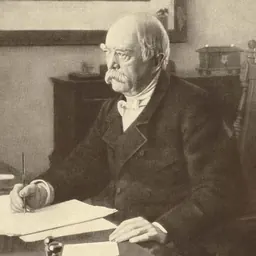
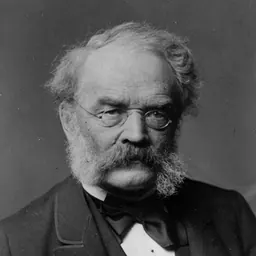
People in Wilhelm Wandschneider's life
Named in this biography and alive at the same time

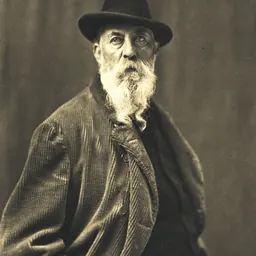



Related people
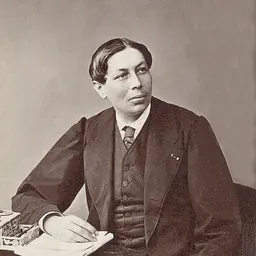
Same field, nearest in time
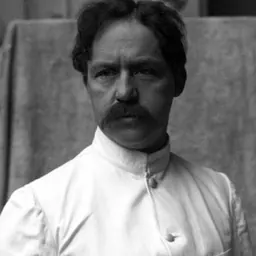
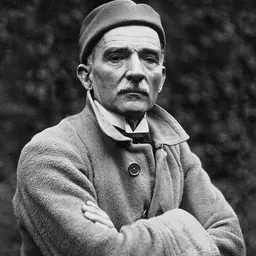
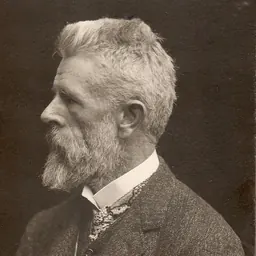

Contemporaries
People whose lives overlapped Wilhelm Wandschneider's




Frequently asked questions
Who was Wilhelm Wandschneider?
German sculptor (1866-1942)
When was Wilhelm Wandschneider born?
Wilhelm Wandschneider was born on 6 June 1866 in Plau am See.
When did Wilhelm Wandschneider die?
Wilhelm Wandschneider died on 23 September 1942 in Plau am See.
What was Wilhelm Wandschneider's occupation?
Wilhelm Wandschneider was a sculptor.
What nationality was Wilhelm Wandschneider?
Wilhelm Wandschneider's recorded nationality: German Reich.
Sources & further reading
· Wikipedia: Wilhelm Wandschneider
· DBpedia: Wilhelm Wandschneider
Cite this page
APA: Biography.guide. (2026). Wilhelm Wandschneider. https://biography.guide/wilhelm-wandschneider/
MLA: "Wilhelm Wandschneider." Biography.guide, https://biography.guide/wilhelm-wandschneider/.
Chicago: "Wilhelm Wandschneider." Biography.guide. https://biography.guide/wilhelm-wandschneider/.
Data last updated: 2026-09-22 · Spot an error? Report a correction.
Portrait: Wikimedia Commons · author & licence
Page generated 2026-09-27 05:04 UTC