
About Wilhelm von Hohnstein
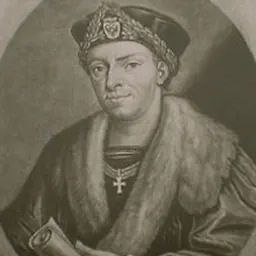
Lived 1470 – 1541 (aged 70–71). Wilhelm von Hohnstein was a French catholic priest and catholic bishop.
Wilhelm von Hohnstein or Honstein (1466 - 29 June 1541) was prince bishop of Strasbourg from 1506 to 1541 under Maximilian I and Charles V and the papacies of Julius II, Leo X, Adrian VI, Clement VII and Paul III. He was assisted by a titular bishop, initially Johann Ortwin bishop of Mathones, then Konrad Wickgram bishop of Dunes.
His episcopate, like that of his successor, was very representative of the medieval and modern history of Alsace and Strasbourg, in illustrating the complex mechanisms of Holy Roman Empire's geopolitics in a troubled era marked by the arrival of the Protestant Reformation, the Alsace anchorage's place in a then largely German-speaking Rhine basin, and tensions between Strasbourg (a multiconfessional and multicultural free imperial city) and the prince bishopric deep in Lower Alsace with a diocese which formerly extended beyond the modern-day frontiers of Alsace and France.
Wilhelm and his brother Francis originated in Thuringia, showing how the influence of the chapters, collegiate churches and cathedrals of Strasbourg extended beyond its region, with the city's nobles proud of being prebendary canons like the chapters in Cologne, Speyer, Worms, Mainz and Bamberg. Very many major clerics, reformers and politicians in Strasbourg under Wilhelm did not come from Strasbourg or Alsace but a larger interconnected territory between Lorraine and Swabia and between the Rhineland and Switzerland. Despite their diverse origins, several major figures in 16th century Strasbourg's political and theological life totally identified themselves with that city's future, meaning their lives are more often linked to the history of Strasbourg than of the city where they were born - Wilhelm himself is one example, as are the Erasmus of Strasbourg from Franconia, Jean Sturm from Westphalia, Nikolaus Gerbel and Christophe Welsinger from Baden and Johannes Sleidanus from Luxembourg.
Family
He came from a noble family in Thuringia. His parents were Ernest IV, count of Hohnstein (1440 - 1508) and his wife Anna-Margaretha von Gera. This made his paternal grandparents Heinrich XI ('the Rash'; 1402-1454) and countess Margareta von Waldeck. Ernest IV also had a son by his 1498 second marriage to Félicité de Beichlingen, Francis von Hohenstein, who became a canon in the chapter of Strasbourg Cathedral and provost at Saverne in 1512. Due to a lack of male issue, the county of Hohnstein passed to other dynastic houses such as the kings of Prussia.
Wilhelm is buried to the right of the altar in the choir of the collegiate church in Saverne, now known as Notre-Dame-de-la-Nativité. His tomb inscription translates as:
Francis is also buried there, with his inscription translated as "Count von Hohnstein, lord of Lohra and Klettenberg, canon of the insignia church of Strasbourg".
Pre-episcopate Wilhelm studied at the universities of Freiburg and Pavia before serving as vicar general to his uncle Berthold von Henneberg, Archbishop of Mainz. That role was the head of government of an episcopal principality on behalf of the dicoesan curia, alongside the judicial vicar administering justice and the chancellor the archives and general administration. Wilhelm was a canon of Cologne and Mainz (1482-1488) and of Strasbourg (1488 - 1506) and 'custode' of the collegiate church of St. John's Church, Mainz (1499-1507), and provost of St. Petri Church, Jechaburg (now a Protestant church in a suburb of Sondershausen).
Episcopate Election and consecration On 9 October 1505 he was unanimously elected by the capitulary canons after the preaching of Jean Geiler. The election was confirmed by Pope Julius II on 4 December 1506, despite his only being a subdeacon at the time. By then he was Lord of Lohra and Klettenburg.
He was ordained a priest in Saverne on 28 February 1507 and consecrated bishop on the fourth Sunday of Lent in the choir of Strasbourg Cathedral by Ernest, archbishop of Magdeburg, Duke of Saxony and primate of Germany, assisted by Konrad Wickram, titular bishop of Speyer, and Johann Ortwin, titular bishop of Strasbourg.
Entry into Strasbourg He made his solemn entry into Strasbourg on Monday 4 October 1507. Brant was then acting as chancellor of the city of Strasbourg and wrote one of Europe's first best-sellers, The Ship of Fools. His coronation in Strasbourg was an exception, since these traditionally new Bishops of Strasbourg were consecrated at Mainz Cathedral by the metropolitan bishop in Mainz, to whom the bishop of Strasbourg was a suffragan. There was a coronation and a solemn entry each time a new bishop was elected and for all but two bishops before Wilhelm (Henry II of Veringen in 1207 and Frederick of Lichtenberg, elected on 1 October 1299) these also occurred at Mainz Cathedral - it is still doubtful whether Gauthier of Geroldseck was crowned in Strasbourg.
Delegation from the Holy Roman Emperor and King of the Romans Freiherr Caspar de Mörsberg, bailiff of Lower-Alsace, representing the emperor; Delegation from the Archbishopric of Mainz Henri, count of Salm, representing René II of Lorraine; count Hessen of Linange; Sire Jacques of Haraucourt, grand bailiff of Nancy; Adam II of Hunolstein, provost; Bastien of Rathsamhausen; Philippe, Lord of Hérange, knight; Pierre of Dalheim; Lord of Huntlingen; Bernard of Sarrebruck; Jean Quinckner of Sarrebourg; Nicolas Glock;
Delegation from the Duchy of Wurtemberg Georges of Zweibrucken, lord of Bitche and of Ochsenstein; Louis, count of Hanau; Guillaume, lord of Ribeaupierre; Hamman von Thun, lord of Obernstein; Loup le Jeune, lord of Rippoltskirch; Gangloff, lord of the Grand-Geroldseck; Jean Heketzer, master of the Knights Hospitaller; Hartung of Andlau, knight; Jacques Beger of Bleyberg, knight; Jean-Jacques of Bergheim, knight; Georges Max of Eckbersheim, knight; Jean of Hattstatt, knight; Maurice Jung Zorn, knight; Rodolphe of Blumeneck, knight; Jean of Schönau; Jean of House; Claus of Schauenburg; Arnould of Andlau; Loup of Andlau; Nicolas of Fleckstein; Henri of Fleckstein; Urbain of Hattstatt; Georges of Hattstatt; Jean Oswald of Hattstatt; Claus Zorn of Bulach; Étienne Mollenkopf zum Ruß; Rodolphe of Zeisigheim; Conrad of Wallstein; Georges of Entzberg; Louis of Thann; Frédéric of Wilsberg; Jacques Wetzel of Marsilien; Philippe Wetzel of Marsilien; Georges of Hohenstein; Georges of Landsberg; Jean of Wangen; Frédéric of Schauenberg; Jacques Quinckner of Sarrebourg; Henri of Utenheim; Antoine of Ramstein; Albert of Rathsamhausen de la Roche; Blaise of Mülnheim; Jacques Bliecker of Rothenburg; Paul Steer; Jacques Waldener (Valdenaire); Albert of Regesheim; Georges Haffner of Wasselonne; Hugues of Berstetten; Georges of Wickersheim; Martzolff of Weythersheim; Caspar Zuckmantel; Philippe Ritter of Haguenau; Jean Krantz of Geispolsheim; Jean of Neuenstein; N. of Westhouse; Jacques zur Megd; Adolphe of Mittlehausen; Jacques of Fegersheim; Jacques of Oberkirch; Philippe of Rosenburg; Claus Böcklin; Balthasar of Falkenstein; Christophe Fürstenberger, provost of Achern; Loup Eckbrecht of Turckheim; Hertwig Eckbrecht of Turckheim; Winkenthaler Henri of Thann; Caspar of Wantzenheim; Loup Wormser; Simon Bastardt of Bitche; Jean of Rambourg; Balthasar of Endingen; Jean Stumpf of Simmeringen; Alexis of Beyern; Georges of Soultz; Caspar of Egersheim; Loup of Rhinach; Jacques of Rabenstein; Vith Wycker, 'grand fou' to the king; Vith of Ast; Germain Veßler of Arnsberg; N. of Buches
On entering the cathedral, the new bishop took off his canon's habit and - accompanied by the dean and the schoolmaster - went to the throne, where he was presented with his episcopal insignia.
Troubles
Reformation For twenty years the situation deteriorated both for the Catholic middle classes in Strasbourg and for the canons and secular clergy of the bishopric. Many intellectuals (particularly the cathedral's and the collegiate churches' preaching priests) favoured the reformers. The magistrate refused to do so and kept these heretical priests in their roles - he could afford to do so because some of the city's high clergy (such as Sigismond von Hohenlohe, dean of the chapter, and Wolfgang Capiton, provost of the collegiate church of St Thomas) were protecting and favouring the new religion based on their reading of the gospels In response they gathered in the home of Matthieu Zell, cathedral preacher, who had married gardener's daughter Catherine Schütz. There they drafted a request for an appeal to be considered at the next church council, entitled "request for an appeal from the married priests of the city of Strasbourg against their infamous and calumnious excommunication by the bishop". This included appointing priests and preachers lawyers Wendelin and Friess, and the theologian Murner.
On 6 January 1525 twenty-five canons of the collegiate churches of Saint-Thomas, Saint-Pierre-le-Jeune and Saint-Pierre-le-Vieux wrote a document declaring their provisional obligation to flee to Haguenau and Offenbourg without any question of renouncing their prebendaries and their place on the chapter, before having it witnessed before a notary at Molsheim. By this exile they protected their goods and their safety. Wurmser, dean of Saint-Thomas, edited this document. Towards the end of 1525, Strasbourg's magistrate only authorised four masses according to the Catholic rite, one each in the cathedral, Saint-Thomas, Saint-Pierre-le-Jeune and Saint-Pierre-le-Vieux.
From his residence forty kilometres from Strasbourg, the bishop had to support this inexorable advance of Protestantism in his diocese: Between 1549 and 1559 there was a brief respite for the Catholic inhabitants of Strasbourg, although Alsace hung onto most of its Protestant gains. ) and led to large loss of life particularly in the lands of the bishopric of Strasbourg and the bishop's main residence at Saverne, where Wilhelm later died. His counsellors were away in Aschaffenburg at the court of his episcopal superior the archbishop of Mainz, but even so they requested help from Antoine, Duke of Lorraine. He arrived in Sarrebourg on 15 May and set up his general headquarters in Steinbourg after his attempted offensive was stopped by peasant bands blocking the Saverne Pass in mid May. His repression was bloody as he had difficulty controlling his landsknechts.
Antoine tried to plot a middle course between Charles V and Francis I of France - he was unable to avoid taking part in the fight against the peasants but avoided the larger battles. He also assisted at a mass in Marmoutier Abbey after it was liberated and hunted down the peasant forces which had escaped the massacre at Saverne and Châtenois
During this war the episcopal administration took refuge in Dachstein,
Internal Protestant conflicts From 7 to 26 January 1528 the reformers gathered at Bern in Switzerland, with Bucer and Capitan of Strasbourg assisting. There they signed ten theses, of which the sixth declared that the eucharist was contrary to holy scripture and an insult to Christ's sacrifice on the cross. Wilhelm had already often threatened Strasbourg's magistracy that he could not longer support the reforms that had been undertaken. In 1528 he asked Balthazar von Merkel, bishop of Hildesheim and the emperor's vice-chancellor, then passing through Strasbourg, to exhort the Senate to go no further until the next church council had taken its decisions. One of the items for discussion was a vote on whether to suppress or continue mass according to the Catholic rite. 94 backed a temporary solution until the next imperial diet, one to keep the Catholic-rite mass, and 184 to suppress it. Among Strasbourg's nine churches, twenty monasteries and 180 chapels The city gave Calvin the rights and liberties of the city on 29 July 1539 and it was there he married Anabaptist Jean Storder's widow Idelette de Bure and began preaching to French and French-speaking Protestants, initially at Saint Nicholas Church, then in the nave of the church of Sainte-Madeleine and finally in the new church.
Anabaptist doctrines were also welcomed into Strasbourg, so much so that for at one point the Lutheran majority within the magistracy felt threatened by them and expelled their preachers, after having organised a debate in 1527. At the request of rector Jacques Sturm, on 29 June 1527 the senate placed heavy sanctions on anabaptists who decided to remain in the city. These Anabaptists included Hetzer, Denk, Hoffmann, Reublin and Salzmann, whilst Caspar Schwenckfeld von Ossig was also welcomed and lodged by Capiton and Zell in 1529 after he was forced into exile, hunted out of his homeland of Silesia. His increasing influence worried Bucer and so von Schwenckfeld had to leave Strasbourg in 1534 and move to Ulm.
Don’t just read it —
keep it.
Full-length biographies made to live with: read them, listen on the way to work, watch them tonight.
- E-book
- Audio
- Video
Instant download · yours to keep · every purchase keeps this site free
Important facts
People in Wilhelm von Hohnstein's life
Named in this biography and alive at the same time



Related people
Same field, nearest in time




Contemporaries
People whose lives overlapped Wilhelm von Hohnstein's




Frequently asked questions
Who was Wilhelm von Hohnstein?
French bishop
When was Wilhelm von Hohnstein born?
Wilhelm von Hohnstein was born in 1470.
When did Wilhelm von Hohnstein die?
Wilhelm von Hohnstein died on 29 June 1541 in Saverne.
What was Wilhelm von Hohnstein's occupation?
Wilhelm von Hohnstein was a catholic priest and catholic bishop.
What nationality was Wilhelm von Hohnstein?
Wilhelm von Hohnstein was French.
Sources & further reading
· Wikipedia: Wilhelm von Hohnstein
· DBpedia: Wilhelm von Hohnstein
Cite this page
APA: Biography.guide. (2026). Wilhelm von Hohnstein. https://biography.guide/wilhelm-von-hohnstein/
MLA: "Wilhelm von Hohnstein." Biography.guide, https://biography.guide/wilhelm-von-hohnstein/.
Chicago: "Wilhelm von Hohnstein." Biography.guide. https://biography.guide/wilhelm-von-hohnstein/.
Data last updated: 2026-09-20 · Spot an error? Report a correction.
Page generated 2026-09-27 05:25 UTC