
About Wilhelm Rosenberg
Lived 1850 – 1928 (aged 77–78). Wilhelm Rosenberg was an American playwright.
Title page of Wilhelm Rosenberg's 1887 pamphlet, Vor der Wahlschlacht: Lustspiel in 1 Akt. (Before the election battle: Comedy in one act).
Wilhelm Ludwig "William" Rosenberg (1850 – 1930s) was a German-American teacher, poet, playwright, journalist, and socialist political activist. He is best remembered as the head of the Socialist Labor Party of America from 1884 to 1889.
Biography
Early years
Wilhelm Ludwig Rosenberg was born in Hamm, Westphalia, Kingdom of Prussia in January 1850. Rosenberg was university educated, and worked as a teacher of Latin and French in Frankfurt am Main.
Emigration to America
Rosenberg was forced to emigrate from Germany in 1880 under the pressure of the Anti-Socialist Laws of 1878, landing in America. He joined the fledgling Socialist Labor Party of America (SLP) around this same time. the SLP's official organ, Der Sozialist (1885–1889), and Vorwärts, (New York City, from 1892).
While in Chicago, Rosenberg wrote politically charged plays to be performed in the several working-class theatres of the city. One of these dramas, Die Nihilisten (The Nihilists), was performed in honor of the Paris Commune in 1882 and featured three future defendants in the 1886 Haymarket affair — Michael Schwab, August Spies, and Oscar Neebe — playing leading roles. In the May 18, 1882 performance in North Side Turner Hall, the role of the liberators was played by members of the local Lehr-und-Wehr Verein (Education and Defense Society), an armed workers' militia movement sweeping the German-American radical community in the Chicago area at the time. Two individuals filled the role on a temporary basis for the rest of the year, culminating in the party's 4th National Convention in December 1883. There the 16 delegates, in an effort to forge links with non-party revolutionary socialists in an effort to keep them out of the camp of the rival anarchist movement, decided to steer the organization on a leftward course, curtaining the authority of the governing National Executive Committee and abolishing the centralizing post of Corresponding Secretary altogether in an effort to render the SLP a more decentralized organization amenable to the revolutionary left.
Head of the Socialist Labor Party
This effort at structural change did little to cure the SLP's fundamental malaise, with the flight of its English-speaking element nearly complete and the organization operating without an English-language official organ of any sort. The party's recuperation was assisted by a downturn of the economy in 1883, however, with widespread unemployment providing an impetus to membership for many, as the SLP tripling in size and doubling the number of its Sections over the next two years.
Determining the decentralized organizational structure to be impractical,
Rosenberg married his wife, Maria, in 1885. The couple had two daughters, Percivale (born circa 1886) and Elsa (born circa 1887).
As the Socialist Labor Party posted membership gains in the second half of the 1880s, its members began to diverge on the question of political tactics. Some, including the newly established English-language party weekly, The Workmen's Advocate, as well as Rosenberg's Der Sozialist, favored an emphasis on electoral politics, including the establishment of alliances with the "progressive" or "radical" labor parties which were emerging in many localities in this period. Others, following the lead of the influential daily New Yorker Volkszeitung (New York People's News), declared socialist politics to be premature and urged that the SLP confine its efforts to extending its influence in the trade union movement. The new NEC named by Section New York began to function as well, issuing a call for a party convention of their own.
At this point the various Sections of the SLP were about evenly split between the pro-electoral Rosenberg NEC and the trade union-oriented Volkszeitung NEC. The frequent changes of locale caused wags remaining in the SLP to refer to the Rosenberg SDF as "the traveling faction" or "the party on wheels." a weekly paper which launched in Cincinnati on October 25, 1889.
There was subsequently some effort towards unity of the two factions, with Thomas J. Morgan put forward for Mayor of Chicago in 1891 as the joint nominee of the official SLP and the Rosenberg organization. Unity discussions came to nothing in 1892, however. The Social Democratic Federation merged with the Social Democracy of America, early forerunner of the Socialist Party of America in August 1897, bringing with it its German-language newspaper, the Volks-Anwalt, which continued to be produced until August 1898.
Rosenberg remained in Cleveland, editing a German-language paper there called Echo in 1911 and into 1912. He worked as a school teacher in Cleveland until his retirement, living with a married daughter in Rocky River, Ohio in his final years.
Rosenberg was a prolific author of poetry, plays, songs, and short stories and remained a contributor to the socialist press until his death sometime in the 1930s.
Works
Lieder und Gedichte. (Songs and Poems) Frankfurt am Main: Morgenstern, 1880. Vor der Wahlschlacht: Lustspiel in 1 Akt. (Before the election battle: Comedy in one act) New York: John Oehler, 1887. —signed as "W.L.R." Aus dem Reiche des Tantalus: Alfresco-Skizzen. (From the realm of Tantalus: Alfresco sketches) Zürich: Verlag Magazin, 1888. An der Weltenwende: Gedichte. (To Turn the World: Poems) Cleveland: Windsor Avenue Publishing Co., 1910. Liebesglück und Liebesleid: Lyrische gedichte. (Love, happiness and suffering love: Lyrical poems) Cleveland: Windsor Avenue Publishing Co., 1916. Die Macht des Aberglaubens: Lustspiel in einem Auszuge. (The power of superstition: A comedy in one act) Cleveland: Windsor Avenue Publishing Co., n.d. [1910s].
Footnotes
Don’t just read it —
keep it.
Full-length biographies made to live with: read them, listen on the way to work, watch them tonight.
- E-book
- Audio
- Video
Instant download · yours to keep · every purchase keeps this site free
Important facts
People in Wilhelm Rosenberg's life
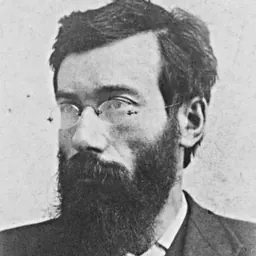
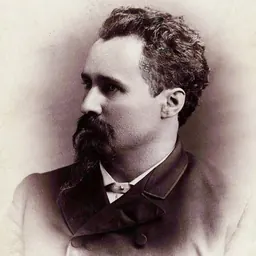
Named in this biography and alive at the same time



Related people
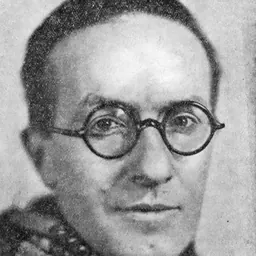
Same field, nearest in time




Contemporaries
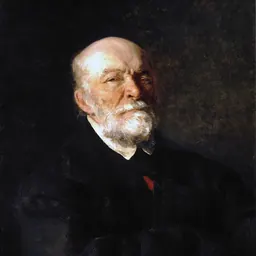
People whose lives overlapped Wilhelm Rosenberg's





Frequently asked questions
Who was Wilhelm Rosenberg?
American poet
When was Wilhelm Rosenberg born?
Wilhelm Rosenberg was born in 1850 in Hamm.
When did Wilhelm Rosenberg die?
Wilhelm Rosenberg died in 1928.
What was Wilhelm Rosenberg's occupation?
Wilhelm Rosenberg was a playwright.
What nationality was Wilhelm Rosenberg?
Wilhelm Rosenberg was American.
Sources & further reading
· Wikipedia: Wilhelm Rosenberg
Cite this page
APA: Biography.guide. (2026). Wilhelm Rosenberg. https://biography.guide/wilhelm-rosenberg/
MLA: "Wilhelm Rosenberg." Biography.guide, https://biography.guide/wilhelm-rosenberg/.
Chicago: "Wilhelm Rosenberg." Biography.guide. https://biography.guide/wilhelm-rosenberg/.
Data last updated: 2026-09-20 · Spot an error? Report a correction.
Page generated 2026-09-27 05:24 UTC